

Give the Gift of Choice!
Too many options? Treat your friends and family to their favourite stores with a Bayshore Shopping Centre gift card, redeemable at participating retailers throughout the centre. Click below to purchase yours today!Purchase HereHome
Efficient Control and Spontaneous Transitions
Coles
Loading Inventory...
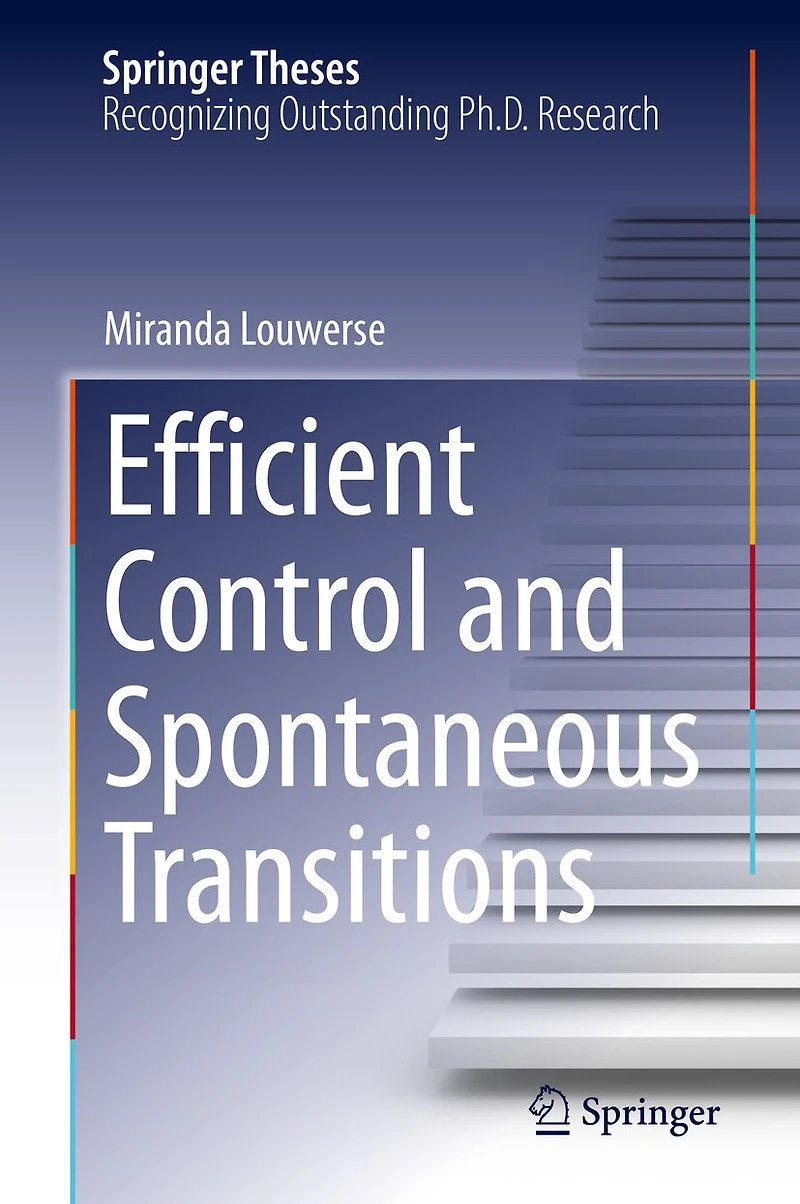
Efficient Control and Spontaneous Transitions in Ottawa, ON
Current price: $248.50

Efficient Control and Spontaneous Transitions in Ottawa, ON
Current price: $248.50
Loading Inventory...
Size: Hardcover
*Product information may vary - to confirm product availability, pricing, shipping and return information please contact Coles
This thesis addresses deep questions that cut to the physical and informational essence of central chemical quantities such as transition paths and reaction mechanisms and proposes fundamental new connections between transition-path theory, linear-response theory, nonequilibrium thermodynamics, and information theory. The author investigates slow, energetically efficient driving protocols that drive a system between conformations corresponding to endpoints of a reaction, aiming to find connections between principles of efficient driving and the spontaneous transition mechanism in the absence of driving. First, an alternative perspective of transition-path theory is developed that unifies it with stochastic thermodynamics to describe flows of entropy, energy, and information during the reaction. This also provides an optimization criterion for selecting collective variables. Next, protocols are designed which invert the magnetization of a 3×3 Ising model with minimal energetic cost,and it is determined that using multiple control parameters allows the system to be driven along a fast-relaxing pathway between reaction endpoints. Finally, the author compares these protocols with the spontaneous transition mechanism for magnetization inversion in the same Ising model, finding that designed protocols capture general features of the spontaneous mechanism and energetics given the constraints on the control parameters. This work represents a major step forward in our understanding of rare events and provides a basis for investigating the connection between efficient protocols and spontaneous transition mechanisms which can be further probed in a wider variety of systems.
This thesis addresses deep questions that cut to the physical and informational essence of central chemical quantities such as transition paths and reaction mechanisms and proposes fundamental new connections between transition-path theory, linear-response theory, nonequilibrium thermodynamics, and information theory. The author investigates slow, energetically efficient driving protocols that drive a system between conformations corresponding to endpoints of a reaction, aiming to find connections between principles of efficient driving and the spontaneous transition mechanism in the absence of driving. First, an alternative perspective of transition-path theory is developed that unifies it with stochastic thermodynamics to describe flows of entropy, energy, and information during the reaction. This also provides an optimization criterion for selecting collective variables. Next, protocols are designed which invert the magnetization of a 3×3 Ising model with minimal energetic cost,and it is determined that using multiple control parameters allows the system to be driven along a fast-relaxing pathway between reaction endpoints. Finally, the author compares these protocols with the spontaneous transition mechanism for magnetization inversion in the same Ising model, finding that designed protocols capture general features of the spontaneous mechanism and energetics given the constraints on the control parameters. This work represents a major step forward in our understanding of rare events and provides a basis for investigating the connection between efficient protocols and spontaneous transition mechanisms which can be further probed in a wider variety of systems.
You May Also Like














More About Coles at Bayshore Shopping Centre
Coles is renowned for its outstanding customer service and great selection of books. Along with the vast array of magazines, stationary, audio-books, children's literature, fiction, non-fiction and reference books, you can find accessories to make your reading experience more pleasurable. We can recommend the very best in reading today. We will help you search our titles for exactly what you need, and if we do not have it in stock, we will order it for you.
100 Bayshore Dr, Nepean, ON K2B 8C1, Canada
Find Coles at Bayshore Shopping Centre in Ottawa, ON
Visit Coles at Bayshore Shopping Centre in Ottawa, ON