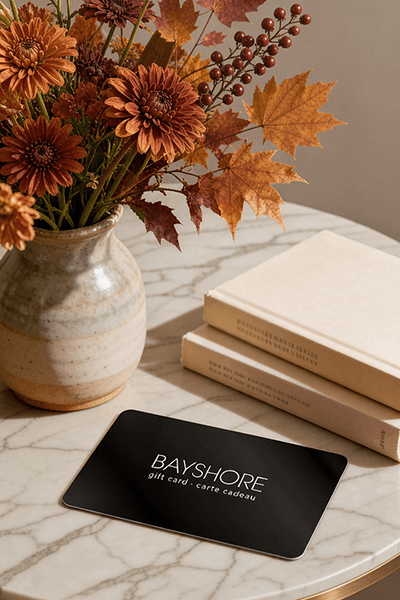
Too many options? Treat your friends and family to their favourite stores with a Bayshore Shopping Centre gift card, redeemable at participating retailers throughout the centre. Click below to purchase yours today!Purchase Here
Coles Emile, Or, Concerning Education at Bayshore Shopping Centre in Ottawa, ON
*Product information may vary - to confirm product availability, pricing, shipping and return information please contact Coles
Jean-Jacques Rousseau (1712-1778) was a French philosopher, novelist and essayist whose ideas in the areas of science, art, nature, morality, among many others, greatly influenced the late eighteenth century's Romantic Naturalism movement. His philosophies explored the virtue of human beings as being good by nature, the corruption of civil society, individual freedom, and in the case of his 1762 treatise on education, "Émile", allowing children to develop naturally and without the constraint of social conditions. Émile is an imaginary student put forth by Rousseau to illustrate his idea of "negative education," in other words, education in harmony with a child's natural capacity through a process of autonomous discovery. Rousseau removes the authoritative, domineering teacher figure, and instead wants mothers to encourage children's natural tendencies, without coddling or spoiling them. The work was controversial in its own time, but later inspired a new national system of education during the French Revolution, and to some has earned Rousseau the title of "father of modern education."
Jean-Jacques Rousseau (1712-1778) was a French philosopher, novelist and essayist whose ideas in the areas of science, art, nature, morality, among many others, greatly influenced the late eighteenth century's Romantic Naturalism movement. His philosophies explored the virtue of human beings as being good by nature, the corruption of civil society, individual freedom, and in the case of his 1762 treatise on education, "Émile", allowing children to develop naturally and without the constraint of social conditions. Émile is an imaginary student put forth by Rousseau to illustrate his idea of "negative education," in other words, education in harmony with a child's natural capacity through a process of autonomous discovery. Rousseau removes the authoritative, domineering teacher figure, and instead wants mothers to encourage children's natural tendencies, without coddling or spoiling them. The work was controversial in its own time, but later inspired a new national system of education during the French Revolution, and to some has earned Rousseau the title of "father of modern education."
Coles is renowned for its outstanding customer service and great selection of books. Along with the vast array of magazines, stationary, audio-books, children's literature, fiction, non-fiction and reference books, you can find accessories to make your reading experience more pleasurable. We can recommend the very best in reading today. We will help you search our titles for exactly what you need, and if we do not have it in stock, we will order it for you.