

Give the Gift of Choice!
Too many options? Treat your friends and family to their favourite stores with a Bayshore Shopping Centre gift card, redeemable at participating retailers throughout the centre. Click below to purchase yours today!Purchase HereHome
Epistemic Uncertainty and Legal Theory
Coles
Loading Inventory...
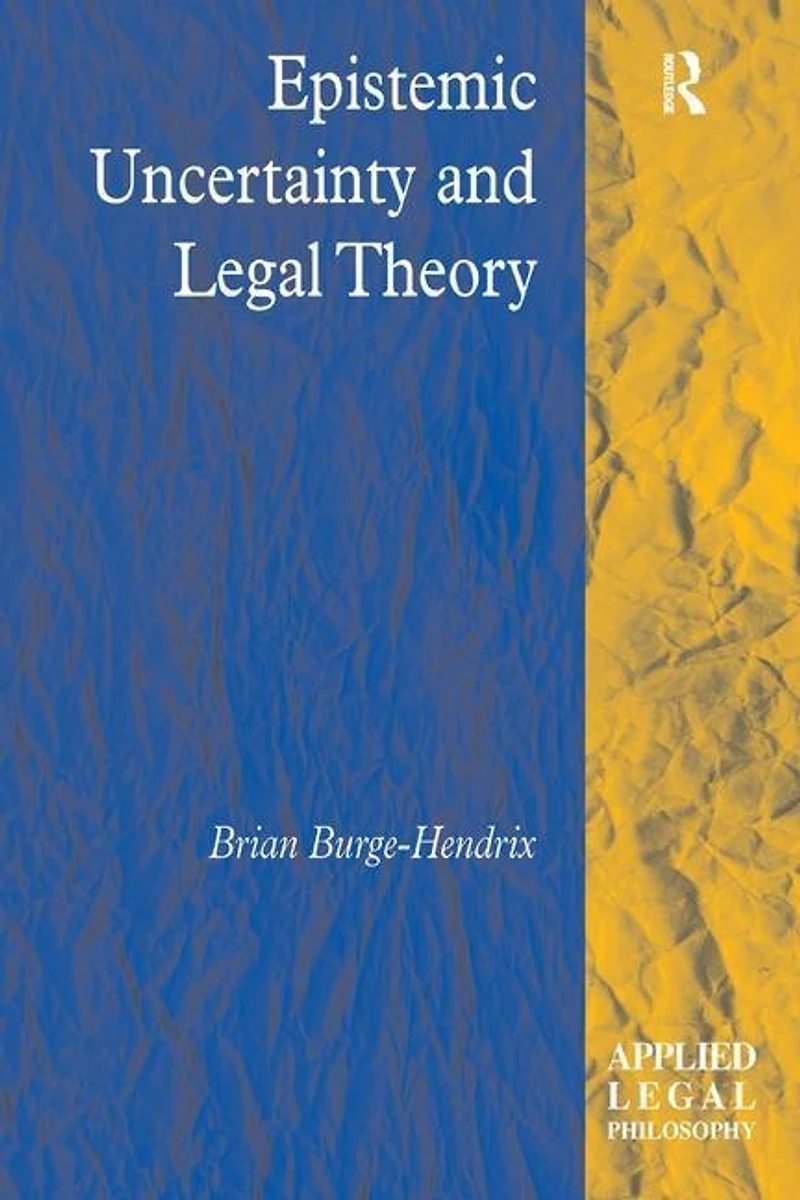
Epistemic Uncertainty and Legal Theory in Ottawa, ON
Current price: $224.00

Epistemic Uncertainty and Legal Theory in Ottawa, ON
Current price: $224.00
Loading Inventory...
Size: Hardcover
*Product information may vary - to confirm product availability, pricing, shipping and return information please contact Coles
Crossing the usual boundaries of abstract legal theory, this book considers actual charter systems - legal systems with explicitly posited moral-political rights, such as those of Canada and the United States - as well as cases in constitutional adjudication. It shows the worth of careful reflection on methodological and meta-theoretical issues for a comprehensive account of a present-day legal system which is fast becoming the norm. The author explicitly connects the ongoing Methodology Debate within legal philosophy to constitutional adjudication and Canadian law. By drawing out the implications of the Methodology Debate and the challenge of giving a proper account of constitutional adjudication in a general theory of law, the study examines how a descriptive, morally and politically neutral legal theory can deal with epistemic uncertainty - uncertainty about the actual status of moral-political legal provisions and their jurisprudential function - in a thoroughgoing manner. It also demonstrates the merits of a minimalist version of Legal Positivism with regard to the practical importance of charters in charter systems and societies.
Crossing the usual boundaries of abstract legal theory, this book considers actual charter systems - legal systems with explicitly posited moral-political rights, such as those of Canada and the United States - as well as cases in constitutional adjudication. It shows the worth of careful reflection on methodological and meta-theoretical issues for a comprehensive account of a present-day legal system which is fast becoming the norm. The author explicitly connects the ongoing Methodology Debate within legal philosophy to constitutional adjudication and Canadian law. By drawing out the implications of the Methodology Debate and the challenge of giving a proper account of constitutional adjudication in a general theory of law, the study examines how a descriptive, morally and politically neutral legal theory can deal with epistemic uncertainty - uncertainty about the actual status of moral-political legal provisions and their jurisprudential function - in a thoroughgoing manner. It also demonstrates the merits of a minimalist version of Legal Positivism with regard to the practical importance of charters in charter systems and societies.
You May Also Like







More About Coles at Bayshore Shopping Centre
Coles is renowned for its outstanding customer service and great selection of books. Along with the vast array of magazines, stationary, audio-books, children's literature, fiction, non-fiction and reference books, you can find accessories to make your reading experience more pleasurable. We can recommend the very best in reading today. We will help you search our titles for exactly what you need, and if we do not have it in stock, we will order it for you.
100 Bayshore Dr, Nepean, ON K2B 8C1, Canada
Find Coles at Bayshore Shopping Centre in Ottawa, ON
Visit Coles at Bayshore Shopping Centre in Ottawa, ON