

Give the Gift of Choice!
Too many options? Treat your friends and family to their favourite stores with a Bayshore Shopping Centre gift card, redeemable at participating retailers throughout the centre. Click below to purchase yours today!Purchase HereHome
Euro-Asian Encounters on 21st-Century Competency-Based Curriculum Reforms: Cultural Views Globalization and Localization
Coles
Loading Inventory...
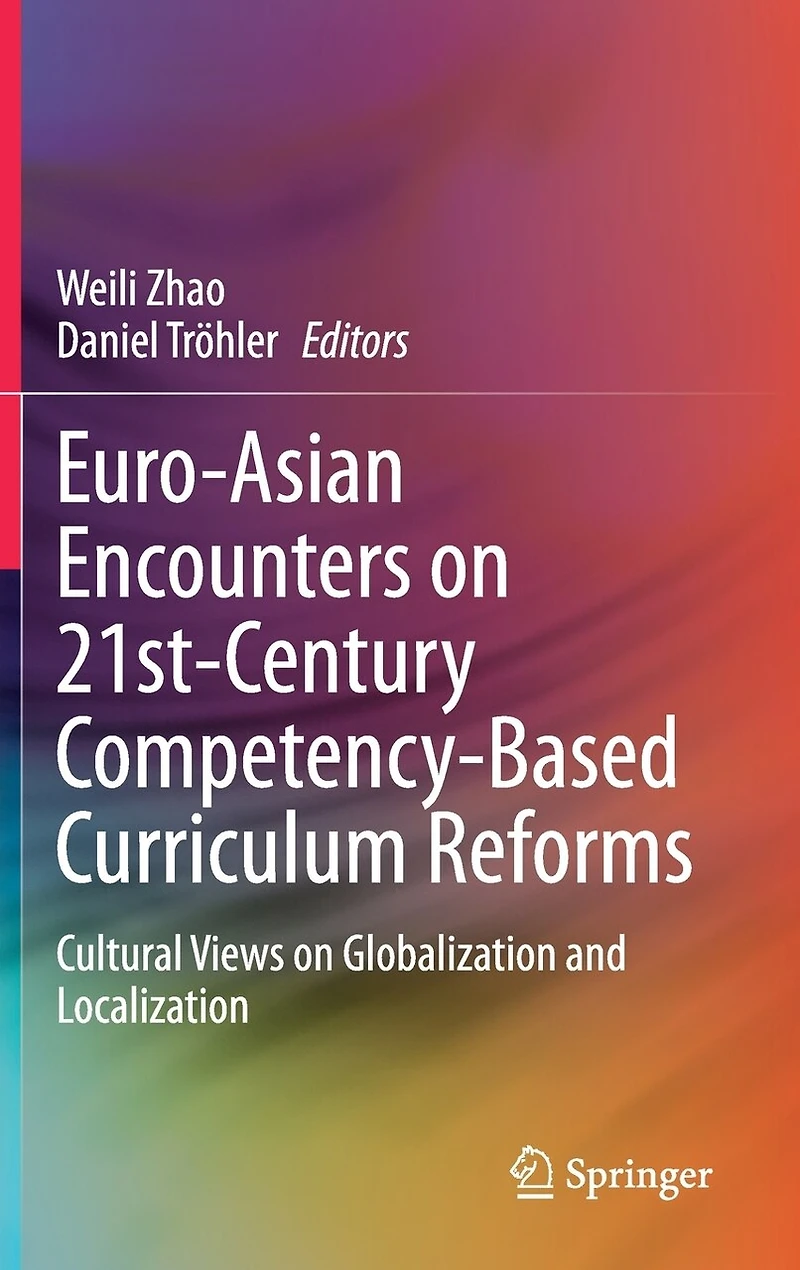
Euro-Asian Encounters on 21st-Century Competency-Based Curriculum Reforms: Cultural Views Globalization and Localization in Ottawa, ON
Current price: $262.95

Euro-Asian Encounters on 21st-Century Competency-Based Curriculum Reforms: Cultural Views Globalization and Localization in Ottawa, ON
Current price: $262.95
Loading Inventory...
Size: Hardcover
*Product information may vary - to confirm product availability, pricing, shipping and return information please contact Coles
This book offers a geographically unique cultural comparative lens to examine the issue of transnational curriculum knowledge (re)production. Prompted by the ongoing competency-based curriculum reforms on a global scale, this book examines where global frameworks like the OECD's core competency definitions are rooted and how they are borrowed, resisted, and/or re-contextualized in various European states with a Christian, foremost Protestant educational-cultural heritage and Asian countries with a Confucian educational-cultural heritage. It highlights the roles that various factors, such as history, culture, religious attitudes, ideology, and state governance play in nation-states' re-contextualization of global curriculum policies and practices beyond a simplistic and dualistic globalism/power and nationalism/resistance dynamic. In doing so, it provides a global context to better understand individual nation-state's continuing curriculum reforms and school practices. At the same time, it situates individual nation-state's latest curriculum reforms and practices within an international community for healthy dialogues and mutual sharing. By selecting two educational-cultural systems and wisdom-Christian-Protestant and Confucian-it also offers a springboard for international curriculum studies beyond the usual confinement of geopolitical nation-state constructs. It not only sheds new light on each nation-state's curriculum policies and practices, but also creates new collaboration spaces within similar and across disparate cultural-educational regions. With its wide geopolitical and educational-cultural scope, this book appeals to a global market and can be used in a variety of undergraduate and graduate courses in comparative education, history of education, curriculum theory, school and society, and curriculum history.
This book offers a geographically unique cultural comparative lens to examine the issue of transnational curriculum knowledge (re)production. Prompted by the ongoing competency-based curriculum reforms on a global scale, this book examines where global frameworks like the OECD's core competency definitions are rooted and how they are borrowed, resisted, and/or re-contextualized in various European states with a Christian, foremost Protestant educational-cultural heritage and Asian countries with a Confucian educational-cultural heritage. It highlights the roles that various factors, such as history, culture, religious attitudes, ideology, and state governance play in nation-states' re-contextualization of global curriculum policies and practices beyond a simplistic and dualistic globalism/power and nationalism/resistance dynamic. In doing so, it provides a global context to better understand individual nation-state's continuing curriculum reforms and school practices. At the same time, it situates individual nation-state's latest curriculum reforms and practices within an international community for healthy dialogues and mutual sharing. By selecting two educational-cultural systems and wisdom-Christian-Protestant and Confucian-it also offers a springboard for international curriculum studies beyond the usual confinement of geopolitical nation-state constructs. It not only sheds new light on each nation-state's curriculum policies and practices, but also creates new collaboration spaces within similar and across disparate cultural-educational regions. With its wide geopolitical and educational-cultural scope, this book appeals to a global market and can be used in a variety of undergraduate and graduate courses in comparative education, history of education, curriculum theory, school and society, and curriculum history.
You May Also Like










More About Coles at Bayshore Shopping Centre
Coles is renowned for its outstanding customer service and great selection of books. Along with the vast array of magazines, stationary, audio-books, children's literature, fiction, non-fiction and reference books, you can find accessories to make your reading experience more pleasurable. We can recommend the very best in reading today. We will help you search our titles for exactly what you need, and if we do not have it in stock, we will order it for you.
100 Bayshore Dr, Nepean, ON K2B 8C1, Canada
Find Coles at Bayshore Shopping Centre in Ottawa, ON
Visit Coles at Bayshore Shopping Centre in Ottawa, ON