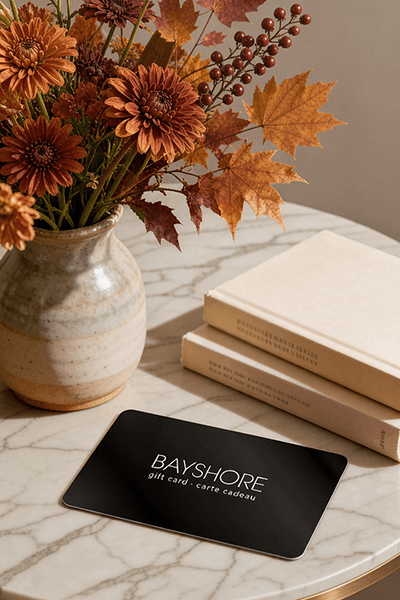
Too many options? Treat your friends and family to their favourite stores with a Bayshore Shopping Centre gift card, redeemable at participating retailers throughout the centre. Click below to purchase yours today!Purchase Here
Coles Explorations in the Icy North: How Travel Narratives Shaped Arctic Science in the Nineteenth Century at Bayshore Shopping Centre in Ottawa, ON
*Product information may vary - to confirm product availability, pricing, shipping and return information please contact Coles
Science in the Arctic changed dramatically over the course of the nineteenth century, when early, scattered attempts in the region to gather knowledge about all aspects of the natural world transitioned to a more unified Arctic science under the First International Polar Year in 1882. The IPY brought together researchers from multiple countries with the aim of undertaking systematic and coordinated experiments and observations in the Arctic and Antarctic. Harsh conditions, intense isolation, and acute danger inevitably impacted the making and communicating of scientific knowledge. At the same time, changes in ideas about what it meant to be an authoritative observer of natural phenomena were linked to tensions in imperial ambitions, national identities, and international collaborations of the IPY. Through a focused study of travel narratives in the British, Danish, Canadian, and American contexts, Nanna Katrine Lüders Kaalund uncovers not only the transnational nature of Arctic exploration, but also how the publication and reception of literature about it shaped an extreme environment, its explorers, and their scientific practices. She reveals how, far beyond the metropole—in the vast area we understand today as the North American and Greenlandic Arctic—explorations and the narratives that followed ultimately influenced the production of field science in the nineteenth century.
Science in the Arctic changed dramatically over the course of the nineteenth century, when early, scattered attempts in the region to gather knowledge about all aspects of the natural world transitioned to a more unified Arctic science under the First International Polar Year in 1882. The IPY brought together researchers from multiple countries with the aim of undertaking systematic and coordinated experiments and observations in the Arctic and Antarctic. Harsh conditions, intense isolation, and acute danger inevitably impacted the making and communicating of scientific knowledge. At the same time, changes in ideas about what it meant to be an authoritative observer of natural phenomena were linked to tensions in imperial ambitions, national identities, and international collaborations of the IPY. Through a focused study of travel narratives in the British, Danish, Canadian, and American contexts, Nanna Katrine Lüders Kaalund uncovers not only the transnational nature of Arctic exploration, but also how the publication and reception of literature about it shaped an extreme environment, its explorers, and their scientific practices. She reveals how, far beyond the metropole—in the vast area we understand today as the North American and Greenlandic Arctic—explorations and the narratives that followed ultimately influenced the production of field science in the nineteenth century.
Coles is renowned for its outstanding customer service and great selection of books. Along with the vast array of magazines, stationary, audio-books, children's literature, fiction, non-fiction and reference books, you can find accessories to make your reading experience more pleasurable. We can recommend the very best in reading today. We will help you search our titles for exactly what you need, and if we do not have it in stock, we will order it for you.