

Give the Gift of Choice!
Too many options? Treat your friends and family to their favourite stores with a Bayshore Shopping Centre gift card, redeemable at participating retailers throughout the centre. Click below to purchase yours today!Purchase HereHome
Family in Greek History by Cynthia B. Patterson, Paperback | Indigo Chapters
Coles
Loading Inventory...
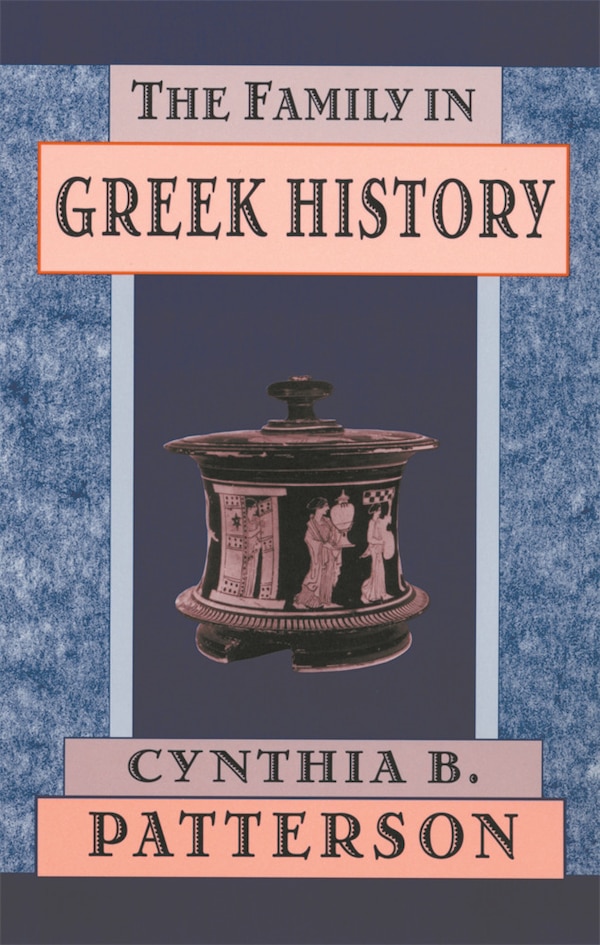
Family in Greek History by Cynthia B. Patterson, Paperback | Indigo Chapters in Ottawa, ON
By Cynthia B. Patterson
Current price: $55.00

By Cynthia B. Patterson
Family in Greek History by Cynthia B. Patterson, Paperback | Indigo Chapters in Ottawa, ON
Current price: $55.00
Loading Inventory...
Size: 1 x 1 x 0.8125
*Product information may vary - to confirm product availability, pricing, shipping and return information please contact Coles
The family, Cynthia Patterson demonstrates, played a key role in the political changes that mark the history of ancient Greece. From the archaic society portrayed in Homer and Hesiod to the Hellenistic age, the private world of the family and household was integral with and essential to the civic realm. Early Greek society was rooted not in clans but in individual households, and a man's or woman's place in the larger community was determined by relationships within those households. The development of the city-state did not result in loss of the family's power and authority, Patterson argues; rather, the protection of household relationships was an important element of early public law. The interaction of civic and family concerns in classical Athens is neatly articulated by the examples of marriage and adultery laws. In law courts and in theater performances, violation of marital relationships was presented as a public danger, the adulterer as a sexual thief. This is an understanding that fits the Athenian concept of the city as the highest form of family. The suppression of the cities with the ascendancy of Alexander's empire led to a new resolution of the relationship between public and private authority: the concept of a community of households, which is clearly exemplified in Menander's plays. Undercutting common interpretations of Greek experience as evolving from clan to patriarchal state, Patterson's insightful analysis sheds new light on the role of men and women in Greek culture. | Family in Greek History by Cynthia B. Patterson, Paperback | Indigo Chapters
The family, Cynthia Patterson demonstrates, played a key role in the political changes that mark the history of ancient Greece. From the archaic society portrayed in Homer and Hesiod to the Hellenistic age, the private world of the family and household was integral with and essential to the civic realm. Early Greek society was rooted not in clans but in individual households, and a man's or woman's place in the larger community was determined by relationships within those households. The development of the city-state did not result in loss of the family's power and authority, Patterson argues; rather, the protection of household relationships was an important element of early public law. The interaction of civic and family concerns in classical Athens is neatly articulated by the examples of marriage and adultery laws. In law courts and in theater performances, violation of marital relationships was presented as a public danger, the adulterer as a sexual thief. This is an understanding that fits the Athenian concept of the city as the highest form of family. The suppression of the cities with the ascendancy of Alexander's empire led to a new resolution of the relationship between public and private authority: the concept of a community of households, which is clearly exemplified in Menander's plays. Undercutting common interpretations of Greek experience as evolving from clan to patriarchal state, Patterson's insightful analysis sheds new light on the role of men and women in Greek culture. | Family in Greek History by Cynthia B. Patterson, Paperback | Indigo Chapters
You May Also Like















More About Coles at Bayshore Shopping Centre
Coles is renowned for its outstanding customer service and great selection of books. Along with the vast array of magazines, stationary, audio-books, children's literature, fiction, non-fiction and reference books, you can find accessories to make your reading experience more pleasurable. We can recommend the very best in reading today. We will help you search our titles for exactly what you need, and if we do not have it in stock, we will order it for you.
100 Bayshore Dr, Nepean, ON K2B 8C1, Canada
Find Coles at Bayshore Shopping Centre in Ottawa, ON
Visit Coles at Bayshore Shopping Centre in Ottawa, ON