

Give the Gift of Choice!
Too many options? Treat your friends and family to their favourite stores with a Bayshore Shopping Centre gift card, redeemable at participating retailers throughout the centre. Click below to purchase yours today!Purchase HereHome
Feasibility Study of A Satellite Solar Power Station
Coles
Loading Inventory...
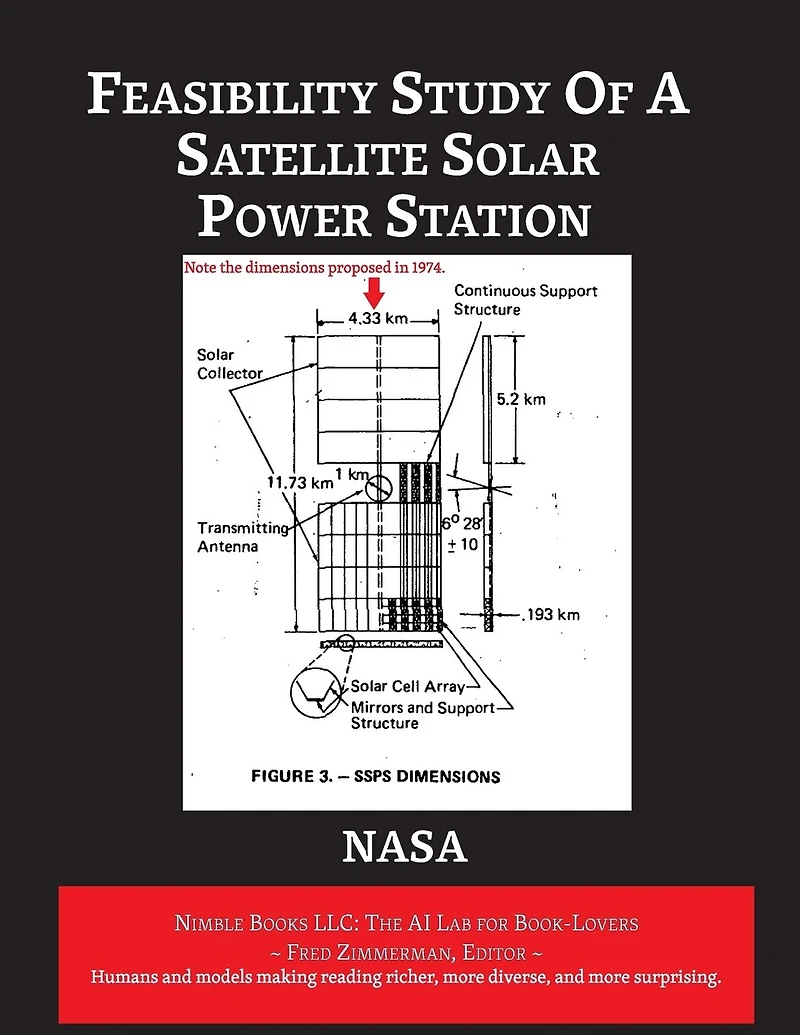
Feasibility Study of A Satellite Solar Power Station in Ottawa, ON
Current price: $43.99

Feasibility Study of A Satellite Solar Power Station in Ottawa, ON
Current price: $43.99
Loading Inventory...
Size: Paperback
*Product information may vary - to confirm product availability, pricing, shipping and return information please contact Coles
In a world grappling with climate change and escalating energy demands, this 1974 report for NASA organized by the consulting firm Arthur Little already presented this visionary solution: the Satellite Solar Power Station. By harnessing the limitless power of the sun, this technology offers a path towards clean, sustainable energy for generations to come. Fifty years later, we're still pumping greenhouse gases into the atmosphere. Read this report and wonder why.
From the 1974 abstract by the authors:
A feasibility study of a satellite solar power station (SSPS) was conducted to (1) explore how an SSPS could be "flown" and controlled in orbit; (2) determine the techniques needed to avoid radio* frequency interference (RFI); and (3) determine the key environmental, technological, and economic issues involved. Structural and dynamic analyses of the SSPS structure were performed, and deflections and internal member loads were determined. Desirable material characteristics were assessed and technology developments identified. Flight control performance of the SSPS baseline design was evaluated and parametric sizing studies were performed. The study of RFI avoidance techniques covered (1) optimization of the microwave transmission system; (2) device design and expected RFI; and (3) SSPS RFI effects. The identification of key issues involved (1) microwave generation, transmission, and rectification and solar energy conversion; (2) environmental-ecological impact and biological effects; and (3) economic issues, i. e., costs and benefits associated with the SSPS. The feasibility of the SSPS based on the parameters of the study was established.
This annotated edition illustrates the capabilities of the AI Lab for Book-Lovers to add context and ease-of-use to manuscripts. It includes several types of abstracts, building from simplest to more complex: TLDR (one word), ELI5, TLDR (vanilla), Scientific Style, and Action Items; essays to increase viewpoint diversity, such as Grounds for Dissent, Red Team Critique, and MAGA Perspective; and Notable Passages and Nutshell Summaries for each page.
In a world grappling with climate change and escalating energy demands, this 1974 report for NASA organized by the consulting firm Arthur Little already presented this visionary solution: the Satellite Solar Power Station. By harnessing the limitless power of the sun, this technology offers a path towards clean, sustainable energy for generations to come. Fifty years later, we're still pumping greenhouse gases into the atmosphere. Read this report and wonder why.
From the 1974 abstract by the authors:
A feasibility study of a satellite solar power station (SSPS) was conducted to (1) explore how an SSPS could be "flown" and controlled in orbit; (2) determine the techniques needed to avoid radio* frequency interference (RFI); and (3) determine the key environmental, technological, and economic issues involved. Structural and dynamic analyses of the SSPS structure were performed, and deflections and internal member loads were determined. Desirable material characteristics were assessed and technology developments identified. Flight control performance of the SSPS baseline design was evaluated and parametric sizing studies were performed. The study of RFI avoidance techniques covered (1) optimization of the microwave transmission system; (2) device design and expected RFI; and (3) SSPS RFI effects. The identification of key issues involved (1) microwave generation, transmission, and rectification and solar energy conversion; (2) environmental-ecological impact and biological effects; and (3) economic issues, i. e., costs and benefits associated with the SSPS. The feasibility of the SSPS based on the parameters of the study was established.
This annotated edition illustrates the capabilities of the AI Lab for Book-Lovers to add context and ease-of-use to manuscripts. It includes several types of abstracts, building from simplest to more complex: TLDR (one word), ELI5, TLDR (vanilla), Scientific Style, and Action Items; essays to increase viewpoint diversity, such as Grounds for Dissent, Red Team Critique, and MAGA Perspective; and Notable Passages and Nutshell Summaries for each page.
You May Also Like








More About Coles at Bayshore Shopping Centre
Coles is renowned for its outstanding customer service and great selection of books. Along with the vast array of magazines, stationary, audio-books, children's literature, fiction, non-fiction and reference books, you can find accessories to make your reading experience more pleasurable. We can recommend the very best in reading today. We will help you search our titles for exactly what you need, and if we do not have it in stock, we will order it for you.
100 Bayshore Dr, Nepean, ON K2B 8C1, Canada
Find Coles at Bayshore Shopping Centre in Ottawa, ON
Visit Coles at Bayshore Shopping Centre in Ottawa, ON