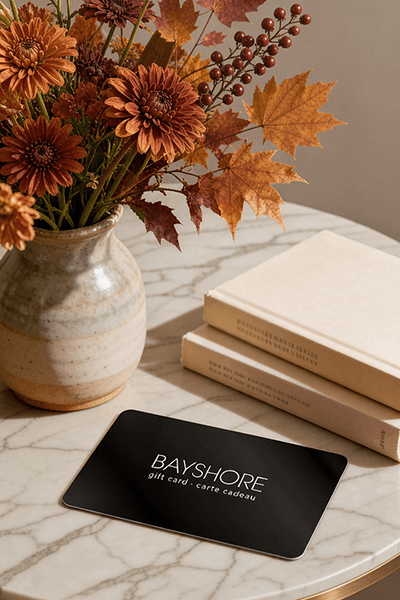
Too many options? Treat your friends and family to their favourite stores with a Bayshore Shopping Centre gift card, redeemable at participating retailers throughout the centre. Click below to purchase yours today!Purchase Here
Coles Field Notes for the Self at Bayshore Shopping Centre in Ottawa, ON
*Product information may vary - to confirm product availability, pricing, shipping and return information please contact Coles
Following his acclaimed Blackbird Song ,Randy Lundy’s fourth collection of poetry modulates the trauma of remembering with the greater spiritual affirmations offered by the natural world.
Field Notes for the Self is a series of dark meditations: spiritual exercises in which the poem becomes a forensics of the soul. The poems converse with Patrick Lane, John Thompson, and Charles Wright, but their closest cousins may be Arvo Prt’s tintinnabulations—overlapping structures in which notes or images are rung slowly and repeatedly like bells. The goal is freedom from illusion, freedom from memory, from “the same old stories” of Lundy’s violent past; and freedom, too, from the unreachable memories of the violence done to his Indigenous ancestors, which, Lundy tells us, seem to haunt his cellular biology. Rooted in exquisitely modulated observations of the natural world, the singular achievement of these poems is mind itself, suspended before interior vision like a bit of crystal twisting in the light.
Following his acclaimed Blackbird Song ,Randy Lundy’s fourth collection of poetry modulates the trauma of remembering with the greater spiritual affirmations offered by the natural world.
Field Notes for the Self is a series of dark meditations: spiritual exercises in which the poem becomes a forensics of the soul. The poems converse with Patrick Lane, John Thompson, and Charles Wright, but their closest cousins may be Arvo Prt’s tintinnabulations—overlapping structures in which notes or images are rung slowly and repeatedly like bells. The goal is freedom from illusion, freedom from memory, from “the same old stories” of Lundy’s violent past; and freedom, too, from the unreachable memories of the violence done to his Indigenous ancestors, which, Lundy tells us, seem to haunt his cellular biology. Rooted in exquisitely modulated observations of the natural world, the singular achievement of these poems is mind itself, suspended before interior vision like a bit of crystal twisting in the light.
Coles is renowned for its outstanding customer service and great selection of books. Along with the vast array of magazines, stationary, audio-books, children's literature, fiction, non-fiction and reference books, you can find accessories to make your reading experience more pleasurable. We can recommend the very best in reading today. We will help you search our titles for exactly what you need, and if we do not have it in stock, we will order it for you.