

Give the Gift of Choice!
Too many options? Treat your friends and family to their favourite stores with a Bayshore Shopping Centre gift card, redeemable at participating retailers throughout the centre. Click below to purchase yours today!Purchase HereHome
Functional Coatings for Food Packaging Applications
Coles
Loading Inventory...
Functional Coatings for Food Packaging Applications in Ottawa, ON
Current price: $116.90

Functional Coatings for Food Packaging Applications in Ottawa, ON
Current price: $116.90
Loading Inventory...
Size: Hardcover
*Product information may vary - to confirm product availability, pricing, shipping and return information please contact Coles
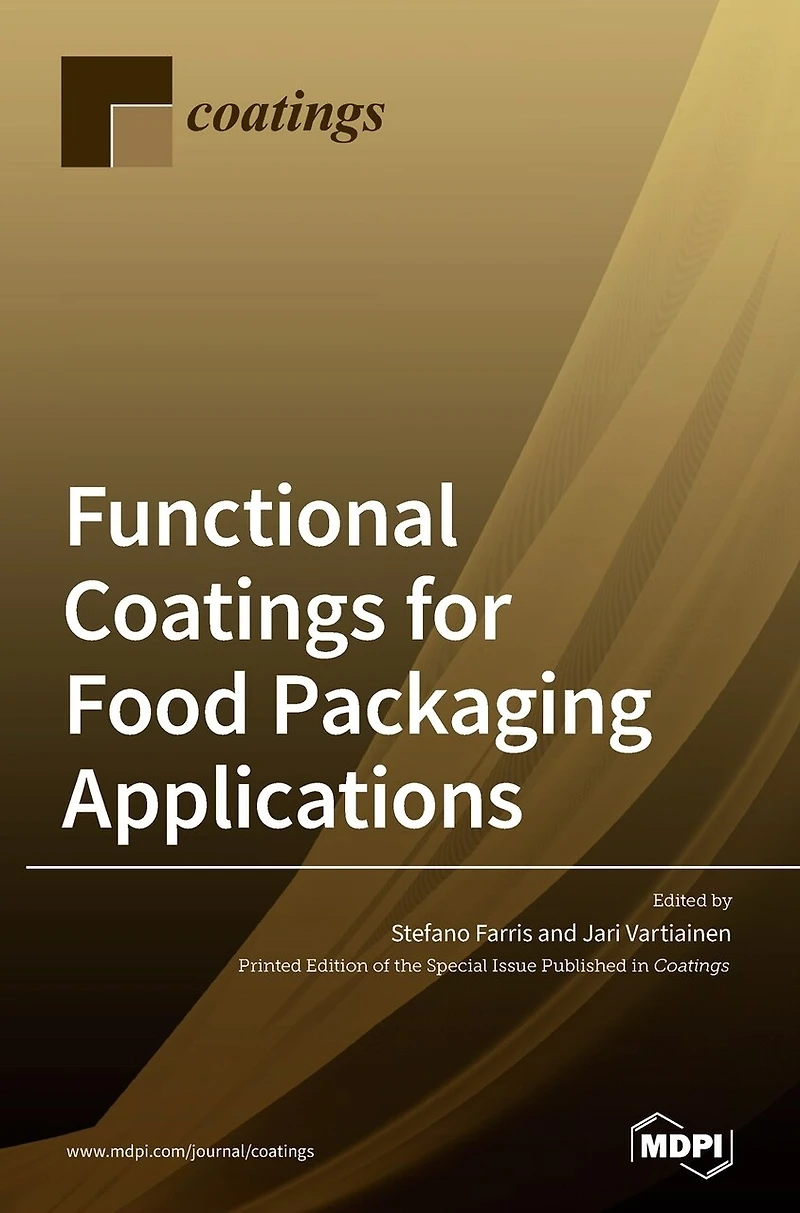
The food packaging industry is experiencing one of the most relevant revolutions associated with the transition from fossil-based polymers to new materials of renewable origin. However, high production costs, low performance, and ethical issues still hinder the market penetration of bioplastics. Recently, coating technology was proposed as an additional strategy for achieving a more rational use of the materials used within the food packaging sector. According to the packaging optimization concept, the use of multifunctional thin layers would enable the replacement of multi-layer and heavy structures, thus reducing the upstream amount of packaging materials while maintaining (or even improving) the functional properties of the final package to pursue the goal of overall shelf life extension. Concurrently, the increasing requirements among consumers for convenience, smaller package sizes, and for minimally processed, fresh, and healthy foods have necessitated the design of highly sophisticated and engineered coatings. To this end, new chemical pathways, new raw materials (e.g., biopolymers), and non-conventional deposition technologies have been used. Nanotechnology, in particular, paved the way for the development of new architectures and never-before-seen patterns that eventually yielded nanostructured and nanocomposite coatings with outstanding performance. This book covers the most recent advances in the coating technology applied to the food packaging sector, with special emphasis on active coatings and barrier coatings intended for the shelf life extension of perishable foods.
The food packaging industry is experiencing one of the most relevant revolutions associated with the transition from fossil-based polymers to new materials of renewable origin. However, high production costs, low performance, and ethical issues still hinder the market penetration of bioplastics. Recently, coating technology was proposed as an additional strategy for achieving a more rational use of the materials used within the food packaging sector. According to the packaging optimization concept, the use of multifunctional thin layers would enable the replacement of multi-layer and heavy structures, thus reducing the upstream amount of packaging materials while maintaining (or even improving) the functional properties of the final package to pursue the goal of overall shelf life extension. Concurrently, the increasing requirements among consumers for convenience, smaller package sizes, and for minimally processed, fresh, and healthy foods have necessitated the design of highly sophisticated and engineered coatings. To this end, new chemical pathways, new raw materials (e.g., biopolymers), and non-conventional deposition technologies have been used. Nanotechnology, in particular, paved the way for the development of new architectures and never-before-seen patterns that eventually yielded nanostructured and nanocomposite coatings with outstanding performance. This book covers the most recent advances in the coating technology applied to the food packaging sector, with special emphasis on active coatings and barrier coatings intended for the shelf life extension of perishable foods.
You May Also Like












More About Coles at Bayshore Shopping Centre
Coles is renowned for its outstanding customer service and great selection of books. Along with the vast array of magazines, stationary, audio-books, children's literature, fiction, non-fiction and reference books, you can find accessories to make your reading experience more pleasurable. We can recommend the very best in reading today. We will help you search our titles for exactly what you need, and if we do not have it in stock, we will order it for you.
100 Bayshore Dr, Nepean, ON K2B 8C1, Canada
Find Coles at Bayshore Shopping Centre in Ottawa, ON
Visit Coles at Bayshore Shopping Centre in Ottawa, ON