

Give the Gift of Choice!
Too many options? Treat your friends and family to their favourite stores with a Bayshore Shopping Centre gift card, redeemable at participating retailers throughout the centre. Click below to purchase yours today!Purchase HereHome
Fuzzy Cognitive Maps: A Tool for the Modeling and Simulation of Processes Systems
Coles
Loading Inventory...
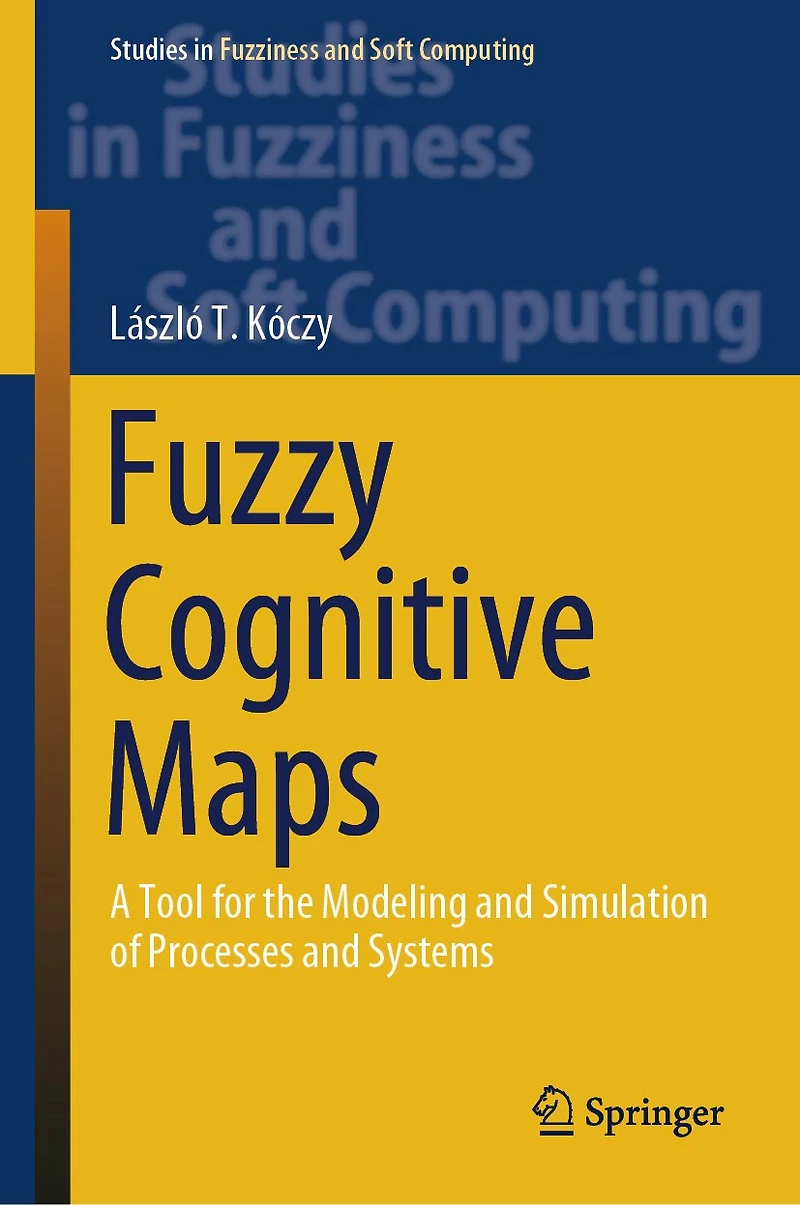
Fuzzy Cognitive Maps: A Tool for the Modeling and Simulation of Processes Systems in Ottawa, ON
Current price: $262.95

Fuzzy Cognitive Maps: A Tool for the Modeling and Simulation of Processes Systems in Ottawa, ON
Current price: $262.95
Loading Inventory...
Size: Hardcover
*Product information may vary - to confirm product availability, pricing, shipping and return information please contact Coles
This book is considered as a monograph but also as a potential textbook for graduate students, focusing on the application of FCMs for modelling and analysing the behaviour of multicomponent systems. In the last two decades, no monograph or textbook has been published on the topic Fuzzy Cognitive Maps (FCM), so this new book is definitely filling a gap in the literature of computational intelligence. The book is built up didactically, the novel results in the field being presented in the way of starting with two real-life case studies, one in the area of waste management, while the other one in modelling bank management systems. In both cases, the book starts with explaining the applied problem and then presenting how the model construction is done and what problems emerge when attempts are made for applying directly earlier results on FCM modelling. In the first case study, the problem of the oversimplification leads to inadequacy of the model, and then it is shown how new,much finer models can be built up based on expert domain knowledge. Then, the new problem of losing transparency and interpretability emerges, and as a solution, a new algorithm family is proposed that reduces FCMs to fewer components, while preserving the essential characteristics of the original model. The second case study raises the problems of stability and sensitivity of FCMs, especially, considering that expert knowledge is often uncertain and subjective. The new results summarised in the book target the questions of how to ascertain whether an FCM is converging to one or several fixed point attractors, whether there is a bifurcation when parameters are changing, etc. Both problems deal with the ultimate question whether the system modelled is stable and sustainable.
This book is considered as a monograph but also as a potential textbook for graduate students, focusing on the application of FCMs for modelling and analysing the behaviour of multicomponent systems. In the last two decades, no monograph or textbook has been published on the topic Fuzzy Cognitive Maps (FCM), so this new book is definitely filling a gap in the literature of computational intelligence. The book is built up didactically, the novel results in the field being presented in the way of starting with two real-life case studies, one in the area of waste management, while the other one in modelling bank management systems. In both cases, the book starts with explaining the applied problem and then presenting how the model construction is done and what problems emerge when attempts are made for applying directly earlier results on FCM modelling. In the first case study, the problem of the oversimplification leads to inadequacy of the model, and then it is shown how new,much finer models can be built up based on expert domain knowledge. Then, the new problem of losing transparency and interpretability emerges, and as a solution, a new algorithm family is proposed that reduces FCMs to fewer components, while preserving the essential characteristics of the original model. The second case study raises the problems of stability and sensitivity of FCMs, especially, considering that expert knowledge is often uncertain and subjective. The new results summarised in the book target the questions of how to ascertain whether an FCM is converging to one or several fixed point attractors, whether there is a bifurcation when parameters are changing, etc. Both problems deal with the ultimate question whether the system modelled is stable and sustainable.
You May Also Like









More About Coles at Bayshore Shopping Centre
Coles is renowned for its outstanding customer service and great selection of books. Along with the vast array of magazines, stationary, audio-books, children's literature, fiction, non-fiction and reference books, you can find accessories to make your reading experience more pleasurable. We can recommend the very best in reading today. We will help you search our titles for exactly what you need, and if we do not have it in stock, we will order it for you.
100 Bayshore Dr, Nepean, ON K2B 8C1, Canada
Find Coles at Bayshore Shopping Centre in Ottawa, ON
Visit Coles at Bayshore Shopping Centre in Ottawa, ON