

Give the Gift of Choice!
Too many options? Treat your friends and family to their favourite stores with a Bayshore Shopping Centre gift card, redeemable at participating retailers throughout the centre. Click below to purchase yours today!Purchase HereHome
Goal Programming Based Multi-Objective Optimization Techniques of Task Allocation in Distributed Environment
Coles
Loading Inventory...
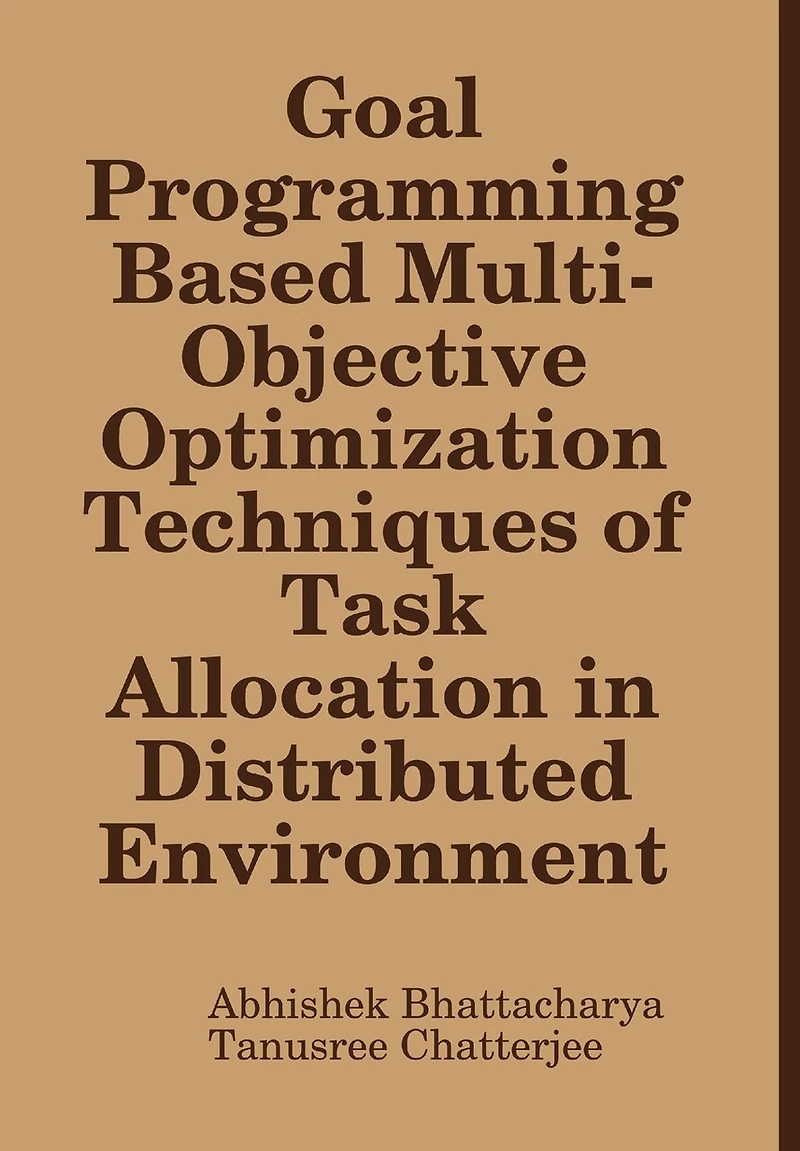
Goal Programming Based Multi-Objective Optimization Techniques of Task Allocation in Distributed Environment in Ottawa, ON
Current price: $42.95

Goal Programming Based Multi-Objective Optimization Techniques of Task Allocation in Distributed Environment in Ottawa, ON
Current price: $42.95
Loading Inventory...
Size: Hardcover
*Product information may vary - to confirm product availability, pricing, shipping and return information please contact Coles
In a distributed computing system (DCS), we need to allocate a number of tasks to different processors for execution. The problem of task assignment in heterogeneous computing systems has been studied for many years with many variations and to accomplish various objectives, such as throughput maximization, reliability maximization, and cost minimization. There are also exists a set of system constraints related to memory and communication link capacity. Most of the existing approaches for task allocation deal with a single objective only. In this project we construct the task allocation problem as a multi-objective optimization problem to consider system constraints. The goal programming technique is used with pre-emptive priority structure to find the optimal allocation that not only optimize system reliability but also optimize memory as well as path load. The genetic algorithm is used to find the optimal allocations. Genetic algorithm is used to find the optimal allocations.
In a distributed computing system (DCS), we need to allocate a number of tasks to different processors for execution. The problem of task assignment in heterogeneous computing systems has been studied for many years with many variations and to accomplish various objectives, such as throughput maximization, reliability maximization, and cost minimization. There are also exists a set of system constraints related to memory and communication link capacity. Most of the existing approaches for task allocation deal with a single objective only. In this project we construct the task allocation problem as a multi-objective optimization problem to consider system constraints. The goal programming technique is used with pre-emptive priority structure to find the optimal allocation that not only optimize system reliability but also optimize memory as well as path load. The genetic algorithm is used to find the optimal allocations. Genetic algorithm is used to find the optimal allocations.
You May Also Like

















More About Coles at Bayshore Shopping Centre
Coles is renowned for its outstanding customer service and great selection of books. Along with the vast array of magazines, stationary, audio-books, children's literature, fiction, non-fiction and reference books, you can find accessories to make your reading experience more pleasurable. We can recommend the very best in reading today. We will help you search our titles for exactly what you need, and if we do not have it in stock, we will order it for you.
100 Bayshore Dr, Nepean, ON K2B 8C1, Canada
Find Coles at Bayshore Shopping Centre in Ottawa, ON
Visit Coles at Bayshore Shopping Centre in Ottawa, ON