

Give the Gift of Choice!
Too many options? Treat your friends and family to their favourite stores with a Bayshore Shopping Centre gift card, redeemable at participating retailers throughout the centre. Click below to purchase yours today!Purchase HereHome
Hegel's Sole Idea: The Last Great Metaphysical System
Coles
Loading Inventory...
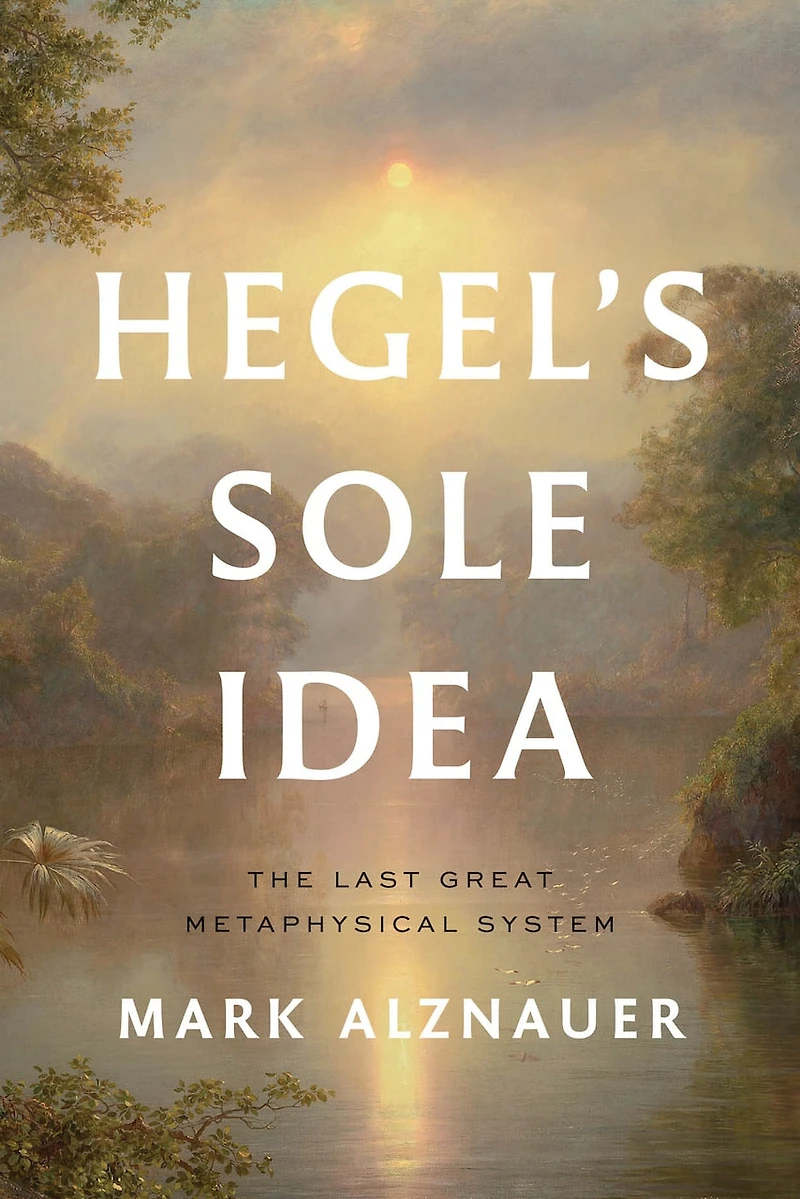
Hegel's Sole Idea: The Last Great Metaphysical System in Ottawa, ON
Current price: $149.50

Hegel's Sole Idea: The Last Great Metaphysical System in Ottawa, ON
Current price: $149.50
Loading Inventory...
Size: Hardcover
*Product information may vary - to confirm product availability, pricing, shipping and return information please contact Coles
An accessible reconstruction of Hegel’s attempt to derive all reality from a single concept. In the early decades of the nineteenth century, G. W. F. Hegel came to believe that philosophy was finally in position to achieve something it had striven for since ancient Greece: becoming an objective, demonstrative science. But to achieve this aim, he thought philosophical knowledge needed to be reconceived in a radically new way—as content contained in a single concept just as the oak tree is hidden in the acorn. In Hegel’s Sole Idea , Mark Alznauer reads Hegel’s mature philosophical system as the unprecedented attempt to comprehend the entire world as the full unfolding of that single concept, which he mysteriously calls “the absolute idea.” Ever since Hegel set out this program in his Encyclopedia of the Philosophical Sciences in Outline , Hegel’s system has been regarded as the last best hope of philosophy as an autonomous, fully rational science. But while Hegel’s followers regarded the Encyclopedia as the successful realization of the traditional aims of philosophy, his most influential successors thought it instead showed the exhaustion and collapse of that project. Hegel’s Sole Idea offers a comprehensive interpretation of Hegelian philosophy that allows a fair confrontation with its most provocative and ambitious claims.
An accessible reconstruction of Hegel’s attempt to derive all reality from a single concept. In the early decades of the nineteenth century, G. W. F. Hegel came to believe that philosophy was finally in position to achieve something it had striven for since ancient Greece: becoming an objective, demonstrative science. But to achieve this aim, he thought philosophical knowledge needed to be reconceived in a radically new way—as content contained in a single concept just as the oak tree is hidden in the acorn. In Hegel’s Sole Idea , Mark Alznauer reads Hegel’s mature philosophical system as the unprecedented attempt to comprehend the entire world as the full unfolding of that single concept, which he mysteriously calls “the absolute idea.” Ever since Hegel set out this program in his Encyclopedia of the Philosophical Sciences in Outline , Hegel’s system has been regarded as the last best hope of philosophy as an autonomous, fully rational science. But while Hegel’s followers regarded the Encyclopedia as the successful realization of the traditional aims of philosophy, his most influential successors thought it instead showed the exhaustion and collapse of that project. Hegel’s Sole Idea offers a comprehensive interpretation of Hegelian philosophy that allows a fair confrontation with its most provocative and ambitious claims.
You May Also Like









More About Coles at Bayshore Shopping Centre
Coles is renowned for its outstanding customer service and great selection of books. Along with the vast array of magazines, stationary, audio-books, children's literature, fiction, non-fiction and reference books, you can find accessories to make your reading experience more pleasurable. We can recommend the very best in reading today. We will help you search our titles for exactly what you need, and if we do not have it in stock, we will order it for you.
100 Bayshore Dr, Nepean, ON K2B 8C1, Canada
Find Coles at Bayshore Shopping Centre in Ottawa, ON
Visit Coles at Bayshore Shopping Centre in Ottawa, ON