

Give the Gift of Choice!
Too many options? Treat your friends and family to their favourite stores with a Bayshore Shopping Centre gift card, redeemable at participating retailers throughout the centre. Click below to purchase yours today!Purchase HereHome
How Language Informs Mathematics: Bridging Hegelian Dialectics And Marxian Models
Coles
Loading Inventory...
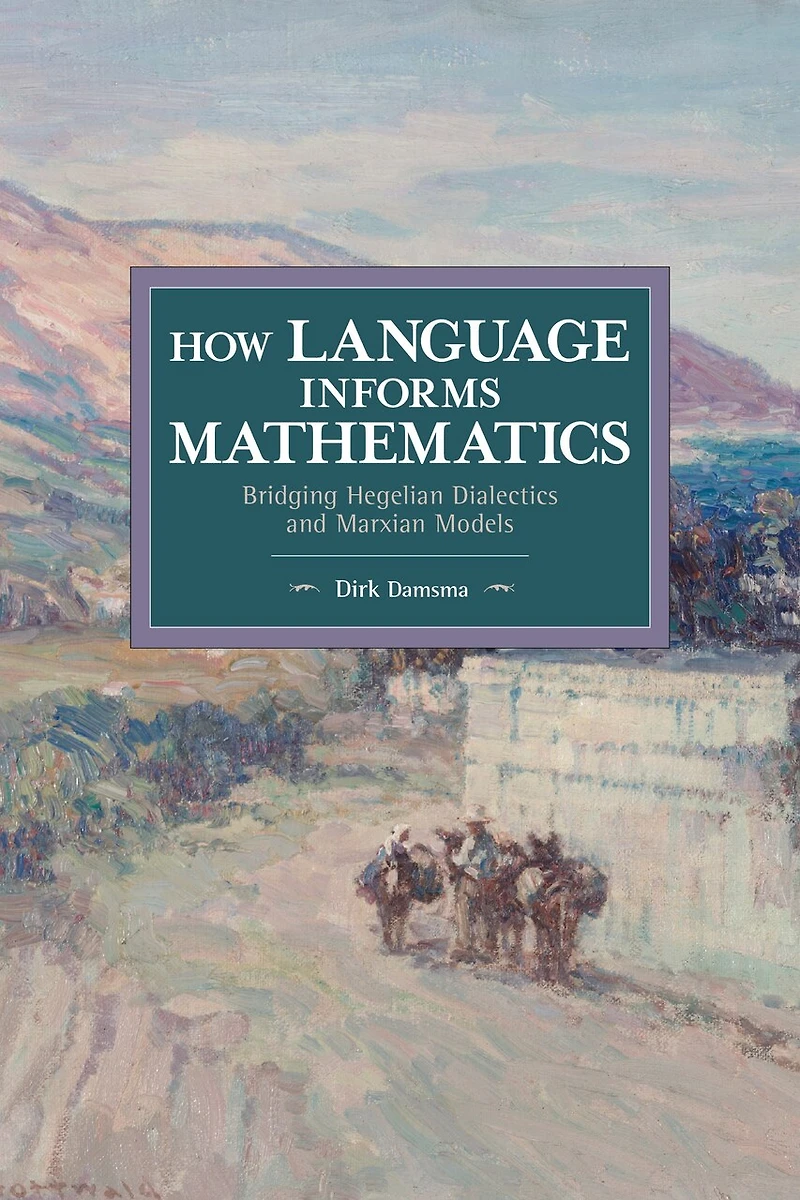
How Language Informs Mathematics: Bridging Hegelian Dialectics And Marxian Models in Ottawa, ON
Current price: $41.95

How Language Informs Mathematics: Bridging Hegelian Dialectics And Marxian Models in Ottawa, ON
Current price: $41.95
Loading Inventory...
Size: Paperback
*Product information may vary - to confirm product availability, pricing, shipping and return information please contact Coles
In How Language Informs Mathematics Dirk Damsma shows how Hegel''s and Marx''s systematic dialectical analysis of mathematical and economic language helps us understand the structure and nature of mathematical and capitalist systems. More importantly, Damsma shows how knowledge of the latter can inform model assumptions and help improve models.
His book provides a blueprint for an approach to economic model building that does away with arbitrarily chosen assumptions and is sensitive to the institutional structures of capitalism. In light of the failure of mainstream economics to understand systemic failures like the financial crisis and given the arbitrary character of most assumptions in mainstream models, such an approach is desperately needed.
In How Language Informs Mathematics Dirk Damsma shows how Hegel''s and Marx''s systematic dialectical analysis of mathematical and economic language helps us understand the structure and nature of mathematical and capitalist systems. More importantly, Damsma shows how knowledge of the latter can inform model assumptions and help improve models.
His book provides a blueprint for an approach to economic model building that does away with arbitrarily chosen assumptions and is sensitive to the institutional structures of capitalism. In light of the failure of mainstream economics to understand systemic failures like the financial crisis and given the arbitrary character of most assumptions in mainstream models, such an approach is desperately needed.
You May Also Like














More About Coles at Bayshore Shopping Centre
Coles is renowned for its outstanding customer service and great selection of books. Along with the vast array of magazines, stationary, audio-books, children's literature, fiction, non-fiction and reference books, you can find accessories to make your reading experience more pleasurable. We can recommend the very best in reading today. We will help you search our titles for exactly what you need, and if we do not have it in stock, we will order it for you.
100 Bayshore Dr, Nepean, ON K2B 8C1, Canada
Find Coles at Bayshore Shopping Centre in Ottawa, ON
Visit Coles at Bayshore Shopping Centre in Ottawa, ON