

Give the Gift of Choice!
Too many options? Treat your friends and family to their favourite stores with a Bayshore Shopping Centre gift card, redeemable at participating retailers throughout the centre. Click below to purchase yours today!Purchase HereHome
How Much is Enough?: Money and the Good Life
Coles
Loading Inventory...
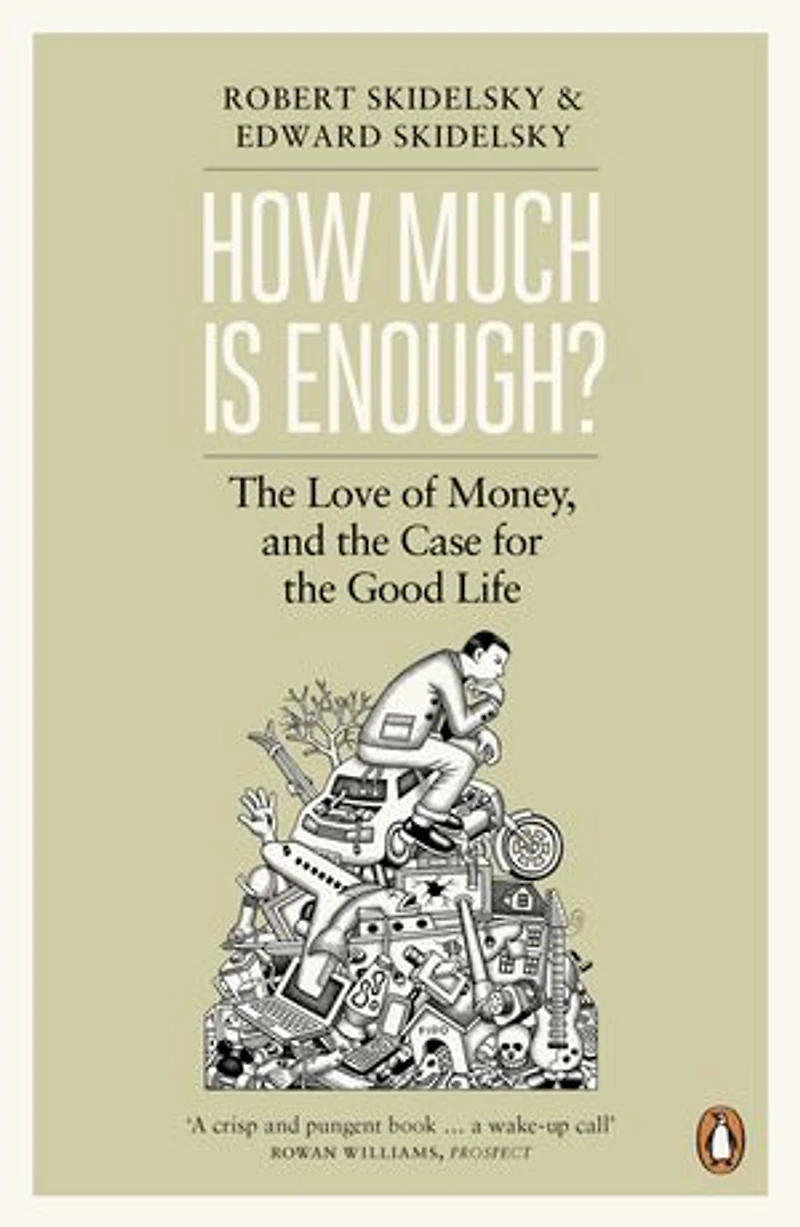
How Much is Enough?: Money and the Good Life in Ottawa, ON
Current price: $10.99

How Much is Enough?: Money and the Good Life in Ottawa, ON
Current price: $10.99
Loading Inventory...
Size: Kobo eBook
*Product information may vary - to confirm product availability, pricing, shipping and return information please contact Coles
In 1930 the great economist Keynes predicted that, over the next century, income would rise steadily, people's basic needs would be met and no one would have to work more than fifteen hours a week. Why was he wrong?
Robert and Edward Skidelsky argue that wealth is not - or should not be - an end in itself, but a means to 'the good life'. Tracing the concept from Aristotle to the present, they show how far modern life has strayed from that ideal. They reject the idea that there is any single measure of human progress, whether GDP or 'happiness', and instead describe the seven elements which, they argue, make up the good life, and the policies that could realize them.
ROBERT SKIDELSKY is Emeritus Professor of Political Economy at the University of Warwick. His biography of Keynes received numerous prizes, including the Lionel Gelber Prize and the Council on Foreign Relations Prize for International Relations. He was made a life peer in 1991, and a Fellow of the British Academy in 1994.
EDWARD SKIDELSKY is a lecturer in the Philosophy Department of the University of Exeter. He contributes regularly to the New Statesman , Spectator and Prospect . His previous books include The Conditions of Goodness and Ernst Cassirer: The Last Philosopher of Culture .
In 1930 the great economist Keynes predicted that, over the next century, income would rise steadily, people's basic needs would be met and no one would have to work more than fifteen hours a week. Why was he wrong?
Robert and Edward Skidelsky argue that wealth is not - or should not be - an end in itself, but a means to 'the good life'. Tracing the concept from Aristotle to the present, they show how far modern life has strayed from that ideal. They reject the idea that there is any single measure of human progress, whether GDP or 'happiness', and instead describe the seven elements which, they argue, make up the good life, and the policies that could realize them.
ROBERT SKIDELSKY is Emeritus Professor of Political Economy at the University of Warwick. His biography of Keynes received numerous prizes, including the Lionel Gelber Prize and the Council on Foreign Relations Prize for International Relations. He was made a life peer in 1991, and a Fellow of the British Academy in 1994.
EDWARD SKIDELSKY is a lecturer in the Philosophy Department of the University of Exeter. He contributes regularly to the New Statesman , Spectator and Prospect . His previous books include The Conditions of Goodness and Ernst Cassirer: The Last Philosopher of Culture .













More About Coles at Bayshore Shopping Centre
Coles is renowned for its outstanding customer service and great selection of books. Along with the vast array of magazines, stationary, audio-books, children's literature, fiction, non-fiction and reference books, you can find accessories to make your reading experience more pleasurable. We can recommend the very best in reading today. We will help you search our titles for exactly what you need, and if we do not have it in stock, we will order it for you.
100 Bayshore Dr, Nepean, ON K2B 8C1, Canada
Find Coles at Bayshore Shopping Centre in Ottawa, ON
Visit Coles at Bayshore Shopping Centre in Ottawa, ON