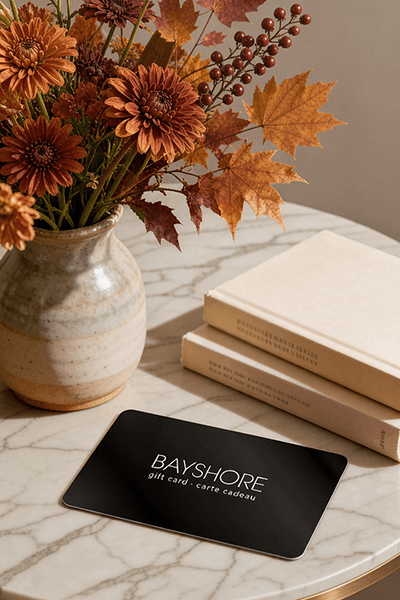
Too many options? Treat your friends and family to their favourite stores with a Bayshore Shopping Centre gift card, redeemable at participating retailers throughout the centre. Click below to purchase yours today!Purchase Here
Coles How to Free Your Mind: the Practice of Tara Liberator at Bayshore Shopping Centre in Ottawa, ON
*Product information may vary - to confirm product availability, pricing, shipping and return information please contact Coles
Tara, the feminine embodiment of enlightened activity, is a Buddhist deity whose Tibetan name means "liberator," signaling her ability to liberate beings from the delusion and ignorance that keep them trapped in ever-recurring patterns of negativity. She embodies a challenge—to transform our minds and become like her, whose tranquility, compassion, and wisdom make her so beautiful—but one that is profoundly nurturing. In the author's words, "We can relax in her presence and look at ourselves honestly, knowing that Tara will not judge, reject, or abandon us due to our shortcomings. Like a mother, she sees her child's potential—in this case, our spiritual potential or Buddha-nature—and wants to nurture it." Ven. Chodron describes a simple meditation on Tara, explaining its benefits and its application to daily life. She then presents two well-loved praises to Tara, together with reflections on their meanings for modern practitioners. Included here are the "Homage to the Twenty-one Taras," verses that are frequently chanted in Tibetan monasteries and homes, and "A Song of Longing for Tara, the Infallible," by Lama Lobsang Tenpey Gyaltsen.
Tara, the feminine embodiment of enlightened activity, is a Buddhist deity whose Tibetan name means "liberator," signaling her ability to liberate beings from the delusion and ignorance that keep them trapped in ever-recurring patterns of negativity. She embodies a challenge—to transform our minds and become like her, whose tranquility, compassion, and wisdom make her so beautiful—but one that is profoundly nurturing. In the author's words, "We can relax in her presence and look at ourselves honestly, knowing that Tara will not judge, reject, or abandon us due to our shortcomings. Like a mother, she sees her child's potential—in this case, our spiritual potential or Buddha-nature—and wants to nurture it." Ven. Chodron describes a simple meditation on Tara, explaining its benefits and its application to daily life. She then presents two well-loved praises to Tara, together with reflections on their meanings for modern practitioners. Included here are the "Homage to the Twenty-one Taras," verses that are frequently chanted in Tibetan monasteries and homes, and "A Song of Longing for Tara, the Infallible," by Lama Lobsang Tenpey Gyaltsen.
Coles is renowned for its outstanding customer service and great selection of books. Along with the vast array of magazines, stationary, audio-books, children's literature, fiction, non-fiction and reference books, you can find accessories to make your reading experience more pleasurable. We can recommend the very best in reading today. We will help you search our titles for exactly what you need, and if we do not have it in stock, we will order it for you.