

Give the Gift of Choice!
Too many options? Treat your friends and family to their favourite stores with a Bayshore Shopping Centre gift card, redeemable at participating retailers throughout the centre. Click below to purchase yours today!Purchase HereHome
Illegibility: Blanchot and Hegel
Coles
Loading Inventory...
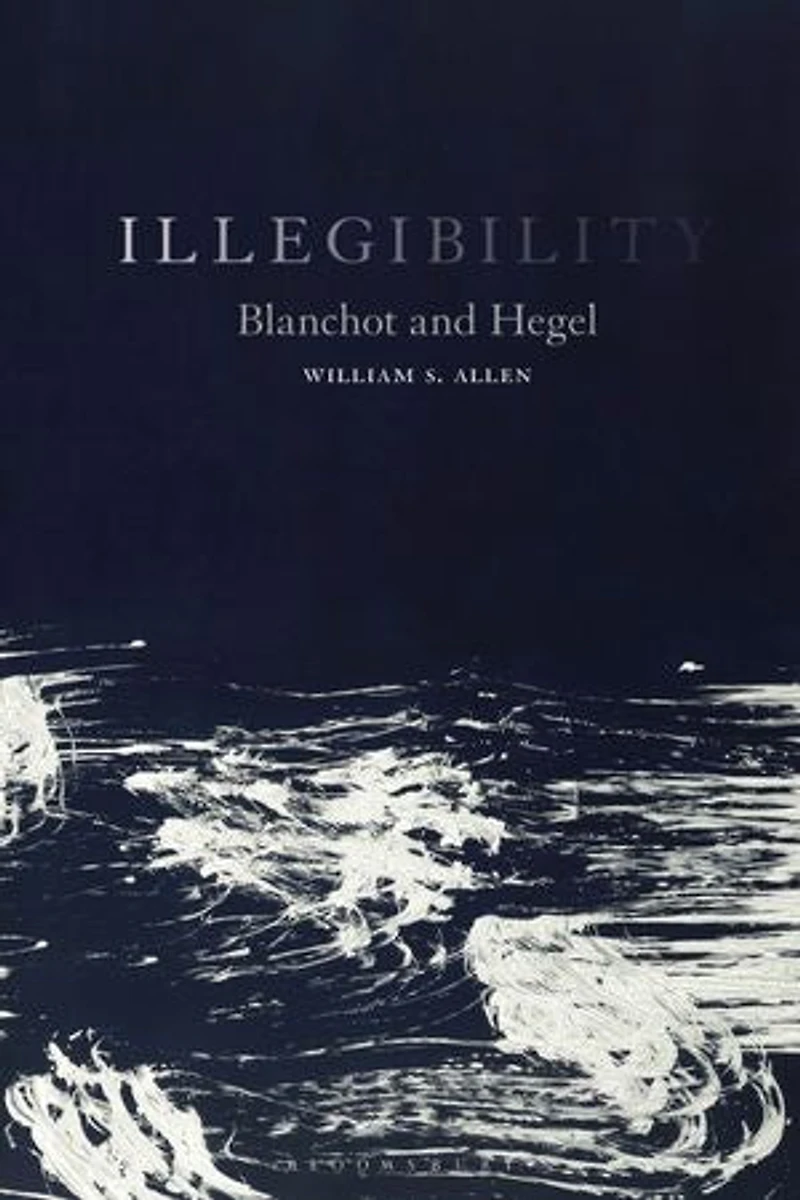
Illegibility: Blanchot and Hegel in Ottawa, ON
Current price: $43.19
Original price: $53.95

Illegibility: Blanchot and Hegel in Ottawa, ON
Current price: $43.19
Original price: $53.95
Loading Inventory...
Size: Kobo eBook
*Product information may vary - to confirm product availability, pricing, shipping and return information please contact Coles
The philosophical significance of Maurice Blanchot's writings has rarely been in doubt. Specifying the nature and implications of his thinking has proved much less easy, particularly in reference to the key figure of G. W. F. Hegel. Examination reveals that Blanchot's thinking is persistently oriented towards a questioning of the terms of Hegel's thought, while nevertheless remaining within its themes, whichshows how rigorously he studied Hegel's works but also how radical his critique of them became. Equally, it allows for a crucial discussion of the differences between Blanchot's responses to Hegel and those of Jacques Derrida, with the implicit suggestion that in some ways Blanchot's critique of Hegel is more far-reaching than that developed by Derrida. William S. Allen demonstrates those aspects of Hegelian thought that permeate Blanchot's writings and, in turn, develops a detailed three-way analysis of Derrida, Hegel, and Blanchot. The key question around which this analysis develops is that of the relation between thought and language concerning the issue of the infinite and its legibility. Illegibility introduces a new and substantially philosophical account of Blanchot's importance, and also showshow his writings laid the ground for Derrida's workswhile developing their own uniquely challenging response to the problems of post-Hegelian thought.
The philosophical significance of Maurice Blanchot's writings has rarely been in doubt. Specifying the nature and implications of his thinking has proved much less easy, particularly in reference to the key figure of G. W. F. Hegel. Examination reveals that Blanchot's thinking is persistently oriented towards a questioning of the terms of Hegel's thought, while nevertheless remaining within its themes, whichshows how rigorously he studied Hegel's works but also how radical his critique of them became. Equally, it allows for a crucial discussion of the differences between Blanchot's responses to Hegel and those of Jacques Derrida, with the implicit suggestion that in some ways Blanchot's critique of Hegel is more far-reaching than that developed by Derrida. William S. Allen demonstrates those aspects of Hegelian thought that permeate Blanchot's writings and, in turn, develops a detailed three-way analysis of Derrida, Hegel, and Blanchot. The key question around which this analysis develops is that of the relation between thought and language concerning the issue of the infinite and its legibility. Illegibility introduces a new and substantially philosophical account of Blanchot's importance, and also showshow his writings laid the ground for Derrida's workswhile developing their own uniquely challenging response to the problems of post-Hegelian thought.
You May Also Like










More About Coles at Bayshore Shopping Centre
Coles is renowned for its outstanding customer service and great selection of books. Along with the vast array of magazines, stationary, audio-books, children's literature, fiction, non-fiction and reference books, you can find accessories to make your reading experience more pleasurable. We can recommend the very best in reading today. We will help you search our titles for exactly what you need, and if we do not have it in stock, we will order it for you.
100 Bayshore Dr, Nepean, ON K2B 8C1, Canada
Find Coles at Bayshore Shopping Centre in Ottawa, ON
Visit Coles at Bayshore Shopping Centre in Ottawa, ON