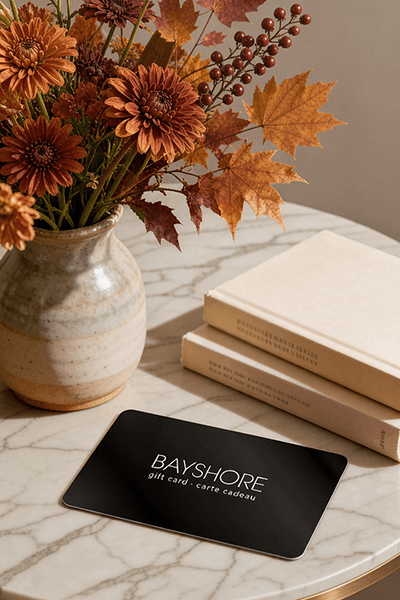
Too many options? Treat your friends and family to their favourite stores with a Bayshore Shopping Centre gift card, redeemable at participating retailers throughout the centre. Click below to purchase yours today!Purchase Here
Coles In-/Near-Memory Computing at Bayshore Shopping Centre in Ottawa, ON
*Product information may vary - to confirm product availability, pricing, shipping and return information please contact Coles
This book provides a structured introduction of the key concepts and techniques that enable in-/near-memory computing. For decades, processing-in-memory or near-memory computing has been attracting growing interest due to its potential to break the memory wall. Near-memory computing moves compute logic near the memory, and thereby reduces data movement. Recent work has also shown that certain memories can morph themselves into compute units by exploiting the physical properties of the memory cells, enabling in-situ computing in the memory array. While in- and near-memory computing can circumvent overheads related to data movement, it comes at the cost of restricted flexibility of data representation and computation, design challenges of compute capable memories, and difficulty in system and software integration. Therefore, wide deployment of in-/near-memory computing cannot be accomplished without techniques that enable efficient mapping of data-intensive applications to such devices,without sacrificing accuracy or increasing hardware costs excessively. This book describes various memory substrates amenable to in- and near-memory computing, architectural approaches for designing efficient and reliable computing devices, and opportunities for in-/near-memory acceleration of different classes of applications.
This book provides a structured introduction of the key concepts and techniques that enable in-/near-memory computing. For decades, processing-in-memory or near-memory computing has been attracting growing interest due to its potential to break the memory wall. Near-memory computing moves compute logic near the memory, and thereby reduces data movement. Recent work has also shown that certain memories can morph themselves into compute units by exploiting the physical properties of the memory cells, enabling in-situ computing in the memory array. While in- and near-memory computing can circumvent overheads related to data movement, it comes at the cost of restricted flexibility of data representation and computation, design challenges of compute capable memories, and difficulty in system and software integration. Therefore, wide deployment of in-/near-memory computing cannot be accomplished without techniques that enable efficient mapping of data-intensive applications to such devices,without sacrificing accuracy or increasing hardware costs excessively. This book describes various memory substrates amenable to in- and near-memory computing, architectural approaches for designing efficient and reliable computing devices, and opportunities for in-/near-memory acceleration of different classes of applications.
Coles is renowned for its outstanding customer service and great selection of books. Along with the vast array of magazines, stationary, audio-books, children's literature, fiction, non-fiction and reference books, you can find accessories to make your reading experience more pleasurable. We can recommend the very best in reading today. We will help you search our titles for exactly what you need, and if we do not have it in stock, we will order it for you.