

Give the Gift of Choice!
Too many options? Treat your friends and family to their favourite stores with a Bayshore Shopping Centre gift card, redeemable at participating retailers throughout the centre. Click below to purchase yours today!Purchase HereHome
India and China: Retrospective Views on Development
Coles
Loading Inventory...
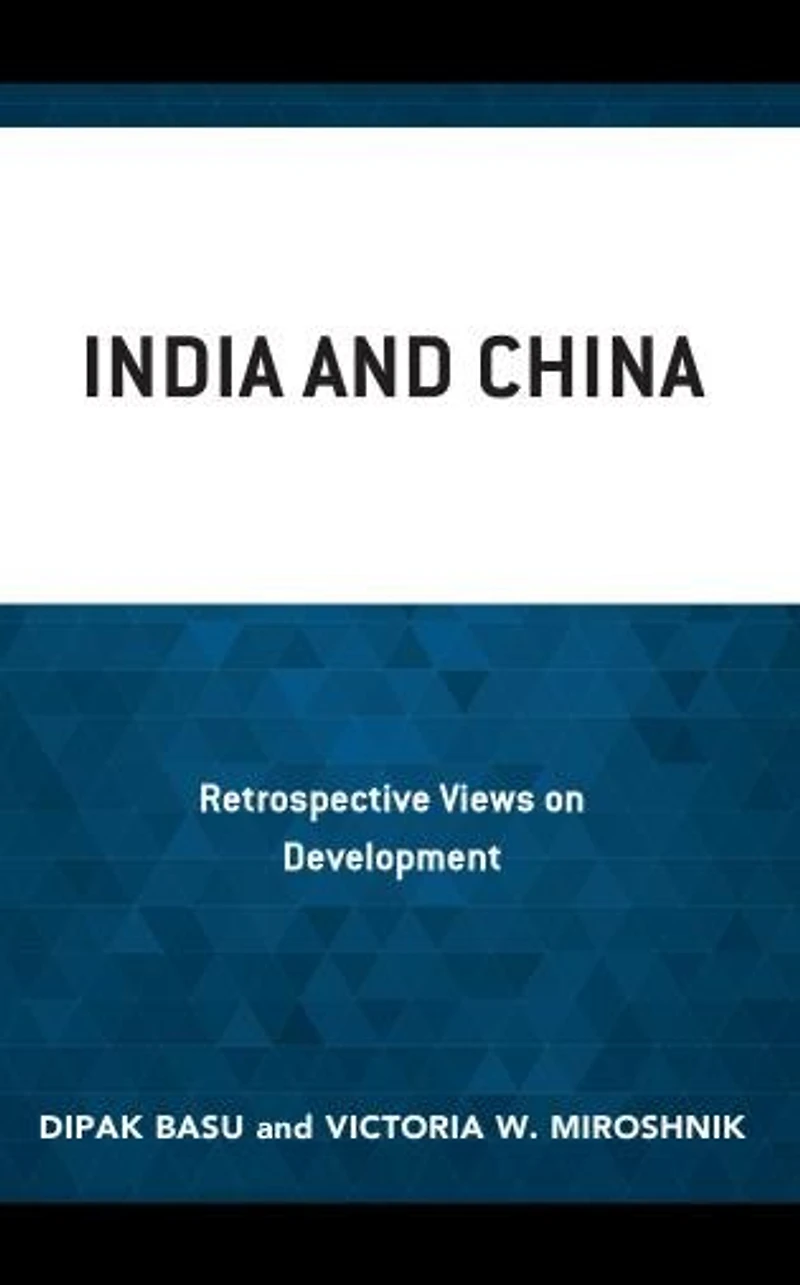
India and China: Retrospective Views on Development in Ottawa, ON
Current price: $160.95

India and China: Retrospective Views on Development in Ottawa, ON
Current price: $160.95
Loading Inventory...
Size: Hardcover
*Product information may vary - to confirm product availability, pricing, shipping and return information please contact Coles
A regular feature in almost publication has been a comparison of India's slow economic growth and, until recently, China's rapid progress. Yet, in 1988, both countries had similar living standards. As things stand, it is undoubtedly a tale of two countries and two systems. Supporters of India can point to the democratic nature of the country's development while ignoring the slow pace of change. China's supporters point to exceptional poverty reduction, urbanization, and infrastructure developments while ignoring the social, religious, and environmental costs these efforts have created. However, popular media has ignored the fact the individual starting points of the two nations, a gap which this book fills. This study examines how China's economic reforms was initiated with Deng Xiaoping's fang-shou ('letting go' and 'tightening up') efforts between 1978 and 1989. However, until 1989 China had nothing much to demonstrate compare with India. Both countries had similar per head national income but India was technologically much superior to China. The reforms in China then accelerated in a sustained manner-be it the Family Responsibility System that transformed agriculture, the opening up of the industrial sector for the growth of local enterprises and foreign investments, or the substantial effort to make state-owned enterprises more efficient.
A regular feature in almost publication has been a comparison of India's slow economic growth and, until recently, China's rapid progress. Yet, in 1988, both countries had similar living standards. As things stand, it is undoubtedly a tale of two countries and two systems. Supporters of India can point to the democratic nature of the country's development while ignoring the slow pace of change. China's supporters point to exceptional poverty reduction, urbanization, and infrastructure developments while ignoring the social, religious, and environmental costs these efforts have created. However, popular media has ignored the fact the individual starting points of the two nations, a gap which this book fills. This study examines how China's economic reforms was initiated with Deng Xiaoping's fang-shou ('letting go' and 'tightening up') efforts between 1978 and 1989. However, until 1989 China had nothing much to demonstrate compare with India. Both countries had similar per head national income but India was technologically much superior to China. The reforms in China then accelerated in a sustained manner-be it the Family Responsibility System that transformed agriculture, the opening up of the industrial sector for the growth of local enterprises and foreign investments, or the substantial effort to make state-owned enterprises more efficient.








More About Coles at Bayshore Shopping Centre
Coles is renowned for its outstanding customer service and great selection of books. Along with the vast array of magazines, stationary, audio-books, children's literature, fiction, non-fiction and reference books, you can find accessories to make your reading experience more pleasurable. We can recommend the very best in reading today. We will help you search our titles for exactly what you need, and if we do not have it in stock, we will order it for you.
100 Bayshore Dr, Nepean, ON K2B 8C1, Canada
Find Coles at Bayshore Shopping Centre in Ottawa, ON
Visit Coles at Bayshore Shopping Centre in Ottawa, ON