

Give the Gift of Choice!
Too many options? Treat your friends and family to their favourite stores with a Bayshore Shopping Centre gift card, redeemable at participating retailers throughout the centre. Click below to purchase yours today!Purchase HereHome
India as a Responsible Nuclear Power: A Strategy for Stability
Coles
Loading Inventory...
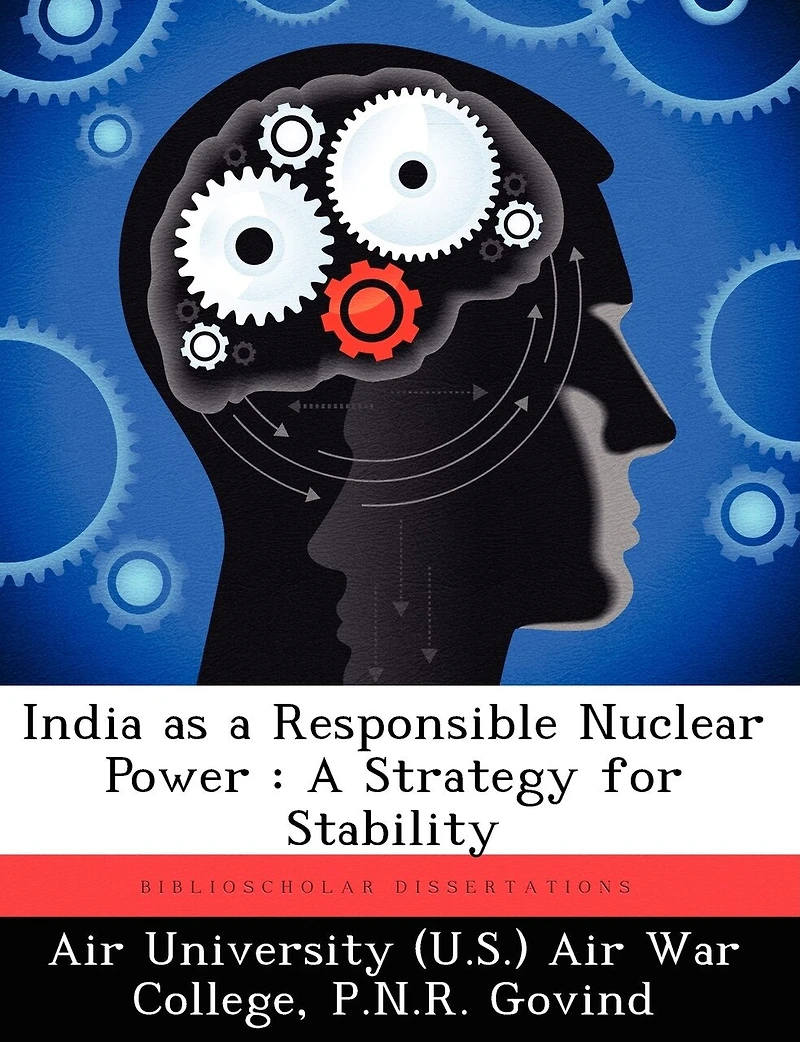
India as a Responsible Nuclear Power: A Strategy for Stability in Ottawa, ON
Current price: $59.00

India as a Responsible Nuclear Power: A Strategy for Stability in Ottawa, ON
Current price: $59.00
Loading Inventory...
Size: Paperback
*Product information may vary - to confirm product availability, pricing, shipping and return information please contact Coles
"After the tests of 1998, India has merely moved sideways from existential to minimum deterrence. From the options available to it, India would in all probability opt for a nuclear posture in the form of a "force-in-being" which implies that India's nuclear capabilities will be strategically active, but operationally dormant. This would give her capability to execute retaliatory action within a matter of hours to a few weeks. India's draft Nuclear Doctrine is by no means the last word on the subject. India's nuclear doctrine and should be seen as an evolving system of beliefs that governs the rationale and use of nuclear weapons. India's declared policy on the use of nuclear weapons is one of "no first use" but an "assured and massive retaliation" in case of nuclear aggression on the part of its enemies.
In keeping with this policy, avoiding the high costs of a ready arsenal and to reinforce its long tradition of strict civilian control over the military, India would try to acquire only a nominal deterrence capability against Pakistan and China. This "de-alerted" capability would be reflected in the form of completed nuclear weapons stored in a dissembled condition, i.e., warheads along with the sub-assemblies and delivery systems being kept at different locations separated by large geographical distances."--Abstract from web site.
"After the tests of 1998, India has merely moved sideways from existential to minimum deterrence. From the options available to it, India would in all probability opt for a nuclear posture in the form of a "force-in-being" which implies that India's nuclear capabilities will be strategically active, but operationally dormant. This would give her capability to execute retaliatory action within a matter of hours to a few weeks. India's draft Nuclear Doctrine is by no means the last word on the subject. India's nuclear doctrine and should be seen as an evolving system of beliefs that governs the rationale and use of nuclear weapons. India's declared policy on the use of nuclear weapons is one of "no first use" but an "assured and massive retaliation" in case of nuclear aggression on the part of its enemies.
In keeping with this policy, avoiding the high costs of a ready arsenal and to reinforce its long tradition of strict civilian control over the military, India would try to acquire only a nominal deterrence capability against Pakistan and China. This "de-alerted" capability would be reflected in the form of completed nuclear weapons stored in a dissembled condition, i.e., warheads along with the sub-assemblies and delivery systems being kept at different locations separated by large geographical distances."--Abstract from web site.
You May Also Like













More About Coles at Bayshore Shopping Centre
Coles is renowned for its outstanding customer service and great selection of books. Along with the vast array of magazines, stationary, audio-books, children's literature, fiction, non-fiction and reference books, you can find accessories to make your reading experience more pleasurable. We can recommend the very best in reading today. We will help you search our titles for exactly what you need, and if we do not have it in stock, we will order it for you.
100 Bayshore Dr, Nepean, ON K2B 8C1, Canada
Find Coles at Bayshore Shopping Centre in Ottawa, ON
Visit Coles at Bayshore Shopping Centre in Ottawa, ON