

Give the Gift of Choice!
Too many options? Treat your friends and family to their favourite stores with a Bayshore Shopping Centre gift card, redeemable at participating retailers throughout the centre. Click below to purchase yours today!Purchase HereHome
Introduction to 3+1 Numerical Relativity
Coles
Loading Inventory...
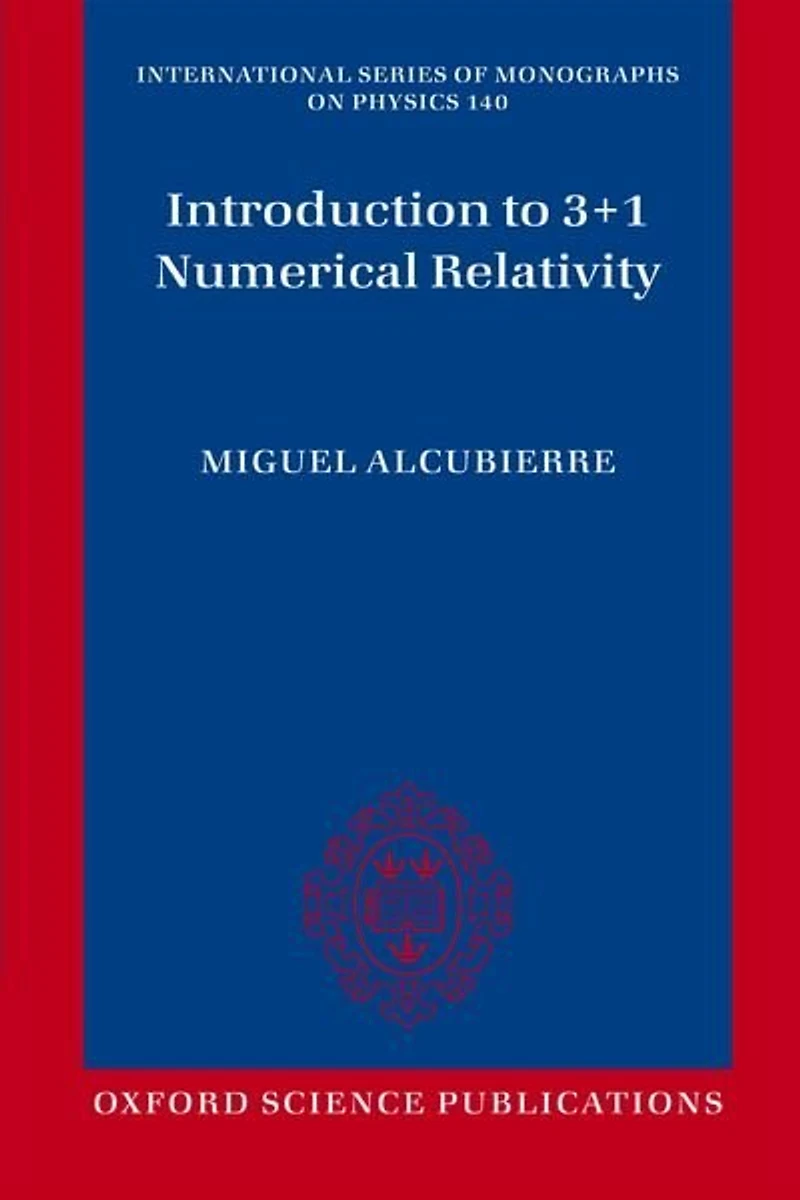
Introduction to 3+1 Numerical Relativity in Ottawa, ON
Current price: $83.95

Introduction to 3+1 Numerical Relativity in Ottawa, ON
Current price: $83.95
Loading Inventory...
Size: Paperback
*Product information may vary - to confirm product availability, pricing, shipping and return information please contact Coles
This book introduces the modern field of 3+1 numerical relativity. The book has been written in a way as to be as self-contained as possible, and only assumes a basic knowledge of special relativity. Starting from a brief introduction to general relativity, it discusses the different concepts and tools necessary for the fully consistent numerical simulation of relativistic astrophysical systems, with strong and dynamical gravitational fields.
Among the topics discussed in detail are the following: the initial data problem, hyperbolic reductions of the field equations, gauge conditions, the evolution of black hole space-times, relativistic hydrodynamics, gravitational wave extraction and numerical methods. There is also a final chapter with examples of some simple numerical space-times. The book is aimed at both graduate students and researchers in physics and astrophysics, and at those interested in relativistic astrophysics.
This book introduces the modern field of 3+1 numerical relativity. The book has been written in a way as to be as self-contained as possible, and only assumes a basic knowledge of special relativity. Starting from a brief introduction to general relativity, it discusses the different concepts and tools necessary for the fully consistent numerical simulation of relativistic astrophysical systems, with strong and dynamical gravitational fields.
Among the topics discussed in detail are the following: the initial data problem, hyperbolic reductions of the field equations, gauge conditions, the evolution of black hole space-times, relativistic hydrodynamics, gravitational wave extraction and numerical methods. There is also a final chapter with examples of some simple numerical space-times. The book is aimed at both graduate students and researchers in physics and astrophysics, and at those interested in relativistic astrophysics.
You May Also Like







More About Coles at Bayshore Shopping Centre
Coles is renowned for its outstanding customer service and great selection of books. Along with the vast array of magazines, stationary, audio-books, children's literature, fiction, non-fiction and reference books, you can find accessories to make your reading experience more pleasurable. We can recommend the very best in reading today. We will help you search our titles for exactly what you need, and if we do not have it in stock, we will order it for you.
100 Bayshore Dr, Nepean, ON K2B 8C1, Canada
Find Coles at Bayshore Shopping Centre in Ottawa, ON
Visit Coles at Bayshore Shopping Centre in Ottawa, ON