

Give the Gift of Choice!
Too many options? Treat your friends and family to their favourite stores with a Bayshore Shopping Centre gift card, redeemable at participating retailers throughout the centre. Click below to purchase yours today!Purchase HereHome
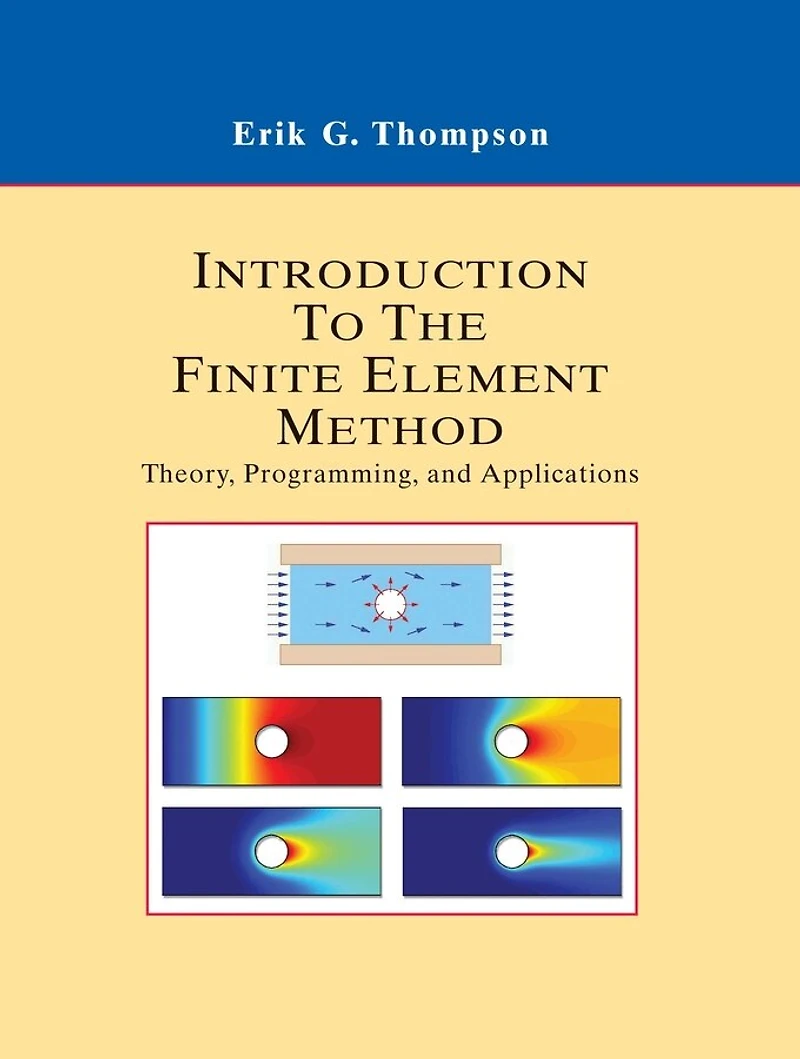
Introduction to the Finite Element Method: Theory, Programming and Applications
Coles
Loading Inventory...
Introduction to the Finite Element Method: Theory, Programming and Applications in Ottawa, ON
Current price: $325.95

Introduction to the Finite Element Method: Theory, Programming and Applications in Ottawa, ON
Current price: $325.95
Loading Inventory...
Size: Boxed Set
*Product information may vary - to confirm product availability, pricing, shipping and return information please contact Coles
Written for students with any engineering or applied science background, Erik Thompson's new text presents the theory, applications, and programming skills needed to understand the finite element method and use it to solve problems in engineering analysis and design. Offering concise, highly practical coverage, this introductory text provides complete finite element codes that can be run on the student version of MATLAB or easily converted to other languages. This text gives students the opportunity to: Master the basic theory: The text promotes an understanding and appreciation of the theoretical basis of finite element approximations by building on concepts that are intuitive to the students. Throughout, the text uses matrix notation to help students visualize the finite element matrices. Study problems reinforce basic theory. Experiment with the code: Numerical experiments show how to test programs for possible errors, experiment with boundary conditions, and study accuracy and stability. Code development exercises suggest ways to modify the codes to create additional capabilities. All codes are available on the book's web page along with sample data files for testing them. Each code can be run immediately using only the student version of MATLAB. Because each code is written using explicit programming, they also serve as pseudo-codes that can be used to develop programs in any computer language. Gain hands-on experience: Projects, representing a wide variety of engineering disciplines, enable students to conduct analyses of fairly complex problems. Many of these projects encourage investigations of new techniques for using the finite element method.
Written for students with any engineering or applied science background, Erik Thompson's new text presents the theory, applications, and programming skills needed to understand the finite element method and use it to solve problems in engineering analysis and design. Offering concise, highly practical coverage, this introductory text provides complete finite element codes that can be run on the student version of MATLAB or easily converted to other languages. This text gives students the opportunity to: Master the basic theory: The text promotes an understanding and appreciation of the theoretical basis of finite element approximations by building on concepts that are intuitive to the students. Throughout, the text uses matrix notation to help students visualize the finite element matrices. Study problems reinforce basic theory. Experiment with the code: Numerical experiments show how to test programs for possible errors, experiment with boundary conditions, and study accuracy and stability. Code development exercises suggest ways to modify the codes to create additional capabilities. All codes are available on the book's web page along with sample data files for testing them. Each code can be run immediately using only the student version of MATLAB. Because each code is written using explicit programming, they also serve as pseudo-codes that can be used to develop programs in any computer language. Gain hands-on experience: Projects, representing a wide variety of engineering disciplines, enable students to conduct analyses of fairly complex problems. Many of these projects encourage investigations of new techniques for using the finite element method.
You May Also Like








More About Coles at Bayshore Shopping Centre
Coles is renowned for its outstanding customer service and great selection of books. Along with the vast array of magazines, stationary, audio-books, children's literature, fiction, non-fiction and reference books, you can find accessories to make your reading experience more pleasurable. We can recommend the very best in reading today. We will help you search our titles for exactly what you need, and if we do not have it in stock, we will order it for you.
100 Bayshore Dr, Nepean, ON K2B 8C1, Canada
Find Coles at Bayshore Shopping Centre in Ottawa, ON
Visit Coles at Bayshore Shopping Centre in Ottawa, ON