

Give the Gift of Choice!
Too many options? Treat your friends and family to their favourite stores with a Bayshore Shopping Centre gift card, redeemable at participating retailers throughout the centre. Click below to purchase yours today!Purchase HereHome
Investment Volume 3 by Dale W. Jorgenson, Paperback | Indigo Chapters
Coles
Loading Inventory...
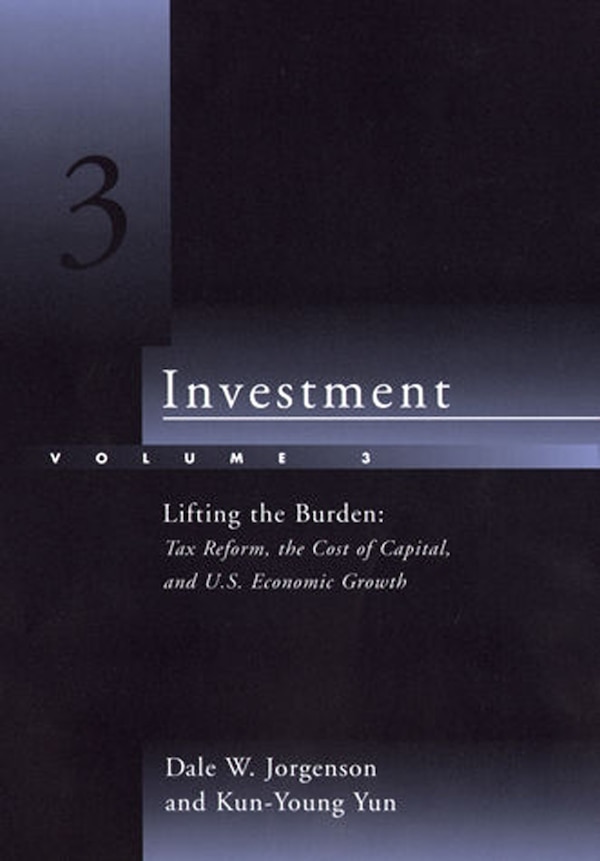
Investment Volume 3 by Dale W. Jorgenson, Paperback | Indigo Chapters in Ottawa, ON
By Dale W. Jorgenson
Current price: $54.00

By Dale W. Jorgenson
Investment Volume 3 by Dale W. Jorgenson, Paperback | Indigo Chapters in Ottawa, ON
Current price: $54.00
Loading Inventory...
Size: 1 x 9 x 0.8125
*Product information may vary - to confirm product availability, pricing, shipping and return information please contact Coles
A presentation of the cost-of-capital approach for analyzing the economic impact of tax policy. This book presents a comprehensive treatment of the cost-of-capital approach for analyzing the economic impact of tax policy. This approach has provided an intellectual impetus for reforms of capital income taxation in the United States and around the world. The cost of capital and the marginal effective tax rate are combined with estimates of substitution possibilities by businesses and households in analyzing tax and spending programs. This makes it possible to evaluate tax reforms and changes in government spending. Studies of the economic impact of tax policies have taken two forms. First, the cost of capital has been incorporated into investment functions in macroeconomic models, which are used to model the short-run responses to tax policy changes. Second, the cost-of-capital approach has been integrated into applied general-equilibrium models used in evaluating the long-run economic effects of tax reforms. The cost-of-capital approach suggests two avenues for tax reform. One would retain the income tax base of the existing U. S. tax system, but would equalize tax burdens on all forms of assets as well as average and marginal tax rates on labor income. The other would substitute consumption for income as a tax base, while equating average and marginal tax rates on labor income. | Investment Volume 3 by Dale W. Jorgenson, Paperback | Indigo Chapters
A presentation of the cost-of-capital approach for analyzing the economic impact of tax policy. This book presents a comprehensive treatment of the cost-of-capital approach for analyzing the economic impact of tax policy. This approach has provided an intellectual impetus for reforms of capital income taxation in the United States and around the world. The cost of capital and the marginal effective tax rate are combined with estimates of substitution possibilities by businesses and households in analyzing tax and spending programs. This makes it possible to evaluate tax reforms and changes in government spending. Studies of the economic impact of tax policies have taken two forms. First, the cost of capital has been incorporated into investment functions in macroeconomic models, which are used to model the short-run responses to tax policy changes. Second, the cost-of-capital approach has been integrated into applied general-equilibrium models used in evaluating the long-run economic effects of tax reforms. The cost-of-capital approach suggests two avenues for tax reform. One would retain the income tax base of the existing U. S. tax system, but would equalize tax burdens on all forms of assets as well as average and marginal tax rates on labor income. The other would substitute consumption for income as a tax base, while equating average and marginal tax rates on labor income. | Investment Volume 3 by Dale W. Jorgenson, Paperback | Indigo Chapters
You May Also Like
















More About Coles at Bayshore Shopping Centre
Coles is renowned for its outstanding customer service and great selection of books. Along with the vast array of magazines, stationary, audio-books, children's literature, fiction, non-fiction and reference books, you can find accessories to make your reading experience more pleasurable. We can recommend the very best in reading today. We will help you search our titles for exactly what you need, and if we do not have it in stock, we will order it for you.
100 Bayshore Dr, Nepean, ON K2B 8C1, Canada
Find Coles at Bayshore Shopping Centre in Ottawa, ON
Visit Coles at Bayshore Shopping Centre in Ottawa, ON