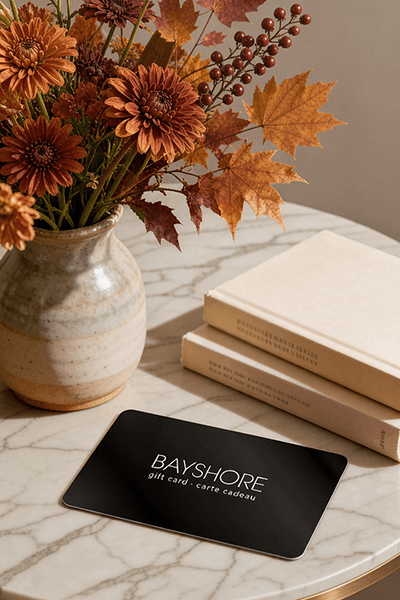
Too many options? Treat your friends and family to their favourite stores with a Bayshore Shopping Centre gift card, redeemable at participating retailers throughout the centre. Click below to purchase yours today!Purchase Here
Coles Islam and Postcolonial Discourse: Purity Hybridity at Bayshore Shopping Centre in Ottawa, ON
*Product information may vary - to confirm product availability, pricing, shipping and return information please contact Coles
Largely, though not exclusively, as a legacy of the 2001 attack on the World Trade Center, Islamic faith has become synonymous in many corners of the media and academia with violence, which many believe to be its primary mode of expression. The absence of a sophisticated recognition of the wide range of Islamic subjectivities within contemporary culture has created a void in which misinterpretations and hostilities thrive. Responding to the growing importance of religion, specifically Islam, as a cultural signifier in the formation of a postcolonial self, this multidisciplinary collection is organized around contested terms such as secularism, Islamopolitics, female identity, and Islamophobia. The overarching goal of the contributors is to facilitate a deeper understanding of the full range of experiences within Islam as well as the figure of the Muslim, thus enabling a new set of questions about religion's role in shaping postcolonial identity.
Largely, though not exclusively, as a legacy of the 2001 attack on the World Trade Center, Islamic faith has become synonymous in many corners of the media and academia with violence, which many believe to be its primary mode of expression. The absence of a sophisticated recognition of the wide range of Islamic subjectivities within contemporary culture has created a void in which misinterpretations and hostilities thrive. Responding to the growing importance of religion, specifically Islam, as a cultural signifier in the formation of a postcolonial self, this multidisciplinary collection is organized around contested terms such as secularism, Islamopolitics, female identity, and Islamophobia. The overarching goal of the contributors is to facilitate a deeper understanding of the full range of experiences within Islam as well as the figure of the Muslim, thus enabling a new set of questions about religion's role in shaping postcolonial identity.
Coles is renowned for its outstanding customer service and great selection of books. Along with the vast array of magazines, stationary, audio-books, children's literature, fiction, non-fiction and reference books, you can find accessories to make your reading experience more pleasurable. We can recommend the very best in reading today. We will help you search our titles for exactly what you need, and if we do not have it in stock, we will order it for you.