

Give the Gift of Choice!
Too many options? Treat your friends and family to their favourite stores with a Bayshore Shopping Centre gift card, redeemable at participating retailers throughout the centre. Click below to purchase yours today!Purchase HereHome
Knowing our World: An Artificial Intelligence Perspective
Coles
Loading Inventory...
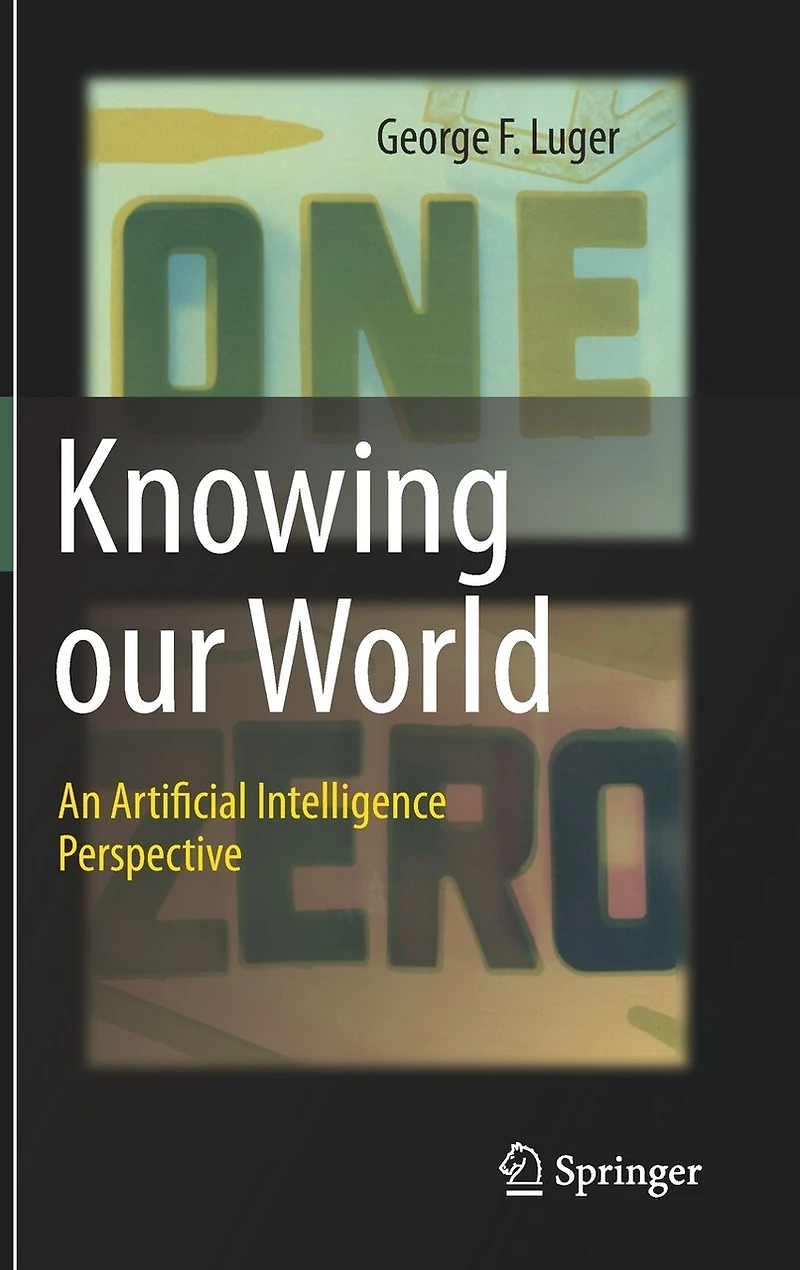
Knowing our World: An Artificial Intelligence Perspective in Ottawa, ON
Current price: $262.95

Knowing our World: An Artificial Intelligence Perspective in Ottawa, ON
Current price: $262.95
Loading Inventory...
Size: Hardcover
*Product information may vary - to confirm product availability, pricing, shipping and return information please contact Coles
Knowing our World: An Artificial Intelligence Perspective considers the methodologies of science, computation, and artificial intelligence to explore how we humans come to understand and operate in our world. While humankind's history of articulating ideas and building machines that can replicate the activity of the human brain is impressive, Professor Luger focuses on understanding the skills that enable these goals. Based on insights afforded by the challenges of AI design and program building, Knowing our World proposes a foundation for the science of epistemology. Taking an interdisciplinary perspective, the book demonstrates that AI technology offers many representational structures and reasoning strategies that support clarification of these epistemic foundations. This monograph is organized in three Parts; the first three chapters introduce the reader to the foundations of computing and the philosophical background that supportsthe AI tradition. These three chapters describe the origins of AI, programming as iterative refinement, and the representations and very high-level language tools that support AI application building. The book's second Part introduces three of the four paradigms that represent research and development in AI over the past seventy years: the symbol-based, connectionist, and complex adaptive systems. Luger presents several introductory programs in each area and demonstrates their use. The final three chapters present the primary theme of the book: bringing together the rationalist, empiricist, and pragmatist philosophical traditions in the context of a Bayesian world view. Luger describes Bayes' theorem with a simple proof to demonstrate epistemic insights. He describes research in model building and refinement and several philosophical issues that constrain the future growth of AI. The book concludes with his proposal of the epistemic stance of an active, pragmatic, model-revising realism .
Knowing our World: An Artificial Intelligence Perspective considers the methodologies of science, computation, and artificial intelligence to explore how we humans come to understand and operate in our world. While humankind's history of articulating ideas and building machines that can replicate the activity of the human brain is impressive, Professor Luger focuses on understanding the skills that enable these goals. Based on insights afforded by the challenges of AI design and program building, Knowing our World proposes a foundation for the science of epistemology. Taking an interdisciplinary perspective, the book demonstrates that AI technology offers many representational structures and reasoning strategies that support clarification of these epistemic foundations. This monograph is organized in three Parts; the first three chapters introduce the reader to the foundations of computing and the philosophical background that supportsthe AI tradition. These three chapters describe the origins of AI, programming as iterative refinement, and the representations and very high-level language tools that support AI application building. The book's second Part introduces three of the four paradigms that represent research and development in AI over the past seventy years: the symbol-based, connectionist, and complex adaptive systems. Luger presents several introductory programs in each area and demonstrates their use. The final three chapters present the primary theme of the book: bringing together the rationalist, empiricist, and pragmatist philosophical traditions in the context of a Bayesian world view. Luger describes Bayes' theorem with a simple proof to demonstrate epistemic insights. He describes research in model building and refinement and several philosophical issues that constrain the future growth of AI. The book concludes with his proposal of the epistemic stance of an active, pragmatic, model-revising realism .
You May Also Like












More About Coles at Bayshore Shopping Centre
Coles is renowned for its outstanding customer service and great selection of books. Along with the vast array of magazines, stationary, audio-books, children's literature, fiction, non-fiction and reference books, you can find accessories to make your reading experience more pleasurable. We can recommend the very best in reading today. We will help you search our titles for exactly what you need, and if we do not have it in stock, we will order it for you.
100 Bayshore Dr, Nepean, ON K2B 8C1, Canada
Find Coles at Bayshore Shopping Centre in Ottawa, ON
Visit Coles at Bayshore Shopping Centre in Ottawa, ON