

Give the Gift of Choice!
Too many options? Treat your friends and family to their favourite stores with a Bayshore Shopping Centre gift card, redeemable at participating retailers throughout the centre. Click below to purchase yours today!Purchase HereHome
Labyrinth of Fortune
Coles
Loading Inventory...
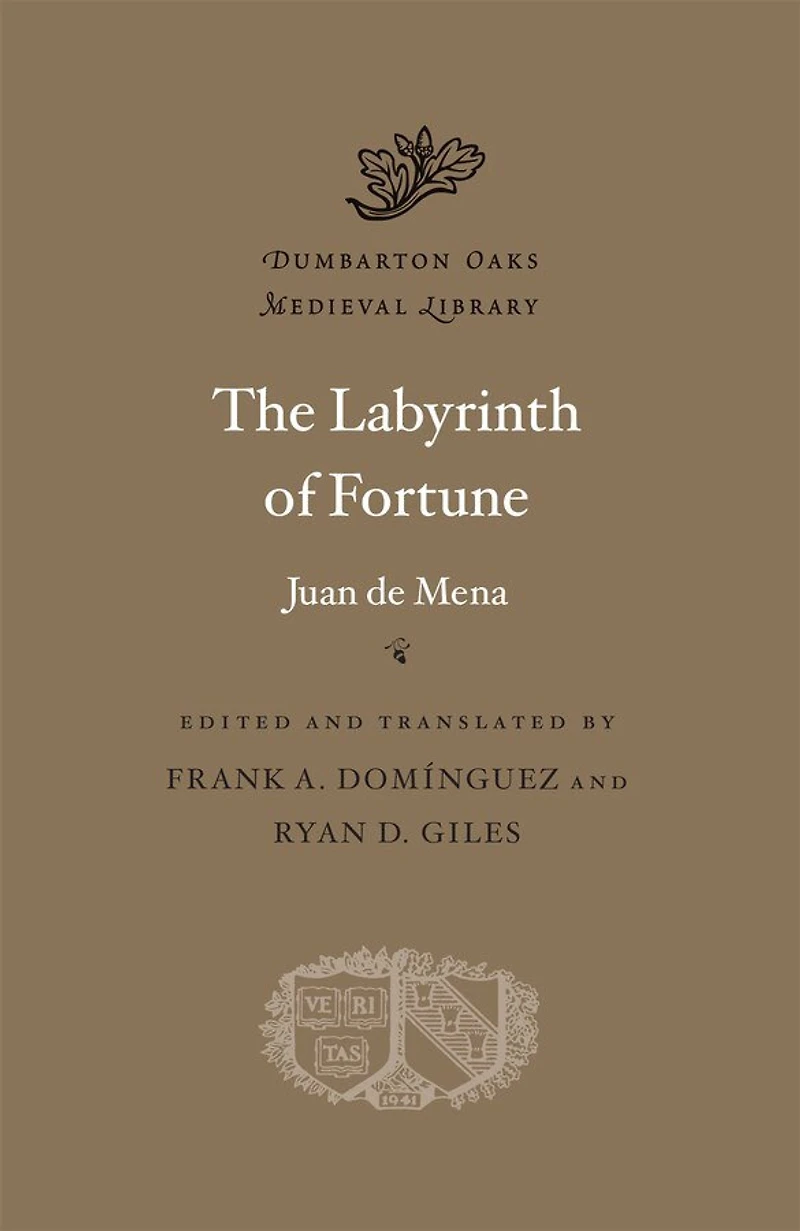
Labyrinth of Fortune in Ottawa, ON
Current price: $47.00

Labyrinth of Fortune in Ottawa, ON
Current price: $47.00
Loading Inventory...
Size: Hardcover
*Product information may vary - to confirm product availability, pricing, shipping and return information please contact Coles
A classic, Dantesque political epic from medieval Spain that inspired Cervantes and Góngora, in its first English translation.
Why do the injustices of the past still afflict the present? With this question, Juan de Mena is transported to heaven by a vision in the Dantesque The Labyrinth of Fortune. Composed in 1444 by Mena, a royal chronicler and Latin secretary in the court of Juan II of Castile, El Laberinto de Fortuna became the most important political allegory of medieval Spain. Allegorizing the past, present, and unknowable future through the figure of Providence, the poem reflects on the contentious kingship of Juan II and frames the Reconquest of Moorish territories—the foundational mythos of the emerging nation—as a virtuous, sacred task that would restore justice and the moral order because it fulfills a destiny ordained by God. This is the first English translation of a masterpiece that enriched the Spanish language with a density of learned allusions and a new Latinate humanistic style that deeply influenced subsequent writers such as Miguel Cervantes and Luis de Góngora.
A classic, Dantesque political epic from medieval Spain that inspired Cervantes and Góngora, in its first English translation.
Why do the injustices of the past still afflict the present? With this question, Juan de Mena is transported to heaven by a vision in the Dantesque The Labyrinth of Fortune. Composed in 1444 by Mena, a royal chronicler and Latin secretary in the court of Juan II of Castile, El Laberinto de Fortuna became the most important political allegory of medieval Spain. Allegorizing the past, present, and unknowable future through the figure of Providence, the poem reflects on the contentious kingship of Juan II and frames the Reconquest of Moorish territories—the foundational mythos of the emerging nation—as a virtuous, sacred task that would restore justice and the moral order because it fulfills a destiny ordained by God. This is the first English translation of a masterpiece that enriched the Spanish language with a density of learned allusions and a new Latinate humanistic style that deeply influenced subsequent writers such as Miguel Cervantes and Luis de Góngora.
You May Also Like













More About Coles at Bayshore Shopping Centre
Coles is renowned for its outstanding customer service and great selection of books. Along with the vast array of magazines, stationary, audio-books, children's literature, fiction, non-fiction and reference books, you can find accessories to make your reading experience more pleasurable. We can recommend the very best in reading today. We will help you search our titles for exactly what you need, and if we do not have it in stock, we will order it for you.
100 Bayshore Dr, Nepean, ON K2B 8C1, Canada
Find Coles at Bayshore Shopping Centre in Ottawa, ON
Visit Coles at Bayshore Shopping Centre in Ottawa, ON