

Give the Gift of Choice!
Too many options? Treat your friends and family to their favourite stores with a Bayshore Shopping Centre gift card, redeemable at participating retailers throughout the centre. Click below to purchase yours today!Purchase HereHome
Learning to Teach the Digital Age: New Materialities and Maker Paradigms Schools
Coles
Loading Inventory...
Learning to Teach the Digital Age: New Materialities and Maker Paradigms Schools in Ottawa, ON
Current price: $155.75

Learning to Teach the Digital Age: New Materialities and Maker Paradigms Schools in Ottawa, ON
Current price: $155.75
Loading Inventory...
Size: Hardcover
*Product information may vary - to confirm product availability, pricing, shipping and return information please contact Coles
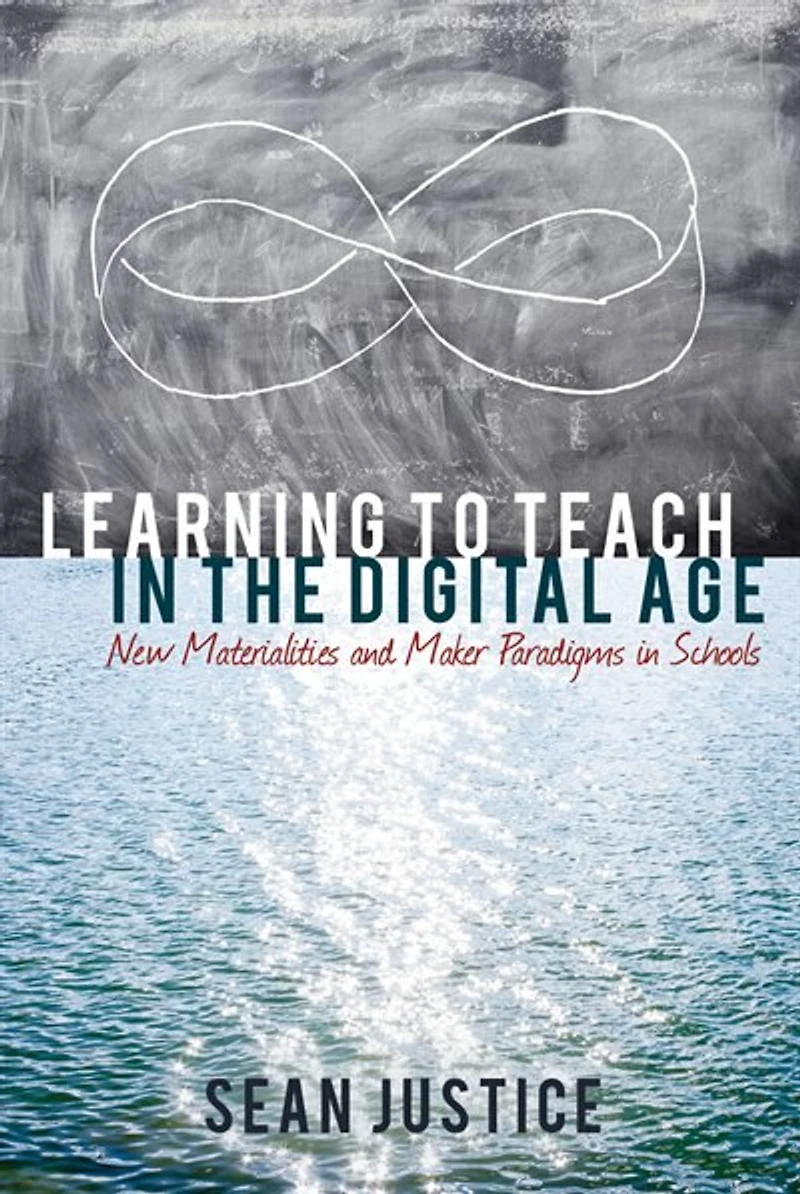
Learning to Teach in the Digital Age tells the story of a group of K–12 teachers as they began to connect with digital making and learning pedagogies. Guiding questions at the heart of this qualitative case study asked how teaching practices engaged with and responded to the maker movement and digital making and learning tools and materials. Over the course of one school year, Sean Justice attended to the ebb and flow of teaching and learning at an independent K–12 girls school the northeastern United States. Teachers and administrators from across grade levels and academic domains participated in interviews and casual conversations, and opened their classrooms to ad hoc observations. In conducting the study, Justice interwove a sociomaterial disposition with new materialism, posthumanism, and new media theory. Methods were inspired by narrative inquiry and actor-network theory. Findings suggested that digital making and learning pedagogies were stabilizing at the school, but not in a linear way. Further, Justice suggests that the teaching practices that most engaged the ethos of twenty-first-century learning enacted a kind of learning we hear about from artists, writers, scientists, and mathematicians when they talk about what innovation feels like, leading to the proposition that a different kind of language is needed to describe the effects of digital materialities on teaching practice.
Learning to Teach in the Digital Age tells the story of a group of K–12 teachers as they began to connect with digital making and learning pedagogies. Guiding questions at the heart of this qualitative case study asked how teaching practices engaged with and responded to the maker movement and digital making and learning tools and materials. Over the course of one school year, Sean Justice attended to the ebb and flow of teaching and learning at an independent K–12 girls school the northeastern United States. Teachers and administrators from across grade levels and academic domains participated in interviews and casual conversations, and opened their classrooms to ad hoc observations. In conducting the study, Justice interwove a sociomaterial disposition with new materialism, posthumanism, and new media theory. Methods were inspired by narrative inquiry and actor-network theory. Findings suggested that digital making and learning pedagogies were stabilizing at the school, but not in a linear way. Further, Justice suggests that the teaching practices that most engaged the ethos of twenty-first-century learning enacted a kind of learning we hear about from artists, writers, scientists, and mathematicians when they talk about what innovation feels like, leading to the proposition that a different kind of language is needed to describe the effects of digital materialities on teaching practice.
You May Also Like










More About Coles at Bayshore Shopping Centre
Coles is renowned for its outstanding customer service and great selection of books. Along with the vast array of magazines, stationary, audio-books, children's literature, fiction, non-fiction and reference books, you can find accessories to make your reading experience more pleasurable. We can recommend the very best in reading today. We will help you search our titles for exactly what you need, and if we do not have it in stock, we will order it for you.
100 Bayshore Dr, Nepean, ON K2B 8C1, Canada
Find Coles at Bayshore Shopping Centre in Ottawa, ON
Visit Coles at Bayshore Shopping Centre in Ottawa, ON