

Give the Gift of Choice!
Too many options? Treat your friends and family to their favourite stores with a Bayshore Shopping Centre gift card, redeemable at participating retailers throughout the centre. Click below to purchase yours today!Purchase HereHome
Leningrad: The Advance Of Panzer Group 4, 1941
Coles
Loading Inventory...
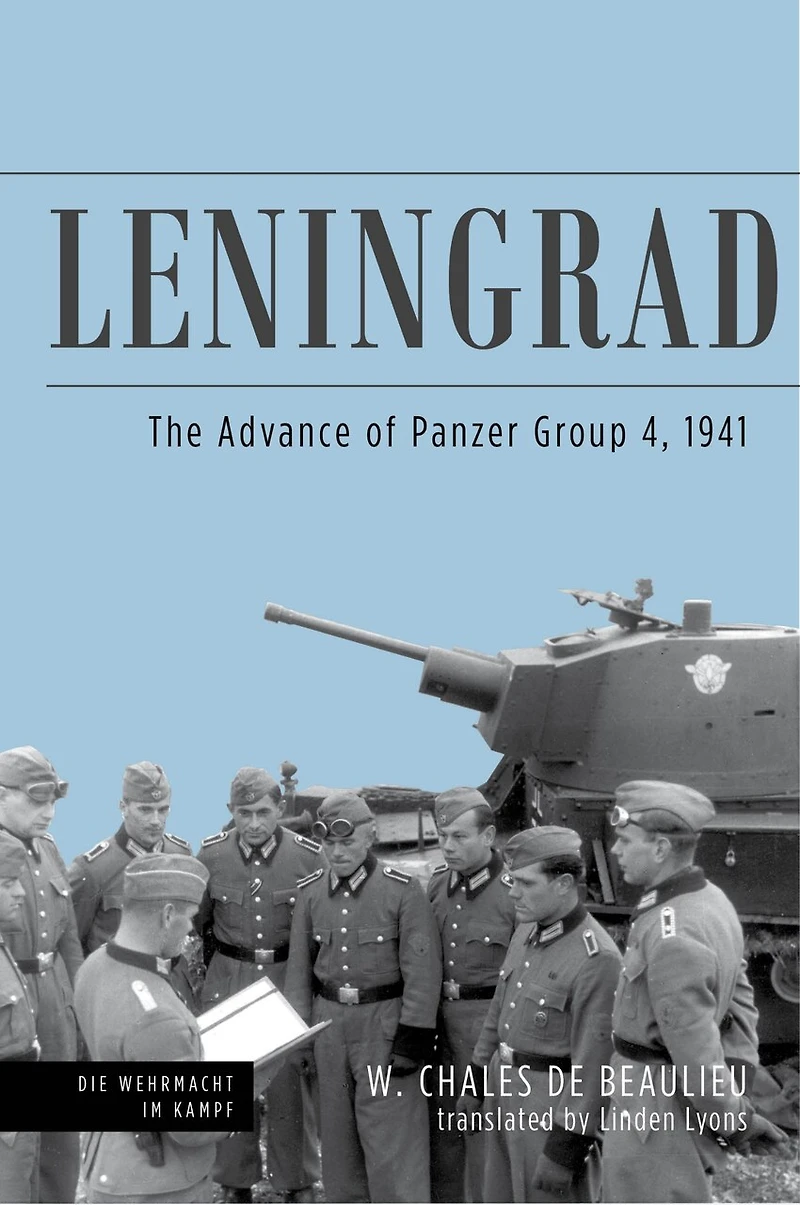
Leningrad: The Advance Of Panzer Group 4, 1941 in Ottawa, ON
Current price: $51.50

Leningrad: The Advance Of Panzer Group 4, 1941 in Ottawa, ON
Current price: $51.50
Loading Inventory...
Size: Hardcover
*Product information may vary - to confirm product availability, pricing, shipping and return information please contact Coles
Narrative of the advance of Panzer Group 4 towards Leningrad In 1941, available in English for the first time. At the launch of Operation Barbarossa, Army Group North was tasked with the operational objective of Leningrad-what lay between it and the city was 800 kilometers of the Baltic states, and 18-20 infantry divisions, two cavalry divisions, and eight or nine mechanized brigades of the Red Army. It was apparent that in order to succeed they would have to race through to the western Dvina and establish a bridgehead before the Russians exploited this natural feature to organize a defensive front. Panzer Group 4, which included LVI Panzer Corps and XLI Panzer Corps, was to lead the way. By the end of the first day the group had pushed 70 kilometers into enemy territory. Red counterattacks on their unprotected flanks slowed them down, resulting in the tank battle of Raseiniai, but the group managed to capture Dünaburg on the Western Dvina on June 26, with a bridgehead established shortly thereafter. The group then pushed northeast through Latvia to the Stalin Line. In mid-July Hoepner was preparing to push the last 100 kilometers to Leningrad, however Leeb, commander of the army group, had other plans for the group and the advance did not continue for several more weeks. This account of Panzer Group 4's advance was written by Walter Charles de Beaulieu, chief of staff of Panzer Group 4. Published in German in 1961, this is the first English translation. Beaulieu not only gives a detailed account of the Panzer Group's advance, but also offers an assessment of the fighting, an examination of how Panzer Group 4's operations were affected by the limitations imposed on Army Group North, and the lessons that can be learnt from its experiences in the Baltic States. He concludes with a discussion of whether Leningrad could ever have been taken.
Narrative of the advance of Panzer Group 4 towards Leningrad In 1941, available in English for the first time. At the launch of Operation Barbarossa, Army Group North was tasked with the operational objective of Leningrad-what lay between it and the city was 800 kilometers of the Baltic states, and 18-20 infantry divisions, two cavalry divisions, and eight or nine mechanized brigades of the Red Army. It was apparent that in order to succeed they would have to race through to the western Dvina and establish a bridgehead before the Russians exploited this natural feature to organize a defensive front. Panzer Group 4, which included LVI Panzer Corps and XLI Panzer Corps, was to lead the way. By the end of the first day the group had pushed 70 kilometers into enemy territory. Red counterattacks on their unprotected flanks slowed them down, resulting in the tank battle of Raseiniai, but the group managed to capture Dünaburg on the Western Dvina on June 26, with a bridgehead established shortly thereafter. The group then pushed northeast through Latvia to the Stalin Line. In mid-July Hoepner was preparing to push the last 100 kilometers to Leningrad, however Leeb, commander of the army group, had other plans for the group and the advance did not continue for several more weeks. This account of Panzer Group 4's advance was written by Walter Charles de Beaulieu, chief of staff of Panzer Group 4. Published in German in 1961, this is the first English translation. Beaulieu not only gives a detailed account of the Panzer Group's advance, but also offers an assessment of the fighting, an examination of how Panzer Group 4's operations were affected by the limitations imposed on Army Group North, and the lessons that can be learnt from its experiences in the Baltic States. He concludes with a discussion of whether Leningrad could ever have been taken.
You May Also Like











More About Coles at Bayshore Shopping Centre
Coles is renowned for its outstanding customer service and great selection of books. Along with the vast array of magazines, stationary, audio-books, children's literature, fiction, non-fiction and reference books, you can find accessories to make your reading experience more pleasurable. We can recommend the very best in reading today. We will help you search our titles for exactly what you need, and if we do not have it in stock, we will order it for you.
100 Bayshore Dr, Nepean, ON K2B 8C1, Canada
Find Coles at Bayshore Shopping Centre in Ottawa, ON
Visit Coles at Bayshore Shopping Centre in Ottawa, ON