

Give the Gift of Choice!
Too many options? Treat your friends and family to their favourite stores with a Bayshore Shopping Centre gift card, redeemable at participating retailers throughout the centre. Click below to purchase yours today!Purchase HereHome
Limonov: the Outrageous Adventures of Radical Soviet Poet Who Became a Bum New York, Sensation France, and Political Antihero Russia
Coles
Loading Inventory...
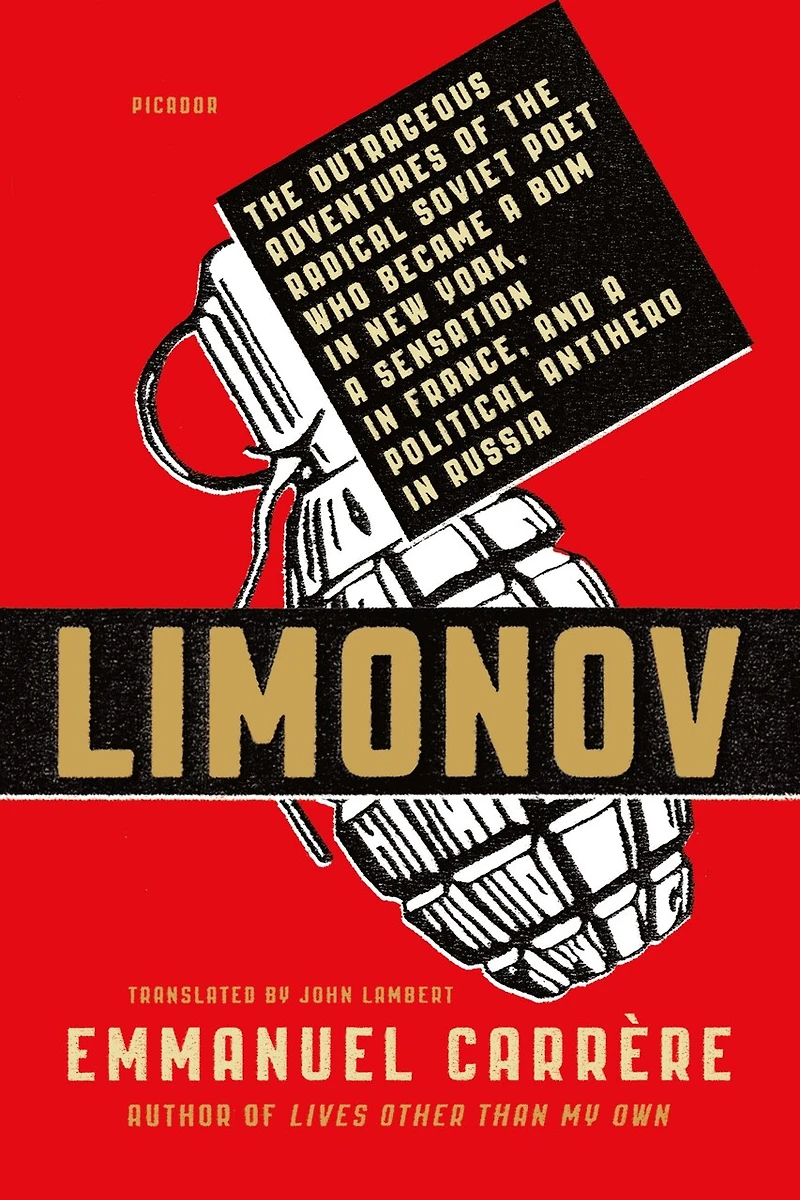
Limonov: the Outrageous Adventures of Radical Soviet Poet Who Became a Bum New York, Sensation France, and Political Antihero Russia in Ottawa, ON
Current price: $35.99

Limonov: the Outrageous Adventures of Radical Soviet Poet Who Became a Bum New York, Sensation France, and Political Antihero Russia in Ottawa, ON
Current price: $35.99
Loading Inventory...
Size: Paperback (2015)
*Product information may vary - to confirm product availability, pricing, shipping and return information please contact Coles
Named a Best Book of the Year by The New York Times and The Guardian
A thrilling page-turner that also happens to be the biography of one of Russia’s most controversial figures.
This is how Emmanuel Carrère, the magnetic journalist, novelist, filmmaker, and chameleon, describes his subject: “Limonov is not a fictional character. There. I know him. He has been a young punk in Ukraine, the idol of the Soviet underground; a bum, then a multimillionaire’s butler in Manhattan; a fashionable writer in Paris; a lost soldier in the Balkans; and now, in the fantastic shambles of postcommunism, the elderly but charismatic leader of a party of young desperadoes. He sees himself as a hero; you might call him a scumbag: I suspend my judgment on the matter. It’s a dangerous life, an ambiguous life: a real adventure novel. It is also, I believe, a life that says something. Not just about him, Limonov, not just about Russia, but about all our history since the end of the Second World War.”
So Eduard Limonov isn’t fictional—but he might as well be. This pseudobiography isn’t a novel, but it reads like one: from Limonov’s grim childhood to his desperate, comical, ultimately successful attempts to gain the respect of Russia’s literary intellectual elite; to his immigration to New York, then to Paris; to his return to the motherland. Limonov could be read as a charming picaresque. But it could also be read as a troubling counternarrative of the second half of the twentieth century, one that reveals a violence, an anarchy, a brutality, that the stories we tell ourselves about progress tend to conceal.
Named a Best Book of the Year by The New York Times and The Guardian
A thrilling page-turner that also happens to be the biography of one of Russia’s most controversial figures.
This is how Emmanuel Carrère, the magnetic journalist, novelist, filmmaker, and chameleon, describes his subject: “Limonov is not a fictional character. There. I know him. He has been a young punk in Ukraine, the idol of the Soviet underground; a bum, then a multimillionaire’s butler in Manhattan; a fashionable writer in Paris; a lost soldier in the Balkans; and now, in the fantastic shambles of postcommunism, the elderly but charismatic leader of a party of young desperadoes. He sees himself as a hero; you might call him a scumbag: I suspend my judgment on the matter. It’s a dangerous life, an ambiguous life: a real adventure novel. It is also, I believe, a life that says something. Not just about him, Limonov, not just about Russia, but about all our history since the end of the Second World War.”
So Eduard Limonov isn’t fictional—but he might as well be. This pseudobiography isn’t a novel, but it reads like one: from Limonov’s grim childhood to his desperate, comical, ultimately successful attempts to gain the respect of Russia’s literary intellectual elite; to his immigration to New York, then to Paris; to his return to the motherland. Limonov could be read as a charming picaresque. But it could also be read as a troubling counternarrative of the second half of the twentieth century, one that reveals a violence, an anarchy, a brutality, that the stories we tell ourselves about progress tend to conceal.
You May Also Like












More About Coles at Bayshore Shopping Centre
Coles is renowned for its outstanding customer service and great selection of books. Along with the vast array of magazines, stationary, audio-books, children's literature, fiction, non-fiction and reference books, you can find accessories to make your reading experience more pleasurable. We can recommend the very best in reading today. We will help you search our titles for exactly what you need, and if we do not have it in stock, we will order it for you.
100 Bayshore Dr, Nepean, ON K2B 8C1, Canada
Find Coles at Bayshore Shopping Centre in Ottawa, ON
Visit Coles at Bayshore Shopping Centre in Ottawa, ON