

Give the Gift of Choice!
Too many options? Treat your friends and family to their favourite stores with a Bayshore Shopping Centre gift card, redeemable at participating retailers throughout the centre. Click below to purchase yours today!Purchase HereHome
Macroeconomics as Systems Theory: Transcending the Micro-Macro Dichotomy
Coles
Loading Inventory...
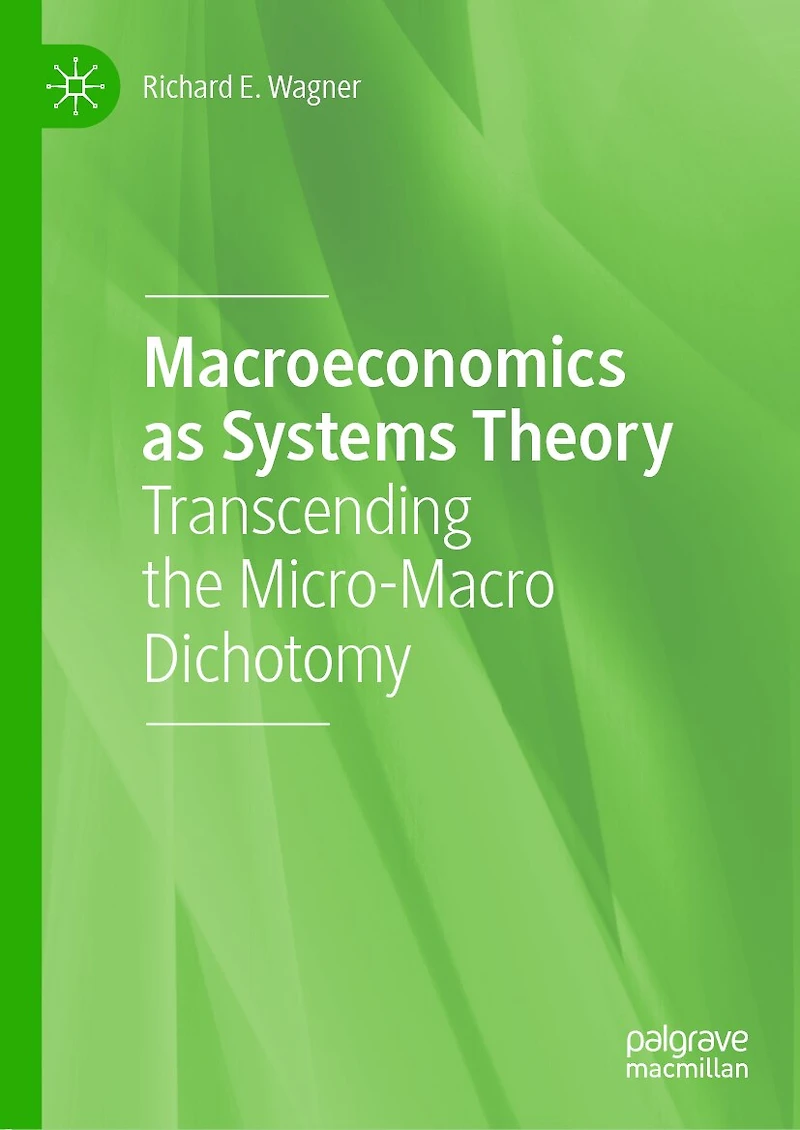
Macroeconomics as Systems Theory: Transcending the Micro-Macro Dichotomy in Ottawa, ON
Current price: $175.50

Macroeconomics as Systems Theory: Transcending the Micro-Macro Dichotomy in Ottawa, ON
Current price: $175.50
Loading Inventory...
Size: Hardcover
*Product information may vary - to confirm product availability, pricing, shipping and return information please contact Coles
This book examines macroeconomic theory from an analytical framework provided by theories of complex systems, in contrast to conventional theories founded on aggregation. The resulting difference in analytical perspectives is huge: the macro level of society is not pursued through aggregation over micro entities. To the contrary, the micro-macro relation is treated as one of parts-to-whole, and this relation is approached from within an ecological scheme of thought. A society is a complex ecology of plans. That ecology, however, is not reducible to a single plan. Conventional macro theory presents a national economy as a collection of such aggregate variables as output, employment, investment, and a price level, and seeks to develop theoretical relationships among those variables. In contrast, the social-theoretic approach to macro or social theory in this book treats the standard macro variables as having been shaped through social institutions, conventions, and processes that in turn are generated through interaction among economizing persons. The object denoted as macro is thus of a higher order of complexity than the object denoted as micro.
This book examines macroeconomic theory from an analytical framework provided by theories of complex systems, in contrast to conventional theories founded on aggregation. The resulting difference in analytical perspectives is huge: the macro level of society is not pursued through aggregation over micro entities. To the contrary, the micro-macro relation is treated as one of parts-to-whole, and this relation is approached from within an ecological scheme of thought. A society is a complex ecology of plans. That ecology, however, is not reducible to a single plan. Conventional macro theory presents a national economy as a collection of such aggregate variables as output, employment, investment, and a price level, and seeks to develop theoretical relationships among those variables. In contrast, the social-theoretic approach to macro or social theory in this book treats the standard macro variables as having been shaped through social institutions, conventions, and processes that in turn are generated through interaction among economizing persons. The object denoted as macro is thus of a higher order of complexity than the object denoted as micro.
You May Also Like














More About Coles at Bayshore Shopping Centre
Coles is renowned for its outstanding customer service and great selection of books. Along with the vast array of magazines, stationary, audio-books, children's literature, fiction, non-fiction and reference books, you can find accessories to make your reading experience more pleasurable. We can recommend the very best in reading today. We will help you search our titles for exactly what you need, and if we do not have it in stock, we will order it for you.
100 Bayshore Dr, Nepean, ON K2B 8C1, Canada
Find Coles at Bayshore Shopping Centre in Ottawa, ON
Visit Coles at Bayshore Shopping Centre in Ottawa, ON