

Give the Gift of Choice!
Too many options? Treat your friends and family to their favourite stores with a Bayshore Shopping Centre gift card, redeemable at participating retailers throughout the centre. Click below to purchase yours today!Purchase HereHome
Maîtresses d'autrefois: Femmes, art et idéologie
Coles
Loading Inventory...
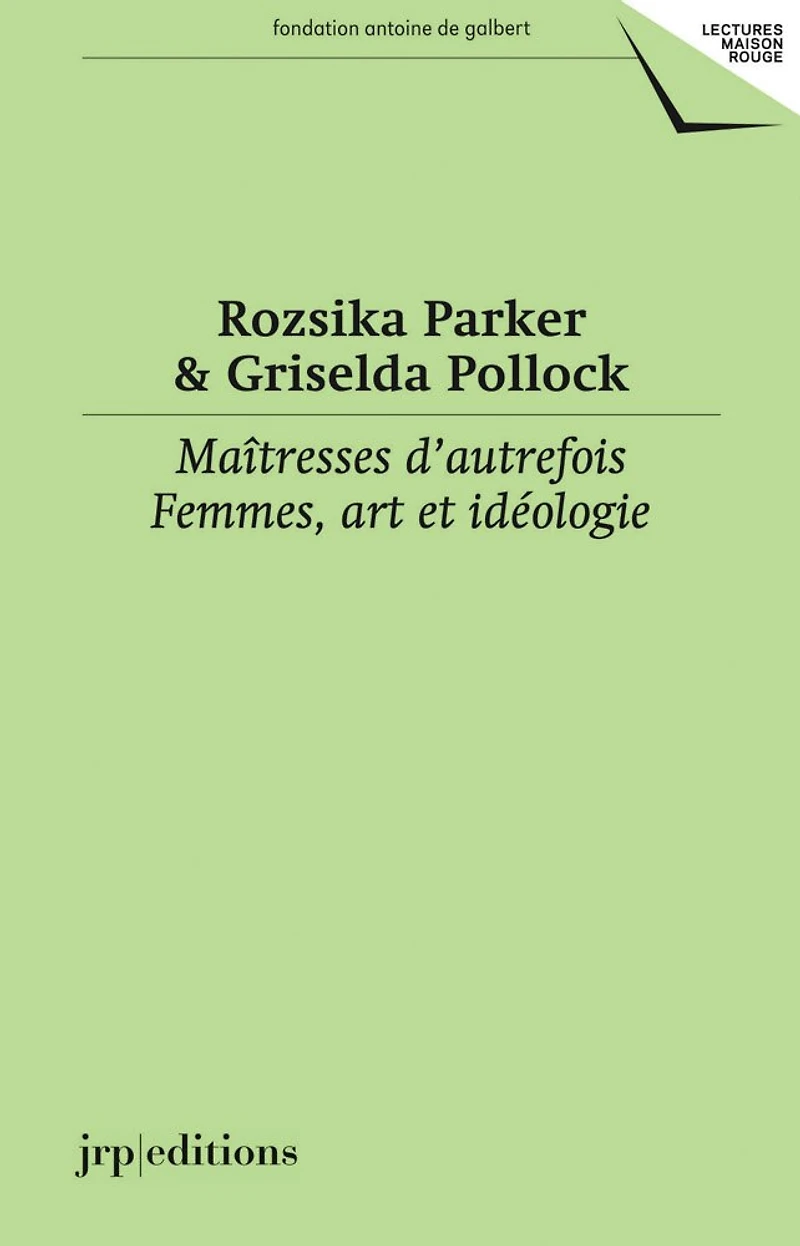
Maîtresses d'autrefois: Femmes, art et idéologie in Ottawa, ON
Current price: $35.00

Maîtresses d'autrefois: Femmes, art et idéologie in Ottawa, ON
Current price: $35.00
Loading Inventory...
Size: Paperback
*Product information may vary - to confirm product availability, pricing, shipping and return information please contact Coles
Originally published in English in 1981 as Old Mistresses. Women, Art, and Ideology and translated here into French for the first time under the title Maîtresses d’autrefois: Femmes, art et idéologie , this ninth volume of the Lectures maison rouge series is not a history of women’s art. Rather, this seminal book by Rozsika Parker and Griselda Pollock is far more radical and emancipatory and, indeed, still relevant today.
It combines in-depth case studies—from Sofonisba Anguissola, Élisabeth Vigée Le Brun and Berthe Morisot to Meret Oppenheim, Eva Hesse and Mary Kelly—with analyses of the structures of artistic production and dynamic developments on the oriented way in which the discipline “art history” has been forged, socially and symbolically. Spanning art history from Antiquity and the Middle Ages to modern art and the feminist practices of the 1970s, Parker and Pollock offer a salutary investigation to all those who not only want to add feminine names to art history, but also to profoundly modify its writing. The book is introduced by art historian and Geneva University Professor Giovanna Zapperi and features a recent foreword by Griselda Pollock.
Recipient of the Holberg Prize in 2020 in recognition of her outstanding contribution to research and her influence on thinking on gender, ideology, art and visual culture, Griselda Pollock (born 1949) is Emeritus Professor of Social and Critical Histories of Art at the University of Leeds.
Rozsika Parker (1945–2010) was a writer and critic in art history and psychoanalysis. In 1984, she published The Subversive Stitch: Embroidery and the Making of the Feminine , an important work on the intertwined histories of embroidery, gender ideologies and women’s resistance through creativity.
Originally published in English in 1981 as Old Mistresses. Women, Art, and Ideology and translated here into French for the first time under the title Maîtresses d’autrefois: Femmes, art et idéologie , this ninth volume of the Lectures maison rouge series is not a history of women’s art. Rather, this seminal book by Rozsika Parker and Griselda Pollock is far more radical and emancipatory and, indeed, still relevant today.
It combines in-depth case studies—from Sofonisba Anguissola, Élisabeth Vigée Le Brun and Berthe Morisot to Meret Oppenheim, Eva Hesse and Mary Kelly—with analyses of the structures of artistic production and dynamic developments on the oriented way in which the discipline “art history” has been forged, socially and symbolically. Spanning art history from Antiquity and the Middle Ages to modern art and the feminist practices of the 1970s, Parker and Pollock offer a salutary investigation to all those who not only want to add feminine names to art history, but also to profoundly modify its writing. The book is introduced by art historian and Geneva University Professor Giovanna Zapperi and features a recent foreword by Griselda Pollock.
Recipient of the Holberg Prize in 2020 in recognition of her outstanding contribution to research and her influence on thinking on gender, ideology, art and visual culture, Griselda Pollock (born 1949) is Emeritus Professor of Social and Critical Histories of Art at the University of Leeds.
Rozsika Parker (1945–2010) was a writer and critic in art history and psychoanalysis. In 1984, she published The Subversive Stitch: Embroidery and the Making of the Feminine , an important work on the intertwined histories of embroidery, gender ideologies and women’s resistance through creativity.
You May Also Like








More About Coles at Bayshore Shopping Centre
Coles is renowned for its outstanding customer service and great selection of books. Along with the vast array of magazines, stationary, audio-books, children's literature, fiction, non-fiction and reference books, you can find accessories to make your reading experience more pleasurable. We can recommend the very best in reading today. We will help you search our titles for exactly what you need, and if we do not have it in stock, we will order it for you.
100 Bayshore Dr, Nepean, ON K2B 8C1, Canada
Find Coles at Bayshore Shopping Centre in Ottawa, ON
Visit Coles at Bayshore Shopping Centre in Ottawa, ON