

Give the Gift of Choice!
Too many options? Treat your friends and family to their favourite stores with a Bayshore Shopping Centre gift card, redeemable at participating retailers throughout the centre. Click below to purchase yours today!Purchase HereHome
Making Koji by Fermentation with Aspergillus Oryzae and Applications: Simplest but Most Advanced Methods
Coles
Loading Inventory...
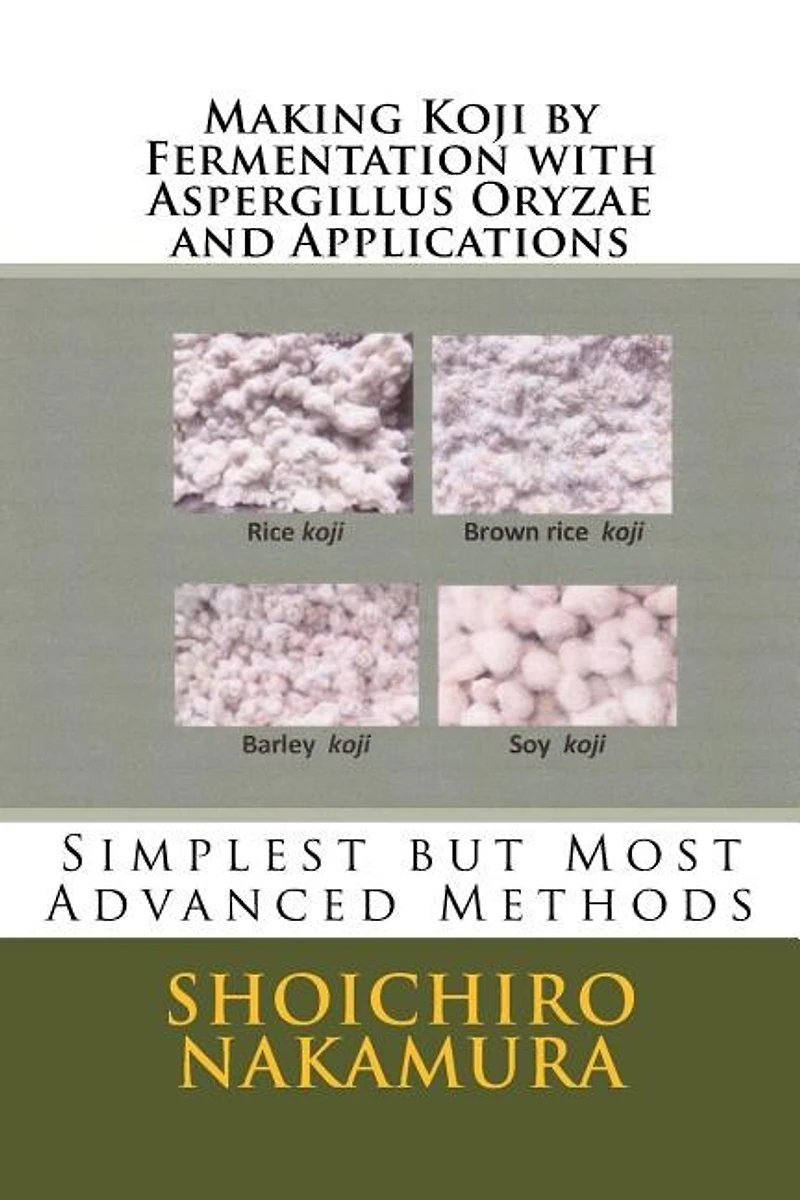
Making Koji by Fermentation with Aspergillus Oryzae and Applications: Simplest but Most Advanced Methods in Ottawa, ON
Current price: $17.50

Making Koji by Fermentation with Aspergillus Oryzae and Applications: Simplest but Most Advanced Methods in Ottawa, ON
Current price: $17.50
Loading Inventory...
Size: Paperback
*Product information may vary - to confirm product availability, pricing, shipping and return information please contact Coles
Rice koji is steamed rice in which a filamentous koji mold is grown. The theoretical name of the mold is Aspergillus Oryzae. The spores of the mold is called koji-kin or koji-spore. Koji has several magical enzymes. Koji is important not only in making sake but also to make soy sauce, miso, amazake (sweet rice drink), mirin (sweet sake), koji pickles, shio-koji (or salt-koji) and shoyu-koji. Indeed, koji is the foundation of Japanese foods. The important role of koji in making sake is that it converts starch of rice to glucose and maltose, which are normally called simply sugar. This conversion is by the work of amylase which is an enzyme secreted by koji. In making sake, the sugar is then converted to alcohol by yeast. In producing miso and soy sauce, amylase and another enzyme called peptidase in koji decompose protein. Rice is not the only grain that can grow Aspergillus Oryzae. Almost any grain can be fermented to make koji. For example, wheat, oat, buckwheat and soy beans can be used to make koji. However, rice koji is most widely used, and koji usually refers to rice koji. Koji grown on different grains are called like wheat koji, buckwheat koji or soy koji. Rice koji is available in the market but it is rather expensive, while if you make DIY the cost is about one tenth of the price you pay in the market. This book teaches the most advanced method of making koji that is far simpler than traditional ways taught in the internet yet the chance of failure is minimal.
Rice koji is steamed rice in which a filamentous koji mold is grown. The theoretical name of the mold is Aspergillus Oryzae. The spores of the mold is called koji-kin or koji-spore. Koji has several magical enzymes. Koji is important not only in making sake but also to make soy sauce, miso, amazake (sweet rice drink), mirin (sweet sake), koji pickles, shio-koji (or salt-koji) and shoyu-koji. Indeed, koji is the foundation of Japanese foods. The important role of koji in making sake is that it converts starch of rice to glucose and maltose, which are normally called simply sugar. This conversion is by the work of amylase which is an enzyme secreted by koji. In making sake, the sugar is then converted to alcohol by yeast. In producing miso and soy sauce, amylase and another enzyme called peptidase in koji decompose protein. Rice is not the only grain that can grow Aspergillus Oryzae. Almost any grain can be fermented to make koji. For example, wheat, oat, buckwheat and soy beans can be used to make koji. However, rice koji is most widely used, and koji usually refers to rice koji. Koji grown on different grains are called like wheat koji, buckwheat koji or soy koji. Rice koji is available in the market but it is rather expensive, while if you make DIY the cost is about one tenth of the price you pay in the market. This book teaches the most advanced method of making koji that is far simpler than traditional ways taught in the internet yet the chance of failure is minimal.
You May Also Like
















More About Coles at Bayshore Shopping Centre
Coles is renowned for its outstanding customer service and great selection of books. Along with the vast array of magazines, stationary, audio-books, children's literature, fiction, non-fiction and reference books, you can find accessories to make your reading experience more pleasurable. We can recommend the very best in reading today. We will help you search our titles for exactly what you need, and if we do not have it in stock, we will order it for you.
100 Bayshore Dr, Nepean, ON K2B 8C1, Canada
Find Coles at Bayshore Shopping Centre in Ottawa, ON
Visit Coles at Bayshore Shopping Centre in Ottawa, ON