

Give the Gift of Choice!
Too many options? Treat your friends and family to their favourite stores with a Bayshore Shopping Centre gift card, redeemable at participating retailers throughout the centre. Click below to purchase yours today!Purchase HereHome
Mark Twain's Joan of Arc: Political Wisdom, Divine Justice, and the Origins Modernity
Coles
Loading Inventory...
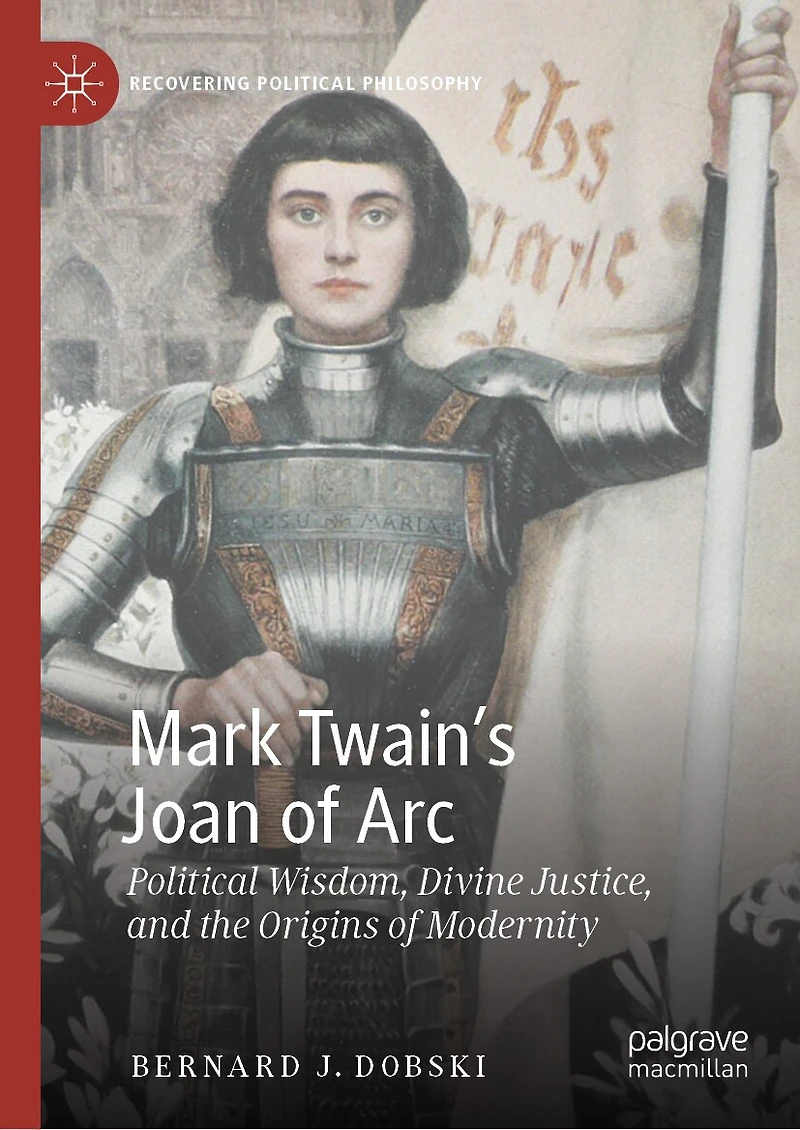
Mark Twain's Joan of Arc: Political Wisdom, Divine Justice, and the Origins Modernity in Ottawa, ON
Current price: $204.50

Mark Twain's Joan of Arc: Political Wisdom, Divine Justice, and the Origins Modernity in Ottawa, ON
Current price: $204.50
Loading Inventory...
Size: Hardcover
*Product information may vary - to confirm product availability, pricing, shipping and return information please contact Coles
This book is about the political wisdom embodied in Personal Recollections of Joan of Arc by Mark Twain, the self-declared best book by arguably America's greatest author. More precisely, this study illuminates Twain's political wisdom by examining his approach to the theological-political problem; it takes up Twain's handling of the question of whether a providential deity intervenes in human affairs so as to effectuate divine justice on earth and it does this through a commentary on his last complete novel. Through this investigation, Twain prompts his audience to explore the natural, conventional, or divine basis for justice in political life. Such a study is critical for understanding Twain's corpus, concerned as it is with the tension between material determinism and moral agency. Dobski argues that Twain's last novel prepares his readers to adopt a "new" understanding of man and his relationship to God, his country, and his fellow man.
This book is about the political wisdom embodied in Personal Recollections of Joan of Arc by Mark Twain, the self-declared best book by arguably America's greatest author. More precisely, this study illuminates Twain's political wisdom by examining his approach to the theological-political problem; it takes up Twain's handling of the question of whether a providential deity intervenes in human affairs so as to effectuate divine justice on earth and it does this through a commentary on his last complete novel. Through this investigation, Twain prompts his audience to explore the natural, conventional, or divine basis for justice in political life. Such a study is critical for understanding Twain's corpus, concerned as it is with the tension between material determinism and moral agency. Dobski argues that Twain's last novel prepares his readers to adopt a "new" understanding of man and his relationship to God, his country, and his fellow man.
You May Also Like













More About Coles at Bayshore Shopping Centre
Coles is renowned for its outstanding customer service and great selection of books. Along with the vast array of magazines, stationary, audio-books, children's literature, fiction, non-fiction and reference books, you can find accessories to make your reading experience more pleasurable. We can recommend the very best in reading today. We will help you search our titles for exactly what you need, and if we do not have it in stock, we will order it for you.
100 Bayshore Dr, Nepean, ON K2B 8C1, Canada
Find Coles at Bayshore Shopping Centre in Ottawa, ON
Visit Coles at Bayshore Shopping Centre in Ottawa, ON