

Give the Gift of Choice!
Too many options? Treat your friends and family to their favourite stores with a Bayshore Shopping Centre gift card, redeemable at participating retailers throughout the centre. Click below to purchase yours today!Purchase HereHome
Mathematics and the Medieval Ancestry of Physics
Coles
Loading Inventory...
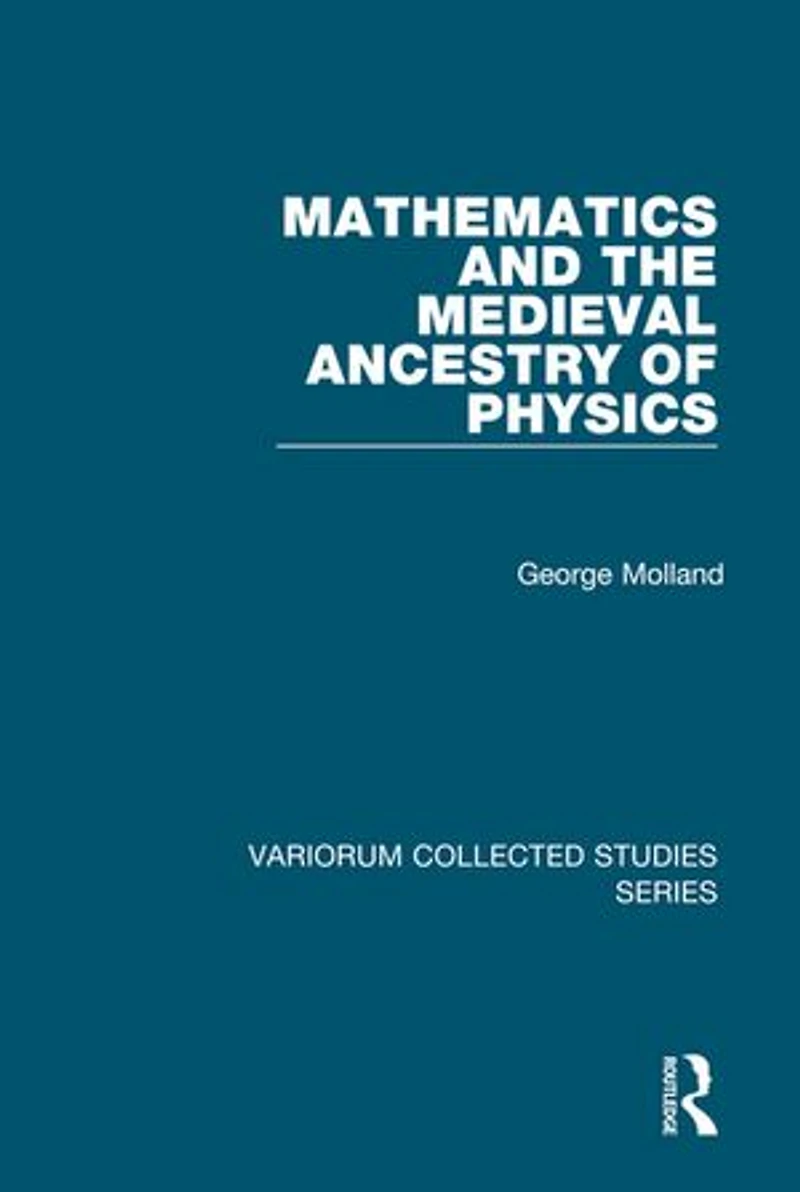
Mathematics and the Medieval Ancestry of Physics in Ottawa, ON
Current price: $100.42

Mathematics and the Medieval Ancestry of Physics in Ottawa, ON
Current price: $100.42
Loading Inventory...
Size: Kobo eBook
*Product information may vary - to confirm product availability, pricing, shipping and return information please contact Coles
The central theme of this volume lies in the medieval consciousness of mathematics, and the variety of strategies adopted to apply it in other areas, notably natural philosophy. In diachromic terms, Dr Molland considers ways in which ancient mathematics (particularly geometry) was assimilated in the Middle Ages, and how it was radically transformed in the 17th century, especially by Descartes. A pervasive concern is with ideas of scientific progress: the author argues that medieval commentatorial and disputational modes encouraged probing attitudes to existing knowledge, aimed at deepening individual understanding, rather than more aggressive endeavours to advance public knowledge characteristic of later periods. What brought about this change is the subject of several studies here; others form more specifically on individual scholars, in particular the important figure of Roger Bacon.
The central theme of this volume lies in the medieval consciousness of mathematics, and the variety of strategies adopted to apply it in other areas, notably natural philosophy. In diachromic terms, Dr Molland considers ways in which ancient mathematics (particularly geometry) was assimilated in the Middle Ages, and how it was radically transformed in the 17th century, especially by Descartes. A pervasive concern is with ideas of scientific progress: the author argues that medieval commentatorial and disputational modes encouraged probing attitudes to existing knowledge, aimed at deepening individual understanding, rather than more aggressive endeavours to advance public knowledge characteristic of later periods. What brought about this change is the subject of several studies here; others form more specifically on individual scholars, in particular the important figure of Roger Bacon.
You May Also Like











More About Coles at Bayshore Shopping Centre
Coles is renowned for its outstanding customer service and great selection of books. Along with the vast array of magazines, stationary, audio-books, children's literature, fiction, non-fiction and reference books, you can find accessories to make your reading experience more pleasurable. We can recommend the very best in reading today. We will help you search our titles for exactly what you need, and if we do not have it in stock, we will order it for you.
100 Bayshore Dr, Nepean, ON K2B 8C1, Canada
Find Coles at Bayshore Shopping Centre in Ottawa, ON
Visit Coles at Bayshore Shopping Centre in Ottawa, ON