

Give the Gift of Choice!
Too many options? Treat your friends and family to their favourite stores with a Bayshore Shopping Centre gift card, redeemable at participating retailers throughout the centre. Click below to purchase yours today!Purchase HereHome
Mathematics is (mostly) Analytic
Coles
Loading Inventory...
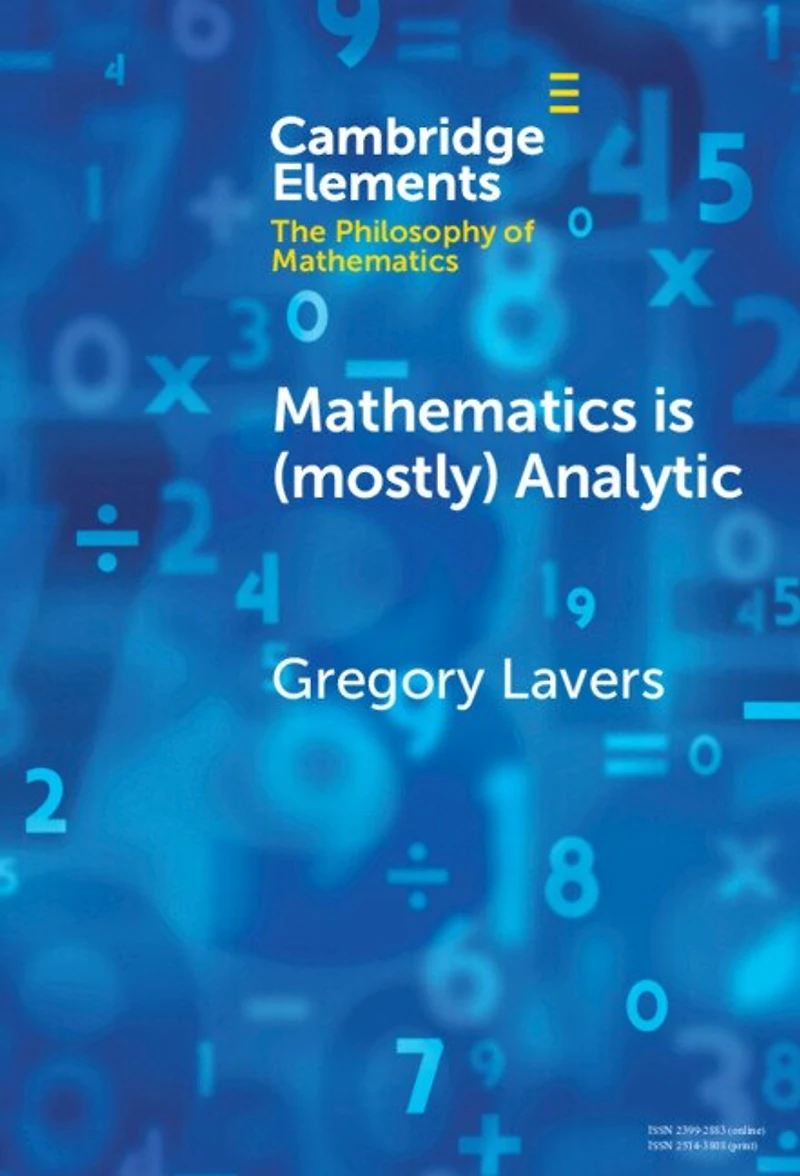
Mathematics is (mostly) Analytic in Ottawa, ON
Current price: $94.73

Mathematics is (mostly) Analytic in Ottawa, ON
Current price: $94.73
Loading Inventory...
Size: Hardcover
*Product information may vary - to confirm product availability, pricing, shipping and return information please contact Coles
This Element outlines and defends an account of analyticity according to which mathematics is, for the most part, analytic. The author begins by looking at Quine's arguments against the concepts of analyticity. He shows how Quine's position on analyticity is related to his view on explication and shows how this suggests a way of defining analyticity that would meet Quine's own standards for explication. The author then looks at Boghossian and his distinction between epistemic and metaphysical accounts of analyticity. Here he argues that there is a straightforward way of eliminating the confusion Boghossian sees with what he calls metaphysical accounts. The author demonstrates that the epistemic dimension of his epistemic account is almost entirely superfluous. The author then discusses how analyticity is related to truth, necessity, and questions of ontology. Finally, he discusses the vagueness of analyticity and also the relation of analyticity to the axiomatic method in mathematics.
This Element outlines and defends an account of analyticity according to which mathematics is, for the most part, analytic. The author begins by looking at Quine's arguments against the concepts of analyticity. He shows how Quine's position on analyticity is related to his view on explication and shows how this suggests a way of defining analyticity that would meet Quine's own standards for explication. The author then looks at Boghossian and his distinction between epistemic and metaphysical accounts of analyticity. Here he argues that there is a straightforward way of eliminating the confusion Boghossian sees with what he calls metaphysical accounts. The author demonstrates that the epistemic dimension of his epistemic account is almost entirely superfluous. The author then discusses how analyticity is related to truth, necessity, and questions of ontology. Finally, he discusses the vagueness of analyticity and also the relation of analyticity to the axiomatic method in mathematics.
You May Also Like












More About Coles at Bayshore Shopping Centre
Coles is renowned for its outstanding customer service and great selection of books. Along with the vast array of magazines, stationary, audio-books, children's literature, fiction, non-fiction and reference books, you can find accessories to make your reading experience more pleasurable. We can recommend the very best in reading today. We will help you search our titles for exactly what you need, and if we do not have it in stock, we will order it for you.
100 Bayshore Dr, Nepean, ON K2B 8C1, Canada
Find Coles at Bayshore Shopping Centre in Ottawa, ON
Visit Coles at Bayshore Shopping Centre in Ottawa, ON