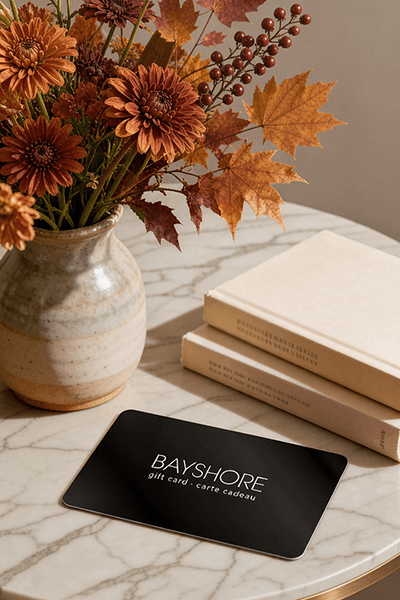
Too many options? Treat your friends and family to their favourite stores with a Bayshore Shopping Centre gift card, redeemable at participating retailers throughout the centre. Click below to purchase yours today!Purchase Here
Coles Micro and Nano Techniques for the Handling of Biological Samples at Bayshore Shopping Centre in Ottawa, ON
*Product information may vary - to confirm product availability, pricing, shipping and return information please contact Coles
Several micro- and nanomanipulation techniques have emerged in recent decades thanks to advances in micro- and nanofabrication. For instance, the atomic force microscope (AFM) uses a nano-sized tip to image, push, pull, cut, and indent biological material in air, liquid, or vacuum. Using micro- and nanofabrication techniques, scientists can make manipulation tools, such as microgrippers and nanotweezers, on the same length scale as the biological samples. Micro and Nano Techniques for the Handling of Biological Samples reviews the different techniques available to manipulate and integrate biological materials in a controlled manner, either by sliding them along a surface (2-D manipulation), or by gripping and moving them to a new position (3-D manipulation). The advantages and drawbacks are mentioned together with examples that reflect the state-of-the-art in manipulation techniques for biological samples. Thanks to the advances in micro- and nanomanipulation techniques, the integration of biomaterials with physical transducers has been possible, giving rise to new and highly sensitive biosensing devices. Although great progress has been made, challenges are still present. To understand the complex interactions between and inside biological samples, scientists will always be working on improving technologies to manipulate, transport, sort, and integrate samples in different environments. Balanced between simplicity for the beginner and hardcore theory for the more advanced readers, this book is the ideal launching point for sharpening the scientific tools required to address these challenges.
Several micro- and nanomanipulation techniques have emerged in recent decades thanks to advances in micro- and nanofabrication. For instance, the atomic force microscope (AFM) uses a nano-sized tip to image, push, pull, cut, and indent biological material in air, liquid, or vacuum. Using micro- and nanofabrication techniques, scientists can make manipulation tools, such as microgrippers and nanotweezers, on the same length scale as the biological samples. Micro and Nano Techniques for the Handling of Biological Samples reviews the different techniques available to manipulate and integrate biological materials in a controlled manner, either by sliding them along a surface (2-D manipulation), or by gripping and moving them to a new position (3-D manipulation). The advantages and drawbacks are mentioned together with examples that reflect the state-of-the-art in manipulation techniques for biological samples. Thanks to the advances in micro- and nanomanipulation techniques, the integration of biomaterials with physical transducers has been possible, giving rise to new and highly sensitive biosensing devices. Although great progress has been made, challenges are still present. To understand the complex interactions between and inside biological samples, scientists will always be working on improving technologies to manipulate, transport, sort, and integrate samples in different environments. Balanced between simplicity for the beginner and hardcore theory for the more advanced readers, this book is the ideal launching point for sharpening the scientific tools required to address these challenges.
Coles is renowned for its outstanding customer service and great selection of books. Along with the vast array of magazines, stationary, audio-books, children's literature, fiction, non-fiction and reference books, you can find accessories to make your reading experience more pleasurable. We can recommend the very best in reading today. We will help you search our titles for exactly what you need, and if we do not have it in stock, we will order it for you.