

Give the Gift of Choice!
Too many options? Treat your friends and family to their favourite stores with a Bayshore Shopping Centre gift card, redeemable at participating retailers throughout the centre. Click below to purchase yours today!Purchase HereHome
Modeling Volatility in Financial Time Series
Coles
Loading Inventory...
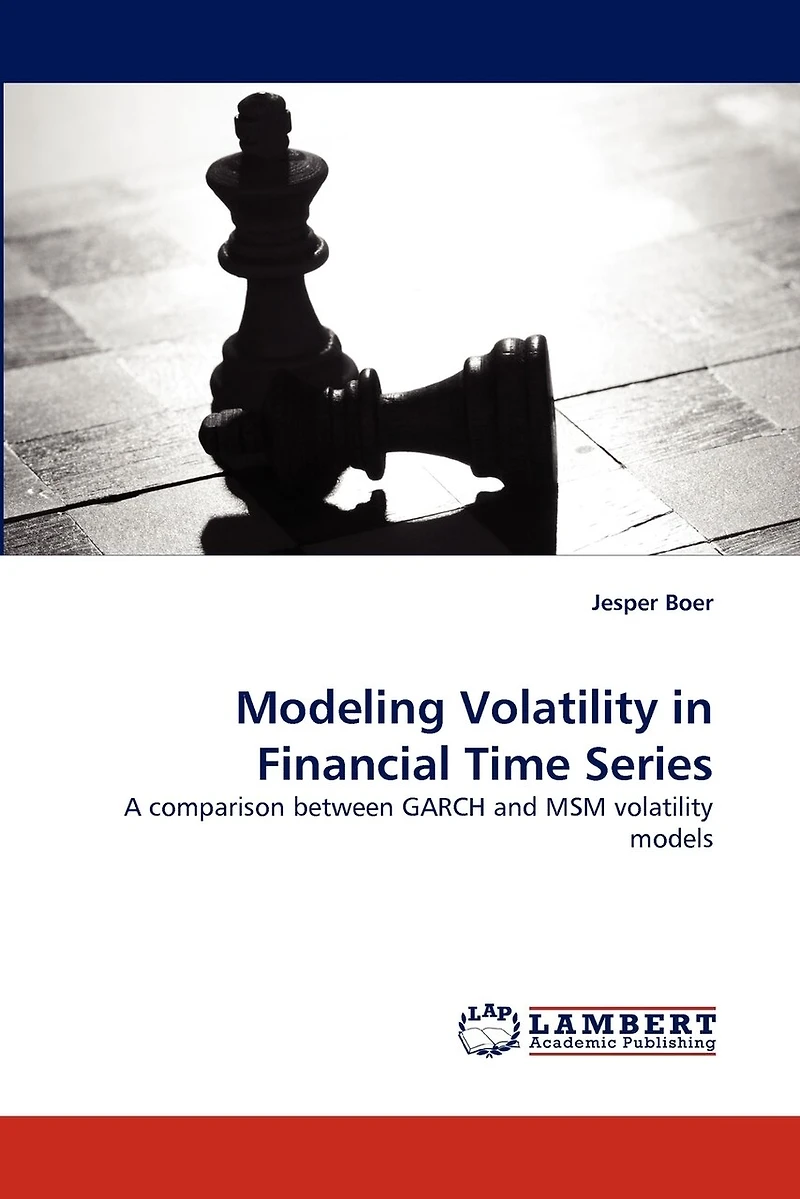
Modeling Volatility in Financial Time Series in Ottawa, ON
Current price: $68.95

Modeling Volatility in Financial Time Series in Ottawa, ON
Current price: $68.95
Loading Inventory...
Size: Paperback
*Product information may vary - to confirm product availability, pricing, shipping and return information please contact Coles
Volatility is one of the biggest topics in finance today. It is the most important measure of risk and plays a crucial role in the valuation of derivatives. Volatility estimations are therefore essential in most financial decisions. However, it has been proven extremely difficult to model and forecast the volatility one witnesses in time series. This book compares two volatility models, their properties and their performances. The models compared are the GARCH model and the Markov Switching Multifractal model, two models that rely on completely different assumptions. This book assesses how both models perform in replicating financial time series. The model parameters are estimated on historical returns and option prices. The results are used to produce volatility forecasts which in their turn are evaluated in a Value at Risk setup. The analysis done shows some unexpected conclusions and promising leads for further research. This book provides a step by step manual on how to estimate various volatility models and how resulting estimates can be used for derivative pricing. This is extremely valuable for practitioners and others interested in modeling volatility in financial markets.
Volatility is one of the biggest topics in finance today. It is the most important measure of risk and plays a crucial role in the valuation of derivatives. Volatility estimations are therefore essential in most financial decisions. However, it has been proven extremely difficult to model and forecast the volatility one witnesses in time series. This book compares two volatility models, their properties and their performances. The models compared are the GARCH model and the Markov Switching Multifractal model, two models that rely on completely different assumptions. This book assesses how both models perform in replicating financial time series. The model parameters are estimated on historical returns and option prices. The results are used to produce volatility forecasts which in their turn are evaluated in a Value at Risk setup. The analysis done shows some unexpected conclusions and promising leads for further research. This book provides a step by step manual on how to estimate various volatility models and how resulting estimates can be used for derivative pricing. This is extremely valuable for practitioners and others interested in modeling volatility in financial markets.
You May Also Like








More About Coles at Bayshore Shopping Centre
Coles is renowned for its outstanding customer service and great selection of books. Along with the vast array of magazines, stationary, audio-books, children's literature, fiction, non-fiction and reference books, you can find accessories to make your reading experience more pleasurable. We can recommend the very best in reading today. We will help you search our titles for exactly what you need, and if we do not have it in stock, we will order it for you.
100 Bayshore Dr, Nepean, ON K2B 8C1, Canada
Find Coles at Bayshore Shopping Centre in Ottawa, ON
Visit Coles at Bayshore Shopping Centre in Ottawa, ON