

Give the Gift of Choice!
Too many options? Treat your friends and family to their favourite stores with a Bayshore Shopping Centre gift card, redeemable at participating retailers throughout the centre. Click below to purchase yours today!Purchase HereHome
Modelling Of Convective Heat And Mass Transfer Nanofluids With Without Boiling Condensation
Coles
Loading Inventory...
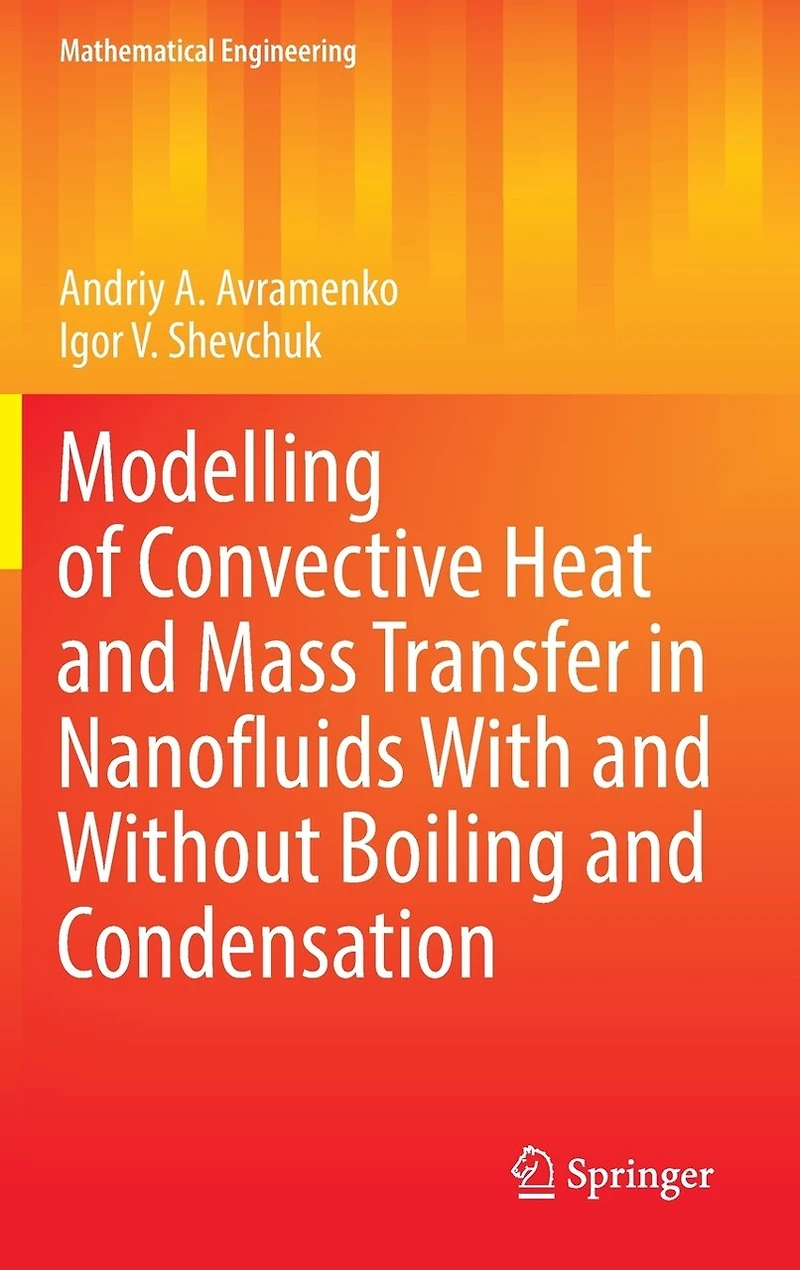
Modelling Of Convective Heat And Mass Transfer Nanofluids With Without Boiling Condensation in Ottawa, ON
Current price: $248.50

Modelling Of Convective Heat And Mass Transfer Nanofluids With Without Boiling Condensation in Ottawa, ON
Current price: $248.50
Loading Inventory...
Size: Hardcover
*Product information may vary - to confirm product availability, pricing, shipping and return information please contact Coles
This book presents step-by-step description of the use of Lie group analysis to find symmetry forms and similarity solutions for single- and two-phase laminar and turbulent flows of nanofluids. It outlines novel and unique analytical solutions validated via comparisons with experimental data. The main part of the book is devoted to analytical modeling of film condensation of still and moving vapor with nanoparticles, stable film boiling of nanofluids, instantaneous unsteady boiling and condensation of nano- and ordinary fluids and clarification and quantification of instability conditions in the vapor layer, as well as centrifugal and Dean instability in nanofluids. It was demonstrated that such complex phenomena can be successfully simulated using the proposed approaches validated via reliable experiments. The book is intended for scientists, engineers, graduate and undergraduate students specializing in the area of engineering thermodynamics, heat and mass transfer and energy systems.
This book presents step-by-step description of the use of Lie group analysis to find symmetry forms and similarity solutions for single- and two-phase laminar and turbulent flows of nanofluids. It outlines novel and unique analytical solutions validated via comparisons with experimental data. The main part of the book is devoted to analytical modeling of film condensation of still and moving vapor with nanoparticles, stable film boiling of nanofluids, instantaneous unsteady boiling and condensation of nano- and ordinary fluids and clarification and quantification of instability conditions in the vapor layer, as well as centrifugal and Dean instability in nanofluids. It was demonstrated that such complex phenomena can be successfully simulated using the proposed approaches validated via reliable experiments. The book is intended for scientists, engineers, graduate and undergraduate students specializing in the area of engineering thermodynamics, heat and mass transfer and energy systems.
You May Also Like









More About Coles at Bayshore Shopping Centre
Coles is renowned for its outstanding customer service and great selection of books. Along with the vast array of magazines, stationary, audio-books, children's literature, fiction, non-fiction and reference books, you can find accessories to make your reading experience more pleasurable. We can recommend the very best in reading today. We will help you search our titles for exactly what you need, and if we do not have it in stock, we will order it for you.
100 Bayshore Dr, Nepean, ON K2B 8C1, Canada
Find Coles at Bayshore Shopping Centre in Ottawa, ON
Visit Coles at Bayshore Shopping Centre in Ottawa, ON