

Give the Gift of Choice!
Too many options? Treat your friends and family to their favourite stores with a Bayshore Shopping Centre gift card, redeemable at participating retailers throughout the centre. Click below to purchase yours today!Purchase HereHome
Modern Classification Theory of Superconducting Gap Nodes
Coles
Loading Inventory...
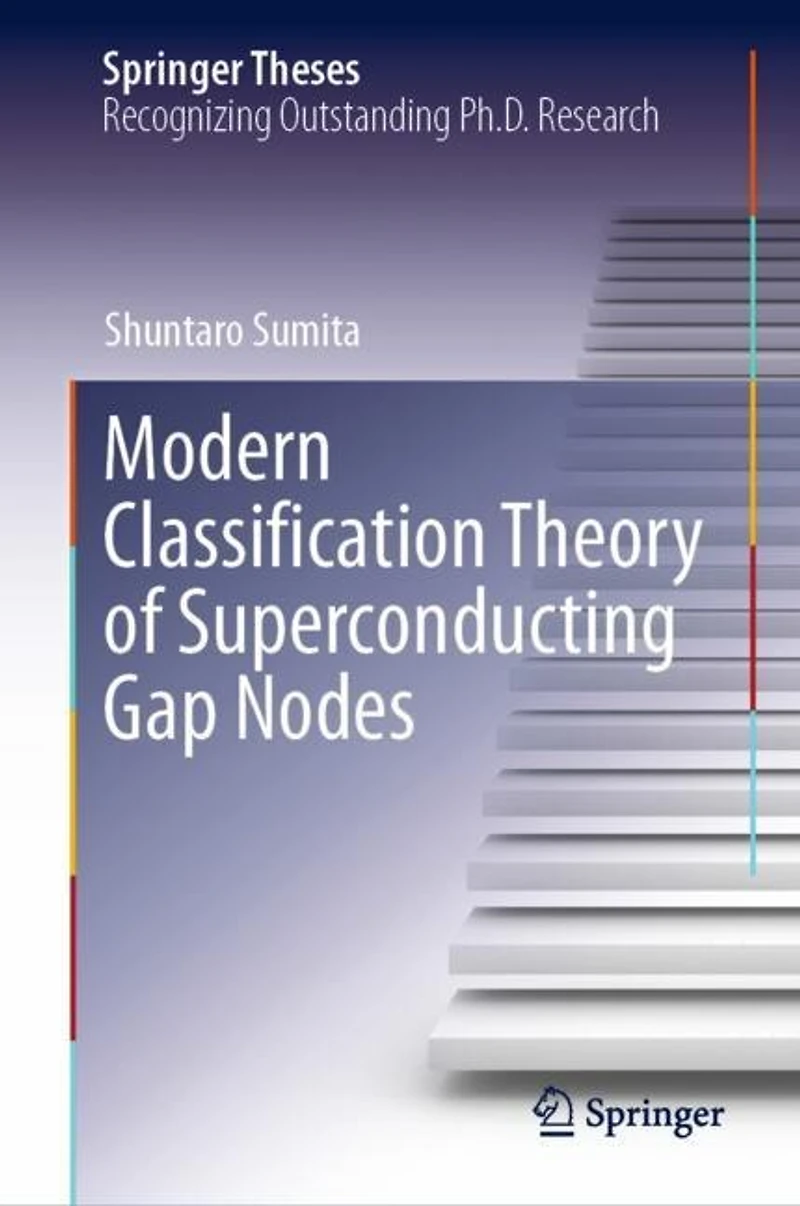
Modern Classification Theory of Superconducting Gap Nodes in Ottawa, ON
Current price: $160.95

Modern Classification Theory of Superconducting Gap Nodes in Ottawa, ON
Current price: $160.95
Loading Inventory...
Size: Hardcover
*Product information may vary - to confirm product availability, pricing, shipping and return information please contact Coles
This book puts forward a modern classification theory for superconducting gap nodes, whose structures can be observed by experiments and are essential for understanding unconventional superconductivity. In the first part of the book, the classification method, based on group theory and K theory, is introduced in a step-by-step, pedagogical way. In turn, the latter part presents comprehensive classification tables, which include various nontrivial gap (node) structures, which are not predicted by the Sigrist-Ueda method, but are by the new method. The results obtained here show that crystal symmetry and/or angular momentum impose critical constraints on the superconducting gap structures. Lastly, the book lists a range of candidate superconductors for the nontrivial gap nodes. The classification methods and tables presented here offer an essential basis for further investigations into unconventional superconductivity. They indicate that previous experimental studies should bereinterpreted, while future experiments should reflect the new excitation spectrum.
This book puts forward a modern classification theory for superconducting gap nodes, whose structures can be observed by experiments and are essential for understanding unconventional superconductivity. In the first part of the book, the classification method, based on group theory and K theory, is introduced in a step-by-step, pedagogical way. In turn, the latter part presents comprehensive classification tables, which include various nontrivial gap (node) structures, which are not predicted by the Sigrist-Ueda method, but are by the new method. The results obtained here show that crystal symmetry and/or angular momentum impose critical constraints on the superconducting gap structures. Lastly, the book lists a range of candidate superconductors for the nontrivial gap nodes. The classification methods and tables presented here offer an essential basis for further investigations into unconventional superconductivity. They indicate that previous experimental studies should bereinterpreted, while future experiments should reflect the new excitation spectrum.
You May Also Like












More About Coles at Bayshore Shopping Centre
Coles is renowned for its outstanding customer service and great selection of books. Along with the vast array of magazines, stationary, audio-books, children's literature, fiction, non-fiction and reference books, you can find accessories to make your reading experience more pleasurable. We can recommend the very best in reading today. We will help you search our titles for exactly what you need, and if we do not have it in stock, we will order it for you.
100 Bayshore Dr, Nepean, ON K2B 8C1, Canada
Find Coles at Bayshore Shopping Centre in Ottawa, ON
Visit Coles at Bayshore Shopping Centre in Ottawa, ON