

Give the Gift of Choice!
Too many options? Treat your friends and family to their favourite stores with a Bayshore Shopping Centre gift card, redeemable at participating retailers throughout the centre. Click below to purchase yours today!Purchase HereHome
Modification of a Modulation Recognition Algorithm to Enable Multi-Carrier Recognition
Coles
Loading Inventory...
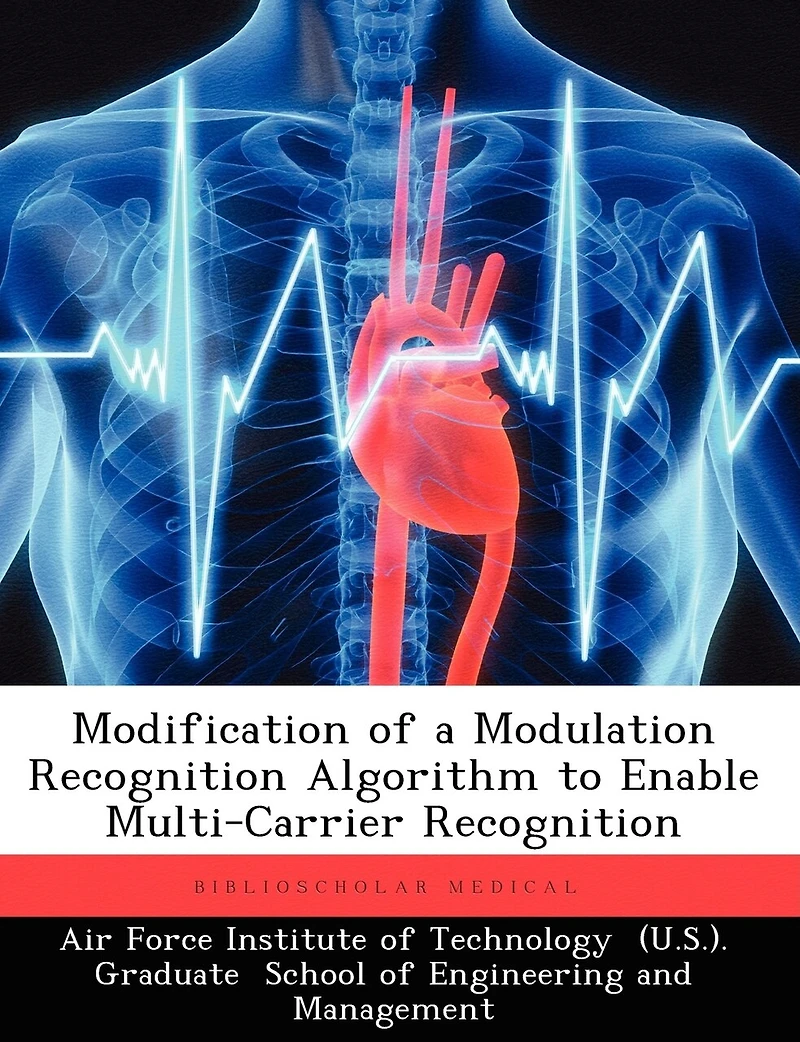
Modification of a Modulation Recognition Algorithm to Enable Multi-Carrier Recognition in Ottawa, ON
Current price: $59.00

Modification of a Modulation Recognition Algorithm to Enable Multi-Carrier Recognition in Ottawa, ON
Current price: $59.00
Loading Inventory...
Size: Paperback
*Product information may vary - to confirm product availability, pricing, shipping and return information please contact Coles
Modulation recognition is important for both military and commercial communication applications, particularly in cases where enhanced situation awareness and/or channel assessment is required to mitigate intentional or collateral interference. Modulation recognition via statistical analysis is a key aspect of non-cooperative signal interception, classification, and exploitation. This research concerns the evaluation and modification of a conventional Digitally Modulated Signal Recognition Algorithm (DMRA) to enable multi-carrier, OFDM, waveform recognition. The original DMRA architecture was developed to classify communication signals for three fundamental data modulations, i.e., ASK, PSK, and FSK. By adding an additional key feature and threshold to the original DMRA architecture, a modified DMRA architecture is developed to enable the reliable recognition of OFDM waveforms. Simulation results for the modified DMRA architecture show a 95.25% success rate for OFDM waveform recognition at a signal-to-noise ratio (SNR) of 11:0 dB. When operated under scenarios where FSK signals are neither present nor considered an alternative, the modified DMRA architecture yields a success rate of 98.25% for classifying OFDM at a SNR of 5:0 dB.
Modulation recognition is important for both military and commercial communication applications, particularly in cases where enhanced situation awareness and/or channel assessment is required to mitigate intentional or collateral interference. Modulation recognition via statistical analysis is a key aspect of non-cooperative signal interception, classification, and exploitation. This research concerns the evaluation and modification of a conventional Digitally Modulated Signal Recognition Algorithm (DMRA) to enable multi-carrier, OFDM, waveform recognition. The original DMRA architecture was developed to classify communication signals for three fundamental data modulations, i.e., ASK, PSK, and FSK. By adding an additional key feature and threshold to the original DMRA architecture, a modified DMRA architecture is developed to enable the reliable recognition of OFDM waveforms. Simulation results for the modified DMRA architecture show a 95.25% success rate for OFDM waveform recognition at a signal-to-noise ratio (SNR) of 11:0 dB. When operated under scenarios where FSK signals are neither present nor considered an alternative, the modified DMRA architecture yields a success rate of 98.25% for classifying OFDM at a SNR of 5:0 dB.
You May Also Like















More About Coles at Bayshore Shopping Centre
Coles is renowned for its outstanding customer service and great selection of books. Along with the vast array of magazines, stationary, audio-books, children's literature, fiction, non-fiction and reference books, you can find accessories to make your reading experience more pleasurable. We can recommend the very best in reading today. We will help you search our titles for exactly what you need, and if we do not have it in stock, we will order it for you.
100 Bayshore Dr, Nepean, ON K2B 8C1, Canada
Find Coles at Bayshore Shopping Centre in Ottawa, ON
Visit Coles at Bayshore Shopping Centre in Ottawa, ON