

Give the Gift of Choice!
Too many options? Treat your friends and family to their favourite stores with a Bayshore Shopping Centre gift card, redeemable at participating retailers throughout the centre. Click below to purchase yours today!Purchase HereHome
Monolingual Policies Multilingual Schools: Tensions, Ambivalence, and Thinking Teachers
Coles
Loading Inventory...
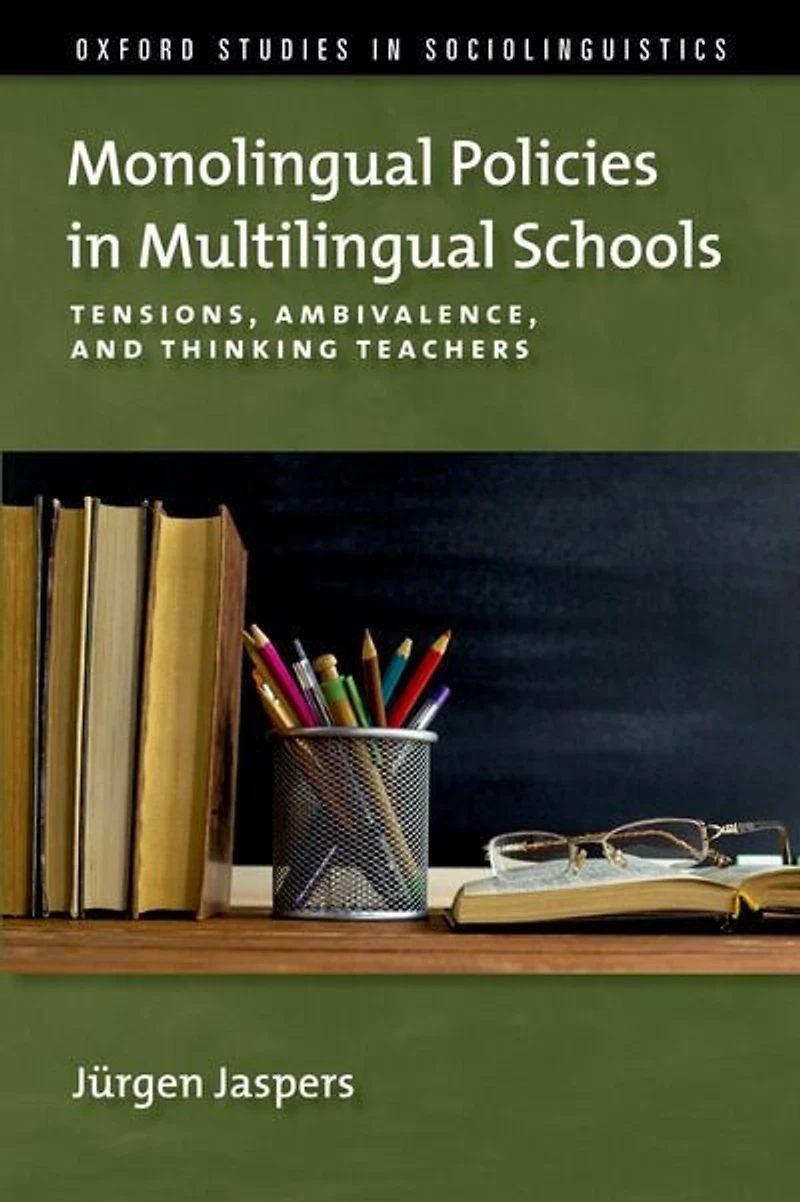
Monolingual Policies Multilingual Schools: Tensions, Ambivalence, and Thinking Teachers in Ottawa, ON
Current price: $151.83

Monolingual Policies Multilingual Schools: Tensions, Ambivalence, and Thinking Teachers in Ottawa, ON
Current price: $151.83
Loading Inventory...
Size: Hardcover
*Product information may vary - to confirm product availability, pricing, shipping and return information please contact Coles
Two teacher types populate the socio- and applied linguistic research on language-in-education: the critical 'agent of change,' who challenges monolingual policies by encouraging pupils to use non-curricular languages in class; and the conservative 'servant of the state,' who acts out a monolingual ideology. Both of these types are useful for advocating multilingual education policies, but they leave much ordinary behavior unaccounted for. The interest in critical and conservative teachers encourages us to praise or blame teachers, moreover, while it invites incompatible explanations: critical teachers have somehow escaped an ideology that their conservative colleagues are completely deceived by. In Monolingual Policies in Multilingual Schools , Jürgen Jaspers shows how a more complex understanding of teacher behavior is crucial to explain how teachers navigate the competing concerns of the authorities who pay their salaries, the pupils whose opportunities they wish to support, and the scholars who share their knowledge with them. Drawing on seven years of research in Dutch-medium schools in Belgium, Jaspers investigates how teachers at monolingual schools deal with the fact that they teach linguistically diverse groups of pupils. He demonstrates that this results in variable, ambivalent, and often contradictory practices and opinions, as teachers continuously juggle competing social and linguistic values with what works in a given classroom. Recognizing that inconsistency and contradiction in teacher behavior is a result of adjusting to variable circumstances means understanding that a single approach may not work, and that a convincing and critical sociolinguistics can generate potential change when it insists on a variety of opinions about language and on the prospect of informed deliberation and debate. Jaspers argues that this capacity is crucial for attending to the multiple, competing goals that classroom interaction presents; that it typically invites inconsistent, albeit rational, behavior; and that if this inconsistency is common and chronic, researchers on language-in-education need to improve their radar and develop a different kind of dialogue with teachers.
Two teacher types populate the socio- and applied linguistic research on language-in-education: the critical 'agent of change,' who challenges monolingual policies by encouraging pupils to use non-curricular languages in class; and the conservative 'servant of the state,' who acts out a monolingual ideology. Both of these types are useful for advocating multilingual education policies, but they leave much ordinary behavior unaccounted for. The interest in critical and conservative teachers encourages us to praise or blame teachers, moreover, while it invites incompatible explanations: critical teachers have somehow escaped an ideology that their conservative colleagues are completely deceived by. In Monolingual Policies in Multilingual Schools , Jürgen Jaspers shows how a more complex understanding of teacher behavior is crucial to explain how teachers navigate the competing concerns of the authorities who pay their salaries, the pupils whose opportunities they wish to support, and the scholars who share their knowledge with them. Drawing on seven years of research in Dutch-medium schools in Belgium, Jaspers investigates how teachers at monolingual schools deal with the fact that they teach linguistically diverse groups of pupils. He demonstrates that this results in variable, ambivalent, and often contradictory practices and opinions, as teachers continuously juggle competing social and linguistic values with what works in a given classroom. Recognizing that inconsistency and contradiction in teacher behavior is a result of adjusting to variable circumstances means understanding that a single approach may not work, and that a convincing and critical sociolinguistics can generate potential change when it insists on a variety of opinions about language and on the prospect of informed deliberation and debate. Jaspers argues that this capacity is crucial for attending to the multiple, competing goals that classroom interaction presents; that it typically invites inconsistent, albeit rational, behavior; and that if this inconsistency is common and chronic, researchers on language-in-education need to improve their radar and develop a different kind of dialogue with teachers.
You May Also Like















More About Coles at Bayshore Shopping Centre
Coles is renowned for its outstanding customer service and great selection of books. Along with the vast array of magazines, stationary, audio-books, children's literature, fiction, non-fiction and reference books, you can find accessories to make your reading experience more pleasurable. We can recommend the very best in reading today. We will help you search our titles for exactly what you need, and if we do not have it in stock, we will order it for you.
100 Bayshore Dr, Nepean, ON K2B 8C1, Canada
Find Coles at Bayshore Shopping Centre in Ottawa, ON
Visit Coles at Bayshore Shopping Centre in Ottawa, ON