

Give the Gift of Choice!
Too many options? Treat your friends and family to their favourite stores with a Bayshore Shopping Centre gift card, redeemable at participating retailers throughout the centre. Click below to purchase yours today!Purchase HereHome
Mutual Misunderstanding: Scepticism and the Theorizing of Language Interpretation
Coles
Loading Inventory...
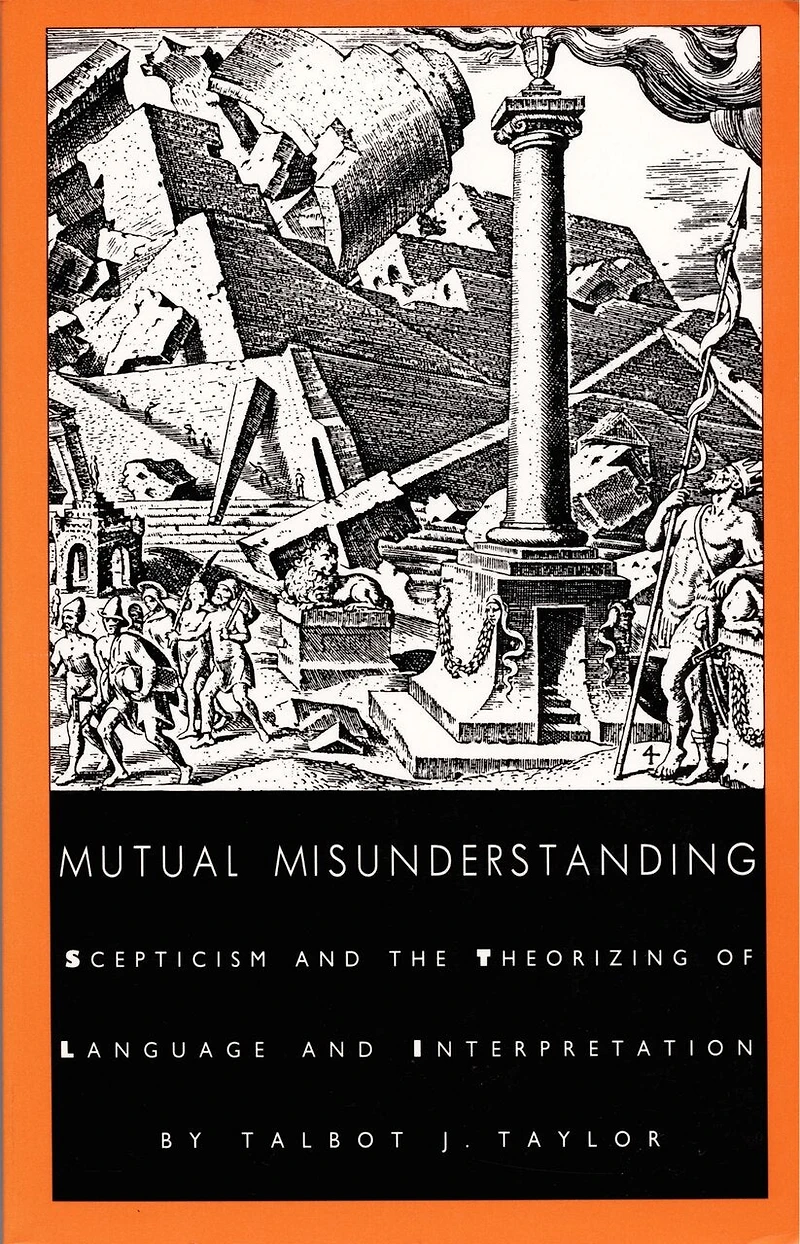
Mutual Misunderstanding: Scepticism and the Theorizing of Language Interpretation in Ottawa, ON
Current price: $153.95

Mutual Misunderstanding: Scepticism and the Theorizing of Language Interpretation in Ottawa, ON
Current price: $153.95
Loading Inventory...
Size: Hardcover
*Product information may vary - to confirm product availability, pricing, shipping and return information please contact Coles
Do others understand what we say or write? Do we understand them? Theorists of language and interpretation claim to be more concerned with questions about "what" we understand and "how" we understand, rather than with the logically prior question "whether" we understand each other. An affirmative answer to the latter question is apparently taken for granted. However, in Mutual Misunderstanding , Talbot J. Taylor shows that the sceptical doubts about communicational understanding do in fact have a profoundly important, if as yet unacknowledged, function in the construction of theories of language and interpretation.
Mutual Misundertanding thus presents a strikingly original analysis of the rhetorical patterns underlying Western linguistic thought, as exemplified in the works of John Locke, Jacques Derrida, Gottlob Frege, Jonathan Culler, Noam Chomsky, Ferdinand de Saussure, H. Paul Grice, Michael Dummet, Stanley Fish, Alfred Schutz, Barbara Herrnstein Smith, Harold Garfinkel, and others.
This analysis reveals how, by the combined effect of appeals to "commonsense" and anxieties about implications of relativism, scepticism has a determining role in the discursive development of a number of the intellectual disciplines making up the "human sciences" today, including critical theory, literary hermeneutics, philosophy of language and logic, communication theory, discourse and conversation analysis, pragmatics, stylistics, and linguistics. Consequently, this provocative study will be of value to readers from a wide variety of disciplinary backgrounds.
Do others understand what we say or write? Do we understand them? Theorists of language and interpretation claim to be more concerned with questions about "what" we understand and "how" we understand, rather than with the logically prior question "whether" we understand each other. An affirmative answer to the latter question is apparently taken for granted. However, in Mutual Misunderstanding , Talbot J. Taylor shows that the sceptical doubts about communicational understanding do in fact have a profoundly important, if as yet unacknowledged, function in the construction of theories of language and interpretation.
Mutual Misundertanding thus presents a strikingly original analysis of the rhetorical patterns underlying Western linguistic thought, as exemplified in the works of John Locke, Jacques Derrida, Gottlob Frege, Jonathan Culler, Noam Chomsky, Ferdinand de Saussure, H. Paul Grice, Michael Dummet, Stanley Fish, Alfred Schutz, Barbara Herrnstein Smith, Harold Garfinkel, and others.
This analysis reveals how, by the combined effect of appeals to "commonsense" and anxieties about implications of relativism, scepticism has a determining role in the discursive development of a number of the intellectual disciplines making up the "human sciences" today, including critical theory, literary hermeneutics, philosophy of language and logic, communication theory, discourse and conversation analysis, pragmatics, stylistics, and linguistics. Consequently, this provocative study will be of value to readers from a wide variety of disciplinary backgrounds.
You May Also Like








More About Coles at Bayshore Shopping Centre
Coles is renowned for its outstanding customer service and great selection of books. Along with the vast array of magazines, stationary, audio-books, children's literature, fiction, non-fiction and reference books, you can find accessories to make your reading experience more pleasurable. We can recommend the very best in reading today. We will help you search our titles for exactly what you need, and if we do not have it in stock, we will order it for you.
100 Bayshore Dr, Nepean, ON K2B 8C1, Canada
Find Coles at Bayshore Shopping Centre in Ottawa, ON
Visit Coles at Bayshore Shopping Centre in Ottawa, ON