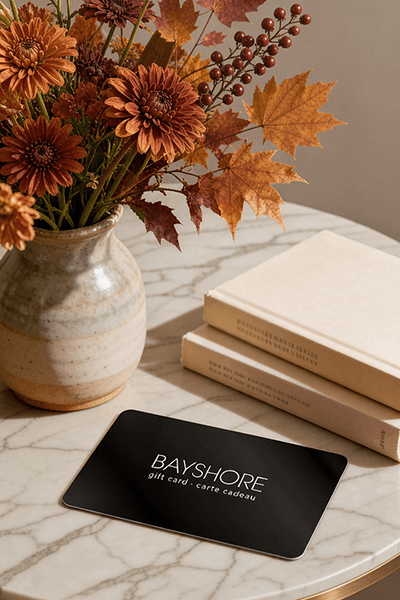
Too many options? Treat your friends and family to their favourite stores with a Bayshore Shopping Centre gift card, redeemable at participating retailers throughout the centre. Click below to purchase yours today!Purchase Here
Coles No more giants: J. M. Richards, modernism and The Architectural Review at Bayshore Shopping Centre in Ottawa, ON
*Product information may vary - to confirm product availability, pricing, shipping and return information please contact Coles
Architecture is more than buildings and architects. It also involves photographers, writers, advertisers and broadcasters, as well as the people who finance and live in the buildings. Using the career of the critic J. M. Richards as a lens, this book takes a new perspective on modern architecture. Richards served as editor of The Architectural Review from 1937 to 1971, during which time he consistently argued that modernism was integrally linked to vernacular architecture, not through style but through the principle of being an anonymous expression of a time and public spirit. Exploring the continuities in Richards’s ideas throughout his career disrupts the existing canon of architectural history, which has focused on abrupt changes linked to individual ‘pioneers’, encouraging us to think again about who is studied in architectural history and how they are researched.
Architecture is more than buildings and architects. It also involves photographers, writers, advertisers and broadcasters, as well as the people who finance and live in the buildings. Using the career of the critic J. M. Richards as a lens, this book takes a new perspective on modern architecture. Richards served as editor of The Architectural Review from 1937 to 1971, during which time he consistently argued that modernism was integrally linked to vernacular architecture, not through style but through the principle of being an anonymous expression of a time and public spirit. Exploring the continuities in Richards’s ideas throughout his career disrupts the existing canon of architectural history, which has focused on abrupt changes linked to individual ‘pioneers’, encouraging us to think again about who is studied in architectural history and how they are researched.
Coles is renowned for its outstanding customer service and great selection of books. Along with the vast array of magazines, stationary, audio-books, children's literature, fiction, non-fiction and reference books, you can find accessories to make your reading experience more pleasurable. We can recommend the very best in reading today. We will help you search our titles for exactly what you need, and if we do not have it in stock, we will order it for you.