

Give the Gift of Choice!
Too many options? Treat your friends and family to their favourite stores with a Bayshore Shopping Centre gift card, redeemable at participating retailers throughout the centre. Click below to purchase yours today!Purchase HereHome
Ocean Colour: Theory And Applications A Decade Of Czcs Experience
Coles
Loading Inventory...
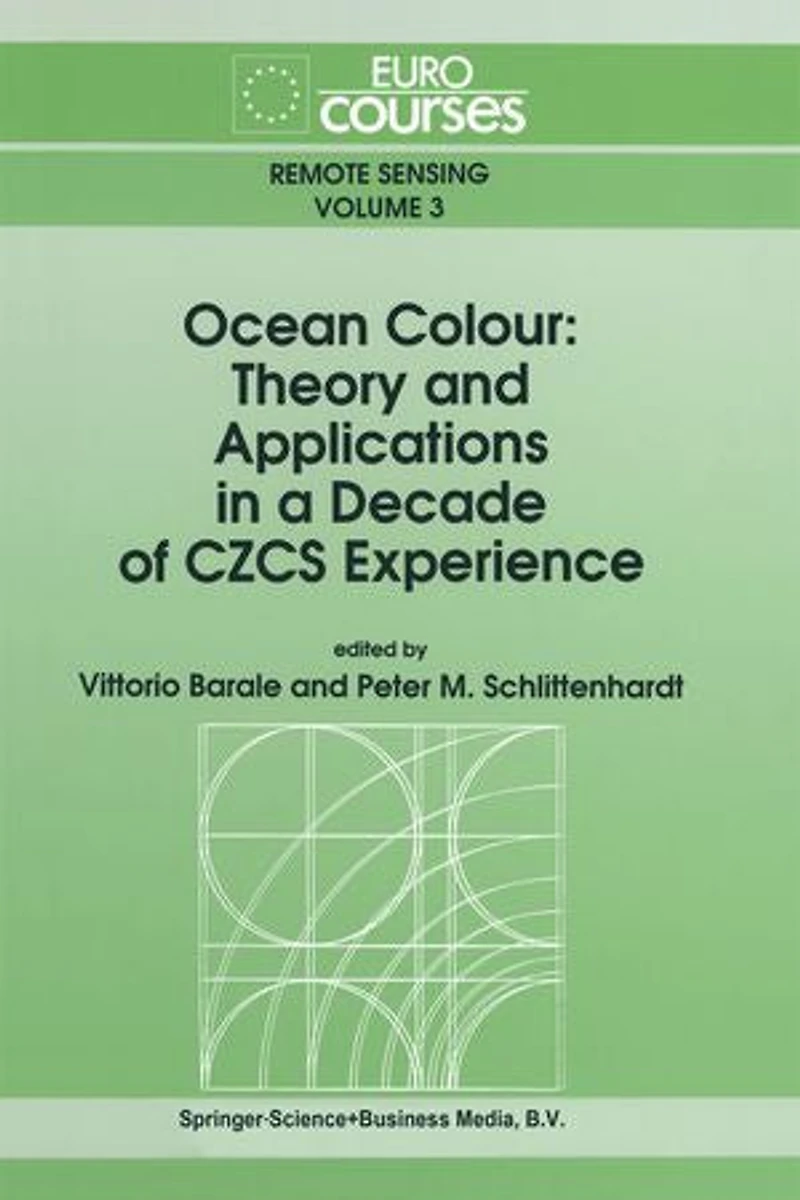
Ocean Colour: Theory And Applications A Decade Of Czcs Experience in Ottawa, ON
By None
Current price: $116.09
Original price: $145.12

By None
Ocean Colour: Theory And Applications A Decade Of Czcs Experience in Ottawa, ON
Current price: $116.09
Original price: $145.12
Loading Inventory...
Size: Kobo eBook
*Product information may vary - to confirm product availability, pricing, shipping and return information please contact Coles
Optical remote sensing is of invaluable help in understanding the marine environment and its biogeochemical and physical processes. The Coastal Zone Color Scanner (CZCS), which operated on board the Nimbus-7 satellite from late 1978 to early 1986, has been the main source of ocean colour data. Much work has been devoted to CZCS data processing and analysis techniques throughout the 1980s. After a decade of experience, the Productivity of the Global Ocean (PGO) Activity - which was established in the framework of the International Space Year 1992 (ISY '92) by SAFISY, the Space Agency Forum of ISY - sponsored a workshop aimed at providing a reference in ocean colour science and at promoting the full exploitation of the CZCS historical data in the field of biological oceanography. The present volume comprises a series of state-of-the-art contributions on theory, applications and future perspectives of ocean colour. After an introduction on the historical perspective of ocean colour, a number of articles are devoted to the CZCS theoretical background, on radiative transfer and in-water topics, as well as on calibration, atmospheric correction and pigment concentration retrieval algorithms developed for the CZCS. Further, a review is given of major applications of CZCS data around the world, carried out in the past decade. The following part of the book is centered on the application of ocean colour to the assessment of marine biological information, with particular regard to plankton biomass, primary productivity and the coupling of physical/biological models. The links between global oceanic production and climate dynamics are also addressed. Finally, the last section is devoted to future approaches and goals of ocean colour science, and to planned sensors and systems. The book is required reading for those involved in ocean colour and related disciplines, providing an overview of the current status in this field as well as stimulating thedebate on new ideas and developments for upcoming ocean colour missions.
Optical remote sensing is of invaluable help in understanding the marine environment and its biogeochemical and physical processes. The Coastal Zone Color Scanner (CZCS), which operated on board the Nimbus-7 satellite from late 1978 to early 1986, has been the main source of ocean colour data. Much work has been devoted to CZCS data processing and analysis techniques throughout the 1980s. After a decade of experience, the Productivity of the Global Ocean (PGO) Activity - which was established in the framework of the International Space Year 1992 (ISY '92) by SAFISY, the Space Agency Forum of ISY - sponsored a workshop aimed at providing a reference in ocean colour science and at promoting the full exploitation of the CZCS historical data in the field of biological oceanography. The present volume comprises a series of state-of-the-art contributions on theory, applications and future perspectives of ocean colour. After an introduction on the historical perspective of ocean colour, a number of articles are devoted to the CZCS theoretical background, on radiative transfer and in-water topics, as well as on calibration, atmospheric correction and pigment concentration retrieval algorithms developed for the CZCS. Further, a review is given of major applications of CZCS data around the world, carried out in the past decade. The following part of the book is centered on the application of ocean colour to the assessment of marine biological information, with particular regard to plankton biomass, primary productivity and the coupling of physical/biological models. The links between global oceanic production and climate dynamics are also addressed. Finally, the last section is devoted to future approaches and goals of ocean colour science, and to planned sensors and systems. The book is required reading for those involved in ocean colour and related disciplines, providing an overview of the current status in this field as well as stimulating thedebate on new ideas and developments for upcoming ocean colour missions.














More About Coles at Bayshore Shopping Centre
Coles is renowned for its outstanding customer service and great selection of books. Along with the vast array of magazines, stationary, audio-books, children's literature, fiction, non-fiction and reference books, you can find accessories to make your reading experience more pleasurable. We can recommend the very best in reading today. We will help you search our titles for exactly what you need, and if we do not have it in stock, we will order it for you.
100 Bayshore Dr, Nepean, ON K2B 8C1, Canada
Find Coles at Bayshore Shopping Centre in Ottawa, ON
Visit Coles at Bayshore Shopping Centre in Ottawa, ON