

Give the Gift of Choice!
Too many options? Treat your friends and family to their favourite stores with a Bayshore Shopping Centre gift card, redeemable at participating retailers throughout the centre. Click below to purchase yours today!Purchase HereHome
Optimal Enterprise: Structures, Processes and Mathematics of Knowledge, Technology Human Capital
Coles
Loading Inventory...
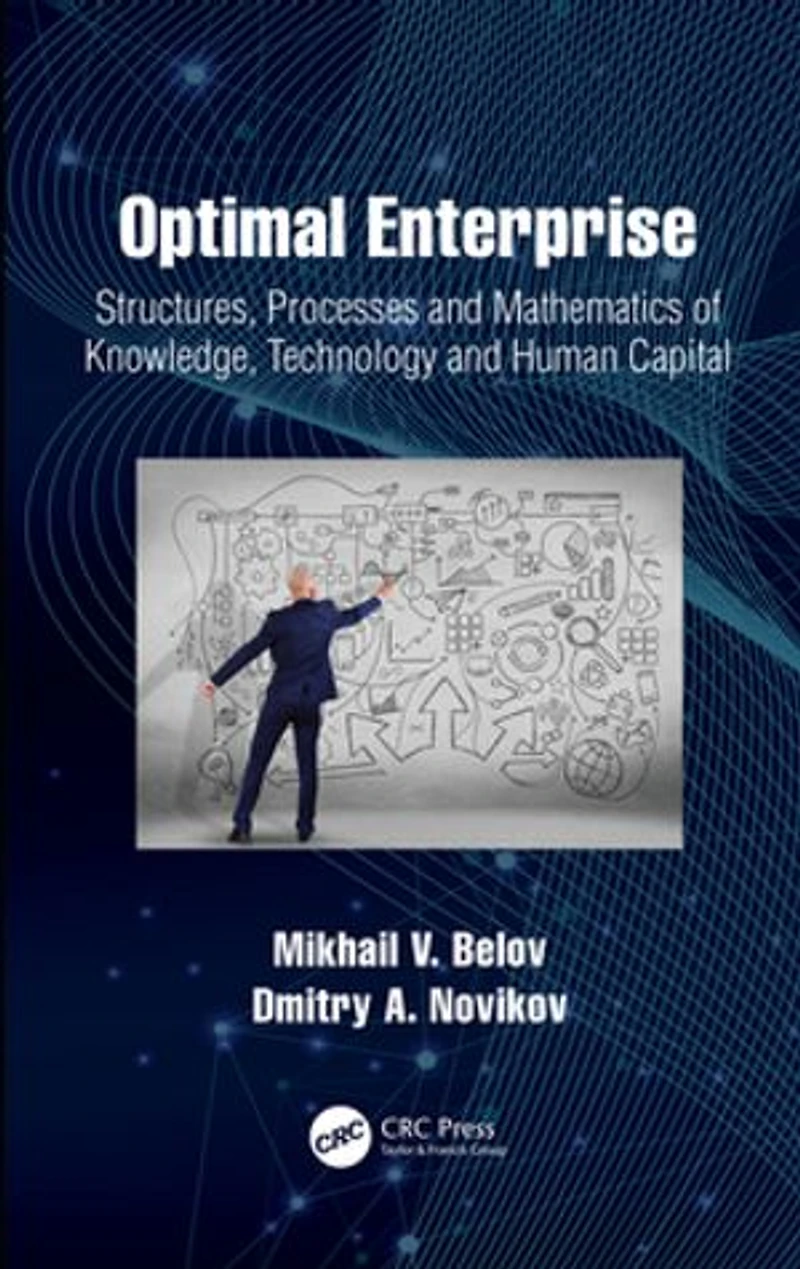
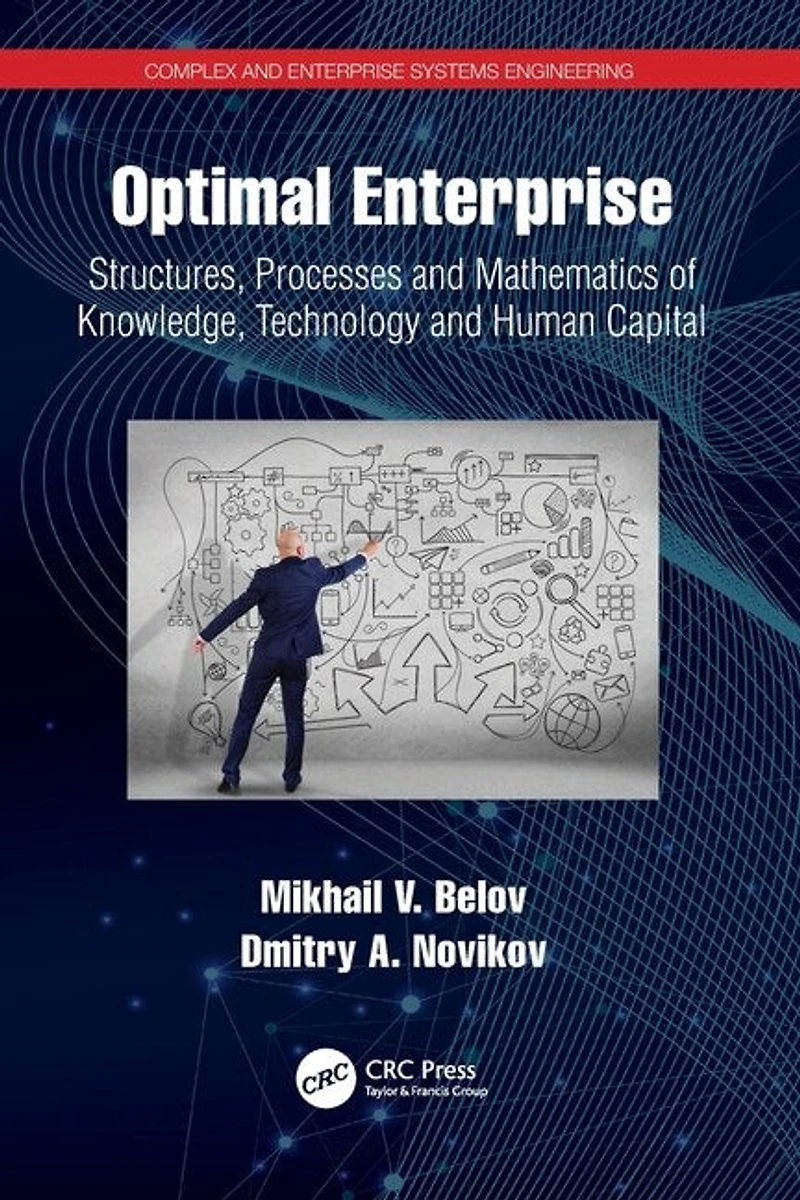
Optimal Enterprise: Structures, Processes and Mathematics of Knowledge, Technology Human Capital in Ottawa, ON
Current price: $236.95

Optimal Enterprise: Structures, Processes and Mathematics of Knowledge, Technology Human Capital in Ottawa, ON
Current price: $236.95
Loading Inventory...
Size: Hardcover
*Product information may vary - to confirm product availability, pricing, shipping and return information please contact Coles
In the modern world, most gross product is created within Enterprise firms, project programs, state agencies, transnational corporations and their divisions, as well as various associations and compositions of the above entities. Enterprises, being, on the one hand, complex, and, on the other hand, widespread systems, are the subject matter of cybernetics, system theory, operations research, management sciences and many other fields of knowledge. However, the complexity of the system obstructs the development of mathematically rigorous foundations for Enterprise control. Moreover, methods of operations research and related sciences, which are widely used in practice, provide optimization of the constituents of an Enterprise, without modeling it as a whole system. But the optimization of parts does not lead to the optimality of the whole, and, also, the absence of top-down and holistic mathematical models of Enterprise contradicts the principle of holism and the system approach. The approach in this book looks first at Enterprise Systems and their essential aspects as complex sociotechnical systems composed of integrated sets of structural and process models (Chapters 1 and 2). A uniform description of all the heterogeneous fields of the modern Enterprise (marketing, sales, manufacturing, HR, finance, etc.) is then made, and the Enterprise Control Problem is posed as a top-down and holistic mathematical optimization problem (Chapter 3). Original models and methods of contract theory (Chapter 4), technology management (Chapter 5), human behavior and human capital (Chapter 6) and complex activity and resource planning (Chapter 7) are developed to solve the problem. Structural processes and mathematical models constitute an Optimal Enterprise Control Framework (Chapter 8) that provides a practical solution to the Enterprise Control Problem. This book is a resource for postgraduate and doctoral students, postdoctoral researchers and professors with research interests in the following fields of science:
Fundamental Complex Systems study, Complex Systems Engineering, Enterprise Systems Engineering
Applications of Operations Research, Optimization, Probability and Stochastic processes to Management Science, Economics and Business
Theory of the Firm
Business and Management - general, strategy/leadership, organization management, operations management and management information systems
Theory of Business Processes, Business Processes Improvement and Reengineering
In the modern world, most gross product is created within Enterprise firms, project programs, state agencies, transnational corporations and their divisions, as well as various associations and compositions of the above entities. Enterprises, being, on the one hand, complex, and, on the other hand, widespread systems, are the subject matter of cybernetics, system theory, operations research, management sciences and many other fields of knowledge. However, the complexity of the system obstructs the development of mathematically rigorous foundations for Enterprise control. Moreover, methods of operations research and related sciences, which are widely used in practice, provide optimization of the constituents of an Enterprise, without modeling it as a whole system. But the optimization of parts does not lead to the optimality of the whole, and, also, the absence of top-down and holistic mathematical models of Enterprise contradicts the principle of holism and the system approach. The approach in this book looks first at Enterprise Systems and their essential aspects as complex sociotechnical systems composed of integrated sets of structural and process models (Chapters 1 and 2). A uniform description of all the heterogeneous fields of the modern Enterprise (marketing, sales, manufacturing, HR, finance, etc.) is then made, and the Enterprise Control Problem is posed as a top-down and holistic mathematical optimization problem (Chapter 3). Original models and methods of contract theory (Chapter 4), technology management (Chapter 5), human behavior and human capital (Chapter 6) and complex activity and resource planning (Chapter 7) are developed to solve the problem. Structural processes and mathematical models constitute an Optimal Enterprise Control Framework (Chapter 8) that provides a practical solution to the Enterprise Control Problem. This book is a resource for postgraduate and doctoral students, postdoctoral researchers and professors with research interests in the following fields of science:
Fundamental Complex Systems study, Complex Systems Engineering, Enterprise Systems Engineering
Applications of Operations Research, Optimization, Probability and Stochastic processes to Management Science, Economics and Business
Theory of the Firm
Business and Management - general, strategy/leadership, organization management, operations management and management information systems
Theory of Business Processes, Business Processes Improvement and Reengineering
You May Also Like
















More About Coles at Bayshore Shopping Centre
Coles is renowned for its outstanding customer service and great selection of books. Along with the vast array of magazines, stationary, audio-books, children's literature, fiction, non-fiction and reference books, you can find accessories to make your reading experience more pleasurable. We can recommend the very best in reading today. We will help you search our titles for exactly what you need, and if we do not have it in stock, we will order it for you.
100 Bayshore Dr, Nepean, ON K2B 8C1, Canada
Find Coles at Bayshore Shopping Centre in Ottawa, ON
Visit Coles at Bayshore Shopping Centre in Ottawa, ON