

Give the Gift of Choice!
Too many options? Treat your friends and family to their favourite stores with a Bayshore Shopping Centre gift card, redeemable at participating retailers throughout the centre. Click below to purchase yours today!Purchase HereHome
Phase Behavior of Two-Dimensional Water Confined Graphene Nanocapillaries
Coles
Loading Inventory...
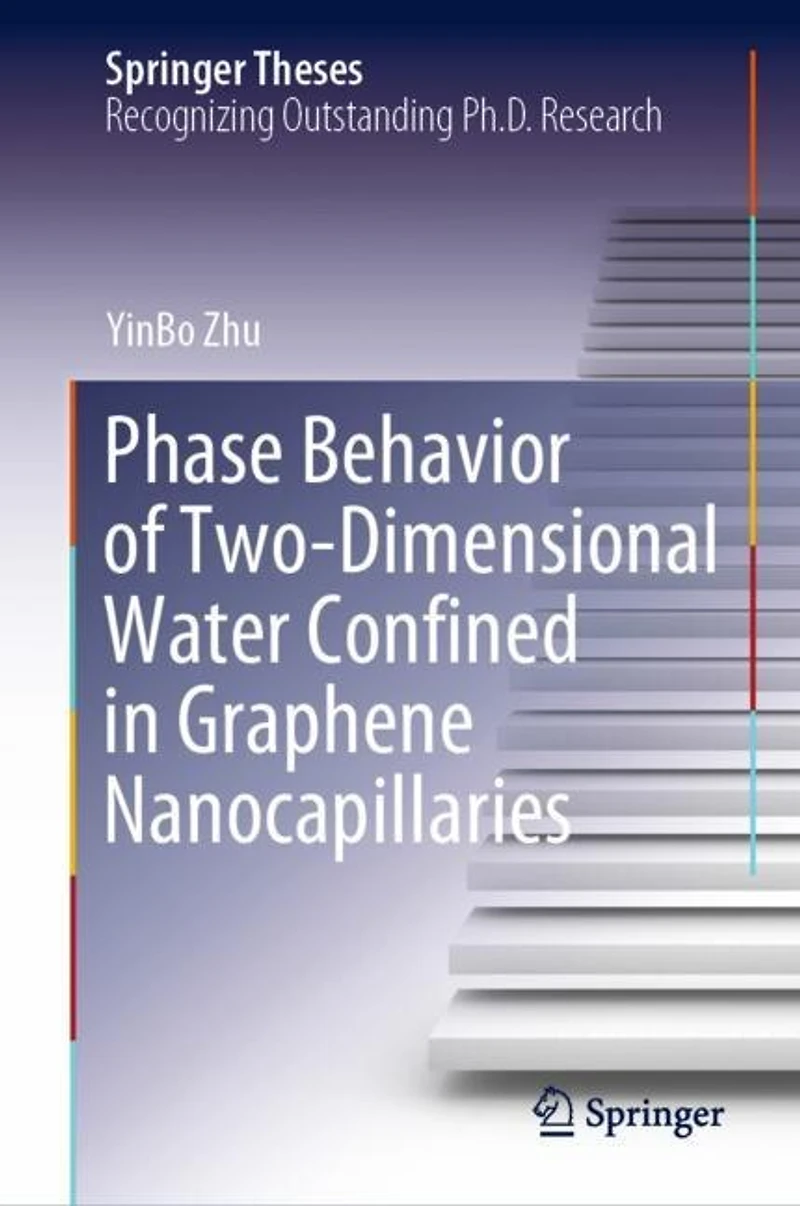
Phase Behavior of Two-Dimensional Water Confined Graphene Nanocapillaries in Ottawa, ON
Current price: $248.50

Phase Behavior of Two-Dimensional Water Confined Graphene Nanocapillaries in Ottawa, ON
Current price: $248.50
Loading Inventory...
Size: Hardcover
*Product information may vary - to confirm product availability, pricing, shipping and return information please contact Coles
In this book, the authors use molecular dynamics simulations to conduct a comprehensive study of the compression/superheating limit and phase transition of 2D (monolayer, bilayer, and trilayer) water/ice constrained in graphene nanocapillaries. When subjected to nanoscale confinement and under ultrahigh pressure, water and ice behave quite differently than their bulk counterparts, partly because the van der Waals pressure can spark a water-to-ice transformation, known as the metastability limit of two-dimensional (2D) liquids. From a mechanical standpoint, this liquid-to-solid transformation characterizes the compression limit (or metastability limit) of 2D water. The findings presented here could help us to better understand the phase behavior of 2D confined water/ice.
In this book, the authors use molecular dynamics simulations to conduct a comprehensive study of the compression/superheating limit and phase transition of 2D (monolayer, bilayer, and trilayer) water/ice constrained in graphene nanocapillaries. When subjected to nanoscale confinement and under ultrahigh pressure, water and ice behave quite differently than their bulk counterparts, partly because the van der Waals pressure can spark a water-to-ice transformation, known as the metastability limit of two-dimensional (2D) liquids. From a mechanical standpoint, this liquid-to-solid transformation characterizes the compression limit (or metastability limit) of 2D water. The findings presented here could help us to better understand the phase behavior of 2D confined water/ice.
You May Also Like

















More About Coles at Bayshore Shopping Centre
Coles is renowned for its outstanding customer service and great selection of books. Along with the vast array of magazines, stationary, audio-books, children's literature, fiction, non-fiction and reference books, you can find accessories to make your reading experience more pleasurable. We can recommend the very best in reading today. We will help you search our titles for exactly what you need, and if we do not have it in stock, we will order it for you.
100 Bayshore Dr, Nepean, ON K2B 8C1, Canada
Find Coles at Bayshore Shopping Centre in Ottawa, ON
Visit Coles at Bayshore Shopping Centre in Ottawa, ON