

Give the Gift of Choice!
Too many options? Treat your friends and family to their favourite stores with a Bayshore Shopping Centre gift card, redeemable at participating retailers throughout the centre. Click below to purchase yours today!Purchase HereHome
Philosophical Fragments: Written During Intervals of Business (Classic Reprint)
Coles
Loading Inventory...
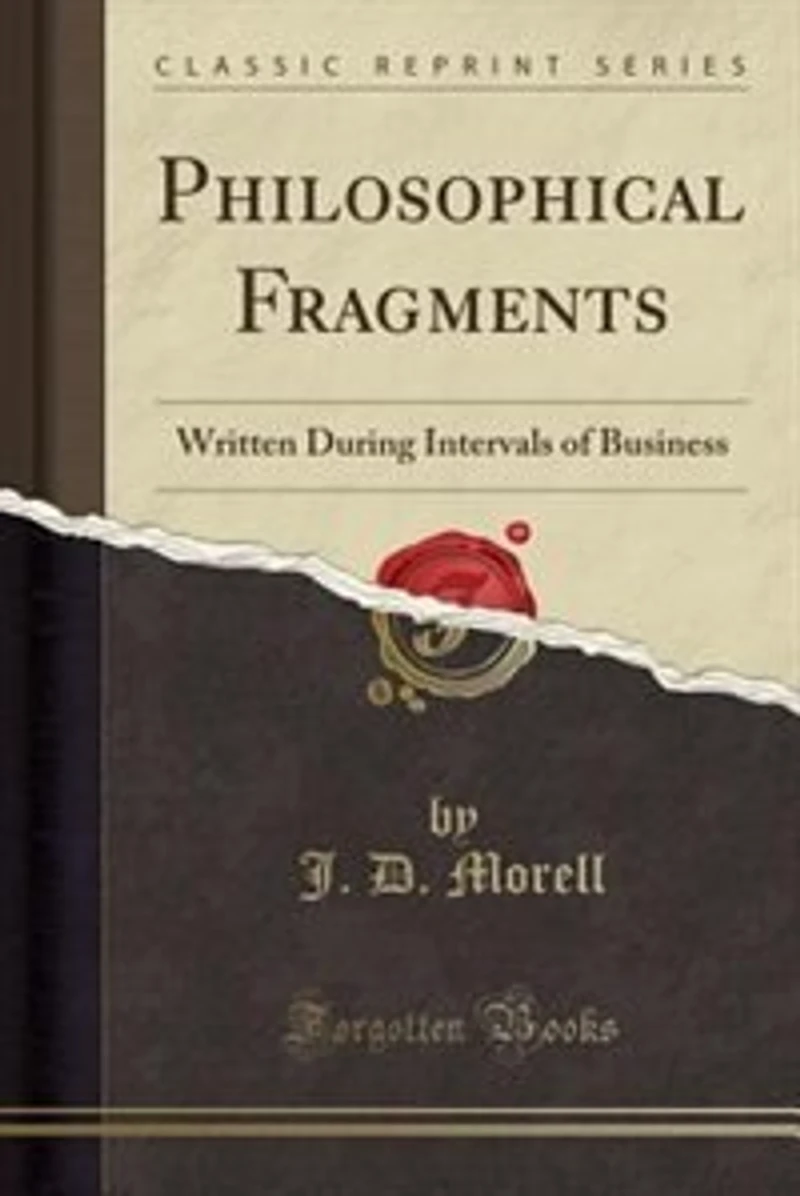
Philosophical Fragments: Written During Intervals of Business (Classic Reprint) in Ottawa, ON
Current price: $9.57

Philosophical Fragments: Written During Intervals of Business (Classic Reprint) in Ottawa, ON
Current price: $9.57
Loading Inventory...
Size: Paperback
*Product information may vary - to confirm product availability, pricing, shipping and return information please contact Coles
Excerpt from Philosophical Fragments: Written During Intervals of Business In the hands of Leibnitz the mechanical pantheism of Spinoza broke down. He demonstrated with convincing force the truth that material existences do not consist merely in extension and its properties, but that upon every created thing there is impressed a self-developing power and an intelligent purpose. The monadologie Of Leibnitz (to which we shall have occasion again to revert) was in fact the precise logical contradiction of the pantheism of Spinoza, and contained the germ Of well-nigh all the doctrines which have been evolved in the more modern speculations of Germany. Locke and Leibnitz were contemporaries as well as literary Opponents and in them we see the point of diverg ence which has led to the two great Opposing schools of modern philosophy - the empirical and the idealistic. The teaching Of Locke, rejecting as it did the whole doctrine Of innate ideas, and deducing the entire material of human knowledge from the intimation of the senses, after leaving its impression upon the whole surface of English thought, passed over the channel and expanded into the extreme doctrines of the French materialistic school. In the same way the teaching Of Leibnitz, after passing through the alembic of Kant's powerful intellect, reappeared in the equally extreme doctrines of the German idealism. About the Publisher Forgotten Books publishes hundreds of thousands of rare and classic books. Find more at www.forgottenbooks.com This book is a reproduction of an important historical work. Forgotten Books uses state-of-the-art technology to digitally reconstruct the work, preserving the original format whilst repairing imperfections present in the aged copy. In rare cases, an imperfection in the original, such as a blemish or missing page, may be replicated in our edition. We do, however, repair the vast majority of imperfections successfully; any imperfections that remain are intentionally left to preserve the state of such historical works.
Excerpt from Philosophical Fragments: Written During Intervals of Business In the hands of Leibnitz the mechanical pantheism of Spinoza broke down. He demonstrated with convincing force the truth that material existences do not consist merely in extension and its properties, but that upon every created thing there is impressed a self-developing power and an intelligent purpose. The monadologie Of Leibnitz (to which we shall have occasion again to revert) was in fact the precise logical contradiction of the pantheism of Spinoza, and contained the germ Of well-nigh all the doctrines which have been evolved in the more modern speculations of Germany. Locke and Leibnitz were contemporaries as well as literary Opponents and in them we see the point of diverg ence which has led to the two great Opposing schools of modern philosophy - the empirical and the idealistic. The teaching Of Locke, rejecting as it did the whole doctrine Of innate ideas, and deducing the entire material of human knowledge from the intimation of the senses, after leaving its impression upon the whole surface of English thought, passed over the channel and expanded into the extreme doctrines of the French materialistic school. In the same way the teaching Of Leibnitz, after passing through the alembic of Kant's powerful intellect, reappeared in the equally extreme doctrines of the German idealism. About the Publisher Forgotten Books publishes hundreds of thousands of rare and classic books. Find more at www.forgottenbooks.com This book is a reproduction of an important historical work. Forgotten Books uses state-of-the-art technology to digitally reconstruct the work, preserving the original format whilst repairing imperfections present in the aged copy. In rare cases, an imperfection in the original, such as a blemish or missing page, may be replicated in our edition. We do, however, repair the vast majority of imperfections successfully; any imperfections that remain are intentionally left to preserve the state of such historical works.
You May Also Like











More About Coles at Bayshore Shopping Centre
Coles is renowned for its outstanding customer service and great selection of books. Along with the vast array of magazines, stationary, audio-books, children's literature, fiction, non-fiction and reference books, you can find accessories to make your reading experience more pleasurable. We can recommend the very best in reading today. We will help you search our titles for exactly what you need, and if we do not have it in stock, we will order it for you.
100 Bayshore Dr, Nepean, ON K2B 8C1, Canada
Find Coles at Bayshore Shopping Centre in Ottawa, ON
Visit Coles at Bayshore Shopping Centre in Ottawa, ON