

Give the Gift of Choice!
Too many options? Treat your friends and family to their favourite stores with a Bayshore Shopping Centre gift card, redeemable at participating retailers throughout the centre. Click below to purchase yours today!Purchase HereHome
Philosophical Uses of Categoricity Arguments
Coles
Loading Inventory...
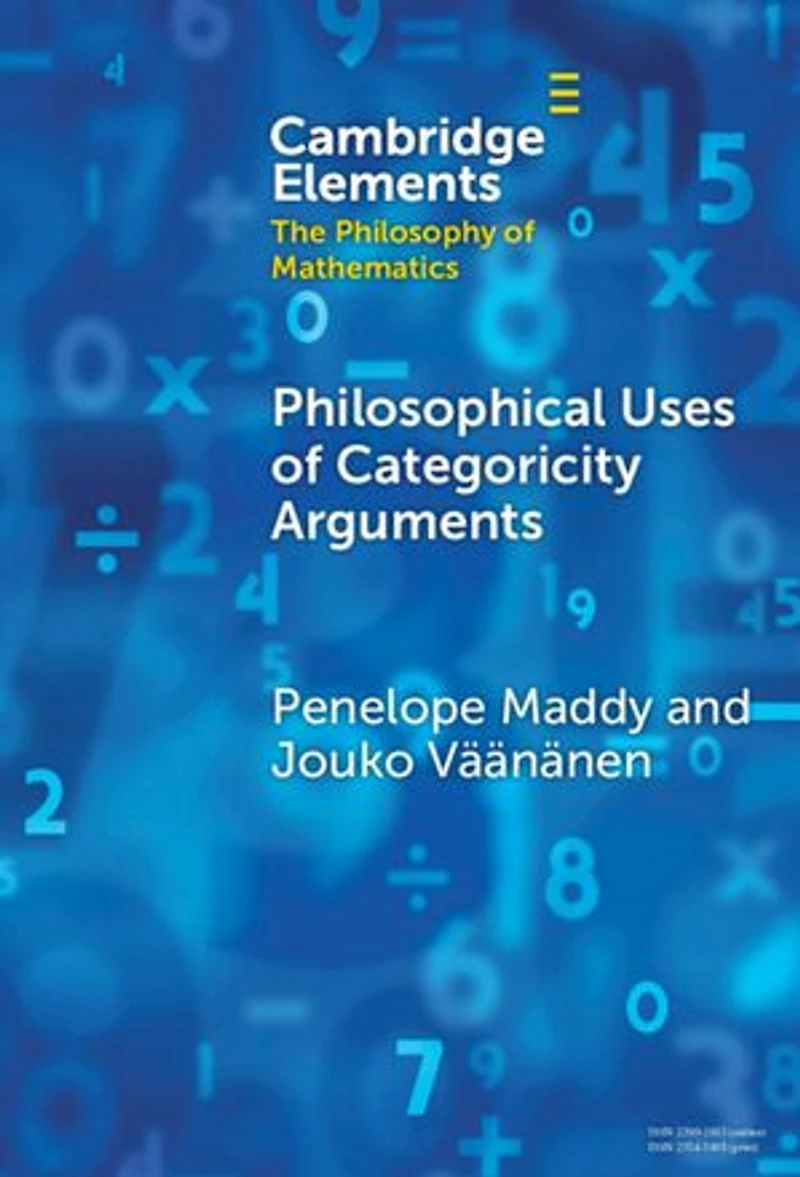
Philosophical Uses of Categoricity Arguments in Ottawa, ON
Current price: $23.19
Original price: $28.95

Philosophical Uses of Categoricity Arguments in Ottawa, ON
Current price: $23.19
Original price: $28.95
Loading Inventory...
Size: Kobo eBook
*Product information may vary - to confirm product availability, pricing, shipping and return information please contact Coles
This Element addresses the viability of categoricity arguments in philosophy by focusing with some care on the specific conclusions that a sampling of prominent figures have attempted to draw – the same theorem might successfully support one such conclusion while failing to support another. It begins with Dedekind, Zermelo, and Kreisel, casting doubt on received readings of the latter two and highlighting the success of all three in achieving what are argued to be their actual goals. These earlier uses of categoricity arguments are then compared and contrasted with more recent work of Parsons and the co-authors Button and Walsh. Highlighting the roles of first- and second-order theorems, of external and internal theorems, the Element concludes that categoricity arguments have been more effective in historical cases that reflect philosophically on internal mathematical matters than in recent questions of pre-theoretic metaphysics.
This Element addresses the viability of categoricity arguments in philosophy by focusing with some care on the specific conclusions that a sampling of prominent figures have attempted to draw – the same theorem might successfully support one such conclusion while failing to support another. It begins with Dedekind, Zermelo, and Kreisel, casting doubt on received readings of the latter two and highlighting the success of all three in achieving what are argued to be their actual goals. These earlier uses of categoricity arguments are then compared and contrasted with more recent work of Parsons and the co-authors Button and Walsh. Highlighting the roles of first- and second-order theorems, of external and internal theorems, the Element concludes that categoricity arguments have been more effective in historical cases that reflect philosophically on internal mathematical matters than in recent questions of pre-theoretic metaphysics.
You May Also Like










More About Coles at Bayshore Shopping Centre
Coles is renowned for its outstanding customer service and great selection of books. Along with the vast array of magazines, stationary, audio-books, children's literature, fiction, non-fiction and reference books, you can find accessories to make your reading experience more pleasurable. We can recommend the very best in reading today. We will help you search our titles for exactly what you need, and if we do not have it in stock, we will order it for you.
100 Bayshore Dr, Nepean, ON K2B 8C1, Canada
Find Coles at Bayshore Shopping Centre in Ottawa, ON
Visit Coles at Bayshore Shopping Centre in Ottawa, ON