

Give the Gift of Choice!
Too many options? Treat your friends and family to their favourite stores with a Bayshore Shopping Centre gift card, redeemable at participating retailers throughout the centre. Click below to purchase yours today!Purchase HereHome
Place for Us: Essay on the Broadway Musical
Coles
Loading Inventory...
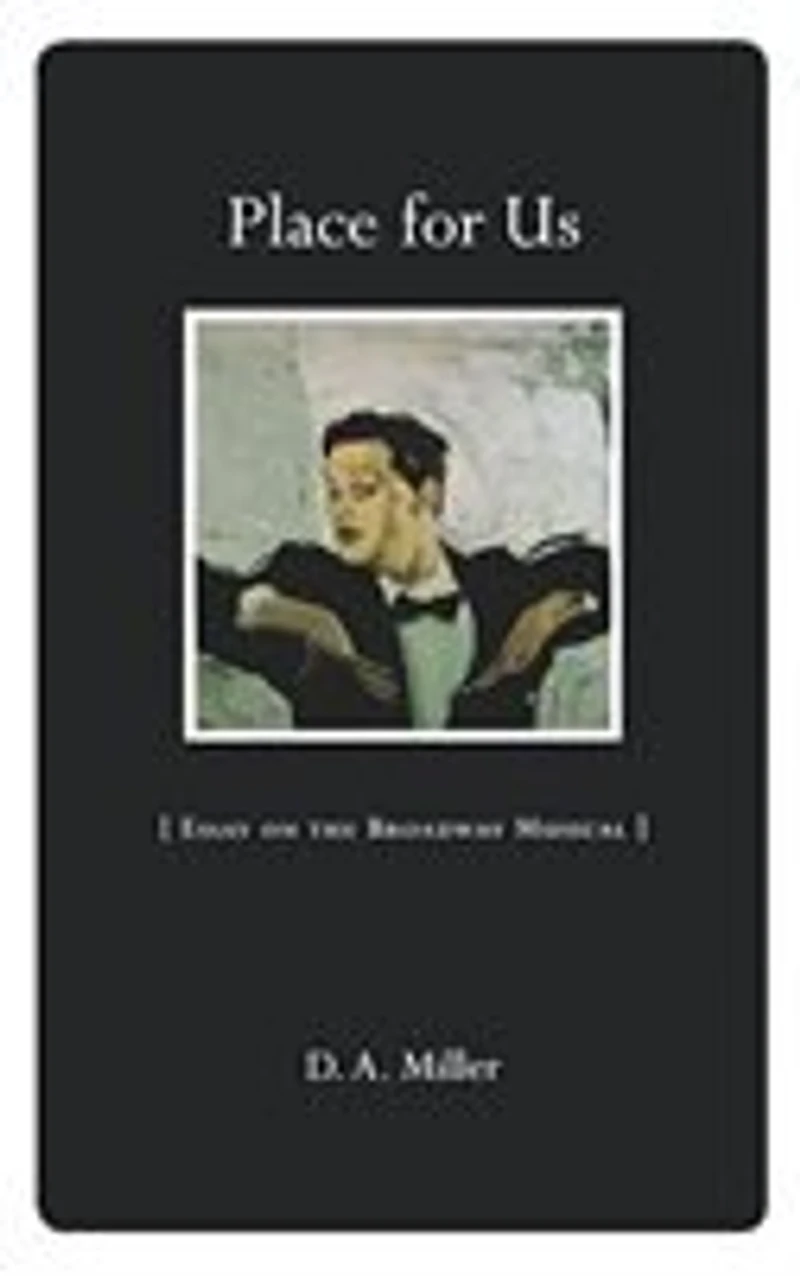
Place for Us: Essay on the Broadway Musical in Ottawa, ON
Current price: $43.32

Place for Us: Essay on the Broadway Musical in Ottawa, ON
Current price: $43.32
Loading Inventory...
Size: Paperback
*Product information may vary - to confirm product availability, pricing, shipping and return information please contact Coles
It used to be a secret that, in its postwar heyday, the Broadway musical recruited a massive underground following of gay men. But though this once silent social fact currently spawns jokes that every sitcom viewer is presumed to be in on, it has not necessarily become better understood.
In Place for Us, D. A. Miller probes what all the jokes laugh off: the embarrassingly mutual affinity between a "general" cultural form and the despised "minority" that was in fact that form's implicit audience. In a style that is in turn novelistic, memorial, autobiographical, and critical, the author restores to their historical density the main modes of reception that so many gay men developed to answer the musical's call: the early private communion with original cast albums, the later camping of show tunes in piano bars, the still later reformatting of these same songs at the post-Stonewall disco. In addition, through an extended reading of Gypsy , Miller specifies the nature of the call itself, which he locates in the postwar musical's most basic conventions: the contradictory relation between the show and the book, the mimetic tendency of the musical number, the centrality of the female star. If the postwar musical may be called a "gay" genre, Miller demonstrates, this is because its regular but unpublicized work has been to indulge men in the spectacular thrills of a femininity become their own.
It used to be a secret that, in its postwar heyday, the Broadway musical recruited a massive underground following of gay men. But though this once silent social fact currently spawns jokes that every sitcom viewer is presumed to be in on, it has not necessarily become better understood.
In Place for Us, D. A. Miller probes what all the jokes laugh off: the embarrassingly mutual affinity between a "general" cultural form and the despised "minority" that was in fact that form's implicit audience. In a style that is in turn novelistic, memorial, autobiographical, and critical, the author restores to their historical density the main modes of reception that so many gay men developed to answer the musical's call: the early private communion with original cast albums, the later camping of show tunes in piano bars, the still later reformatting of these same songs at the post-Stonewall disco. In addition, through an extended reading of Gypsy , Miller specifies the nature of the call itself, which he locates in the postwar musical's most basic conventions: the contradictory relation between the show and the book, the mimetic tendency of the musical number, the centrality of the female star. If the postwar musical may be called a "gay" genre, Miller demonstrates, this is because its regular but unpublicized work has been to indulge men in the spectacular thrills of a femininity become their own.
You May Also Like











More About Coles at Bayshore Shopping Centre
Coles is renowned for its outstanding customer service and great selection of books. Along with the vast array of magazines, stationary, audio-books, children's literature, fiction, non-fiction and reference books, you can find accessories to make your reading experience more pleasurable. We can recommend the very best in reading today. We will help you search our titles for exactly what you need, and if we do not have it in stock, we will order it for you.
100 Bayshore Dr, Nepean, ON K2B 8C1, Canada
Find Coles at Bayshore Shopping Centre in Ottawa, ON
Visit Coles at Bayshore Shopping Centre in Ottawa, ON