

Give the Gift of Choice!
Too many options? Treat your friends and family to their favourite stores with a Bayshore Shopping Centre gift card, redeemable at participating retailers throughout the centre. Click below to purchase yours today!Purchase HereHome
Planet in Ashes: The Scientific Reality of Life after Nuclear War
Coles
Loading Inventory...
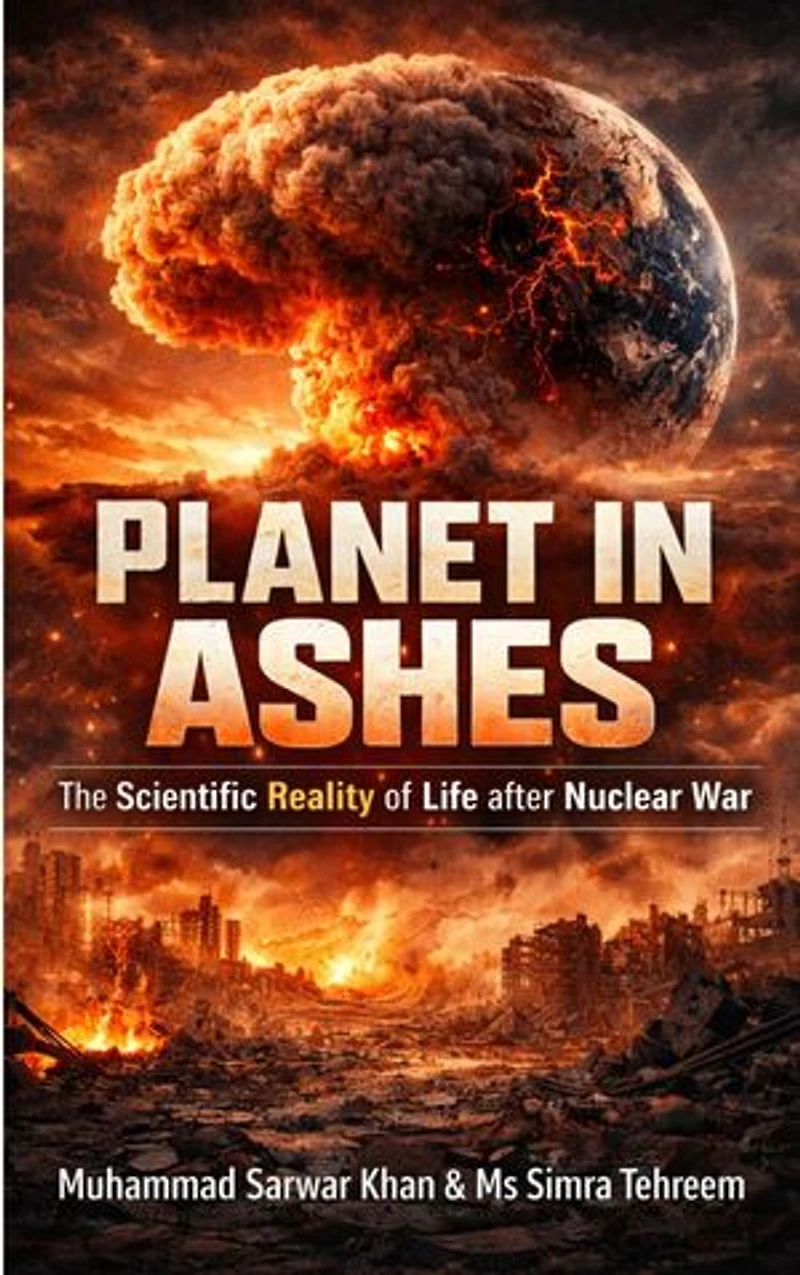
Planet in Ashes: The Scientific Reality of Life after Nuclear War in Ottawa, ON
Current price: $16.29

Planet in Ashes: The Scientific Reality of Life after Nuclear War in Ottawa, ON
Current price: $16.29
Loading Inventory...
Size: Kobo eBook
*Product information may vary - to confirm product availability, pricing, shipping and return information please contact Coles
Planet in Ashes: The Scientific Reality of Life After Nuclear War
What happens after the bombs fall? This book provides the definitive, evidence‑based answer.
Most discussions of nuclear war end with the mushroom cloud. Planet in Ashes begins there and traces the devastating cascade that follows: from the first microsecond of the fireball to the long, silent collapse of the biosphere, from the extinction of oceans to the geological signature that will mark our era for millions of years.
Drawing on decades of climate modelling, ecology, nuclear physics, and declassified military analysis, this book transforms abstract science into a visceral, human story. Through the haunting journal of Marta, a mother and historian navigating a world without sunlight, harvest, or hope, you will witness what the models predict, and what survivors have always known: the blast is only the beginning.
Inside these pages, you will learn:
The first hour – How a single 450‑kiloton warhead detonated above a city creates a fireball hotter than the Sun’s core, vapourises concrete and steel, and ignites a self‑sustaining firestorm that consumes its own oxygen. Most deaths near ground zero are caused not by the blast, but by the fire.
Nuclear winter – How soot from burning cities, up to 150 million tonnes, is injected into the stratosphere, blocking sunlight for years, dropping global temperatures by 5–8°C within weeks. Why did the last Ice Age take thousands of years, but nuclear winter would unfold before the first month of frost had ended?
Ozone collapse – How the same soot that cools the surface heats the stratosphere, destroying the ozone layer and allowing lethal levels of ultraviolet radiation to reach the ground. Why sunlight, once a source of life, becomes a threat that burns skin within minutes.
Electromagnetic pulse (EMP): How a single high‑altitude detonation can fry electronics across an entire continent, collapsing power grids, communications, vehicles, and medical systems without a single building destroyed. Why modern civilisation does not degrade gradually; it stops.
Agricultural and ocean collapse: Why staple crops fail when sunlight drops below 10% of normal, and why the death of phytoplankton, the base of the marine food web, means the oceans die from darkness, not poison. Which regions lose their breadbaskets first, and why does stored grain only delay the inevitable?
Famine and disease: Who dies first (children under five, the elderly, pregnant women), and why? Infectious diseases like cholera, pneumonia, and tuberculosis easily treatable before the war, become death sentences in a post‑antibiotic world.
Social breakdown – Why cooperation fails due to thermodynamic limits, how three archetypal factions emerge (resource hoarders, religious ideologues, and scientific cooperatives), and why violence becomes inevitable when energy surplus disappears.
Refugia and bunkers – Whether remote locations like New Zealand or underground shelters offer any real safety. Why even the best refugia only delay collapse, and why can no sealed environment sustain itself without industrial support?
Regional vs global scenarios – How a “limited” India‑Pakistan exchange (100 warheads) would trigger global crop failures and famine affecting 1–2 billion people. Why a full US‑Russia war (3,000–4,000 warheads) means 90–99% mortality within two years and the irreversible simplification of Earth’s biosphere.
The long trajectory – Why climate does not snap back after the soot clears, how evolutionary bottlenecks will reshape life on Earth for centuries, what permafrost methane feedback could do, and the geological marker that will identify the Anthropocene for future intelligences, if any.
Prevention – What current nuclear arsenals actually contain (12,000–13,000 warheads, many on hair‑trigger alert), why “limited nuclear war” and “counterforce targeting” are dangerous fallacies, and the scientifically proven pathways to risk reduction, including de‑alerting, no‑first‑use doctrines, MIRV reduction, and arsenal cuts.
Rigorously referenced with over 70 scientific sources from The Effects of Nuclear Weapons to the latest Nature Food climate modelling, yet written in an urgent, story‑driven style, Planet in Ashes is a warning, a science textbook, and a human testimony.
For policymakers, military strategists, educators, students, and every citizen who wants to understand the single most urgent threat to our future.
“We were not destroyed by monsters. We were destroyed by systems that exceeded the scale of human understanding. The only way to survive the after is to prevent the before.”
— Marta’s Journal
Planet in Ashes: The Scientific Reality of Life After Nuclear War
What happens after the bombs fall? This book provides the definitive, evidence‑based answer.
Most discussions of nuclear war end with the mushroom cloud. Planet in Ashes begins there and traces the devastating cascade that follows: from the first microsecond of the fireball to the long, silent collapse of the biosphere, from the extinction of oceans to the geological signature that will mark our era for millions of years.
Drawing on decades of climate modelling, ecology, nuclear physics, and declassified military analysis, this book transforms abstract science into a visceral, human story. Through the haunting journal of Marta, a mother and historian navigating a world without sunlight, harvest, or hope, you will witness what the models predict, and what survivors have always known: the blast is only the beginning.
Inside these pages, you will learn:
The first hour – How a single 450‑kiloton warhead detonated above a city creates a fireball hotter than the Sun’s core, vapourises concrete and steel, and ignites a self‑sustaining firestorm that consumes its own oxygen. Most deaths near ground zero are caused not by the blast, but by the fire.
Nuclear winter – How soot from burning cities, up to 150 million tonnes, is injected into the stratosphere, blocking sunlight for years, dropping global temperatures by 5–8°C within weeks. Why did the last Ice Age take thousands of years, but nuclear winter would unfold before the first month of frost had ended?
Ozone collapse – How the same soot that cools the surface heats the stratosphere, destroying the ozone layer and allowing lethal levels of ultraviolet radiation to reach the ground. Why sunlight, once a source of life, becomes a threat that burns skin within minutes.
Electromagnetic pulse (EMP): How a single high‑altitude detonation can fry electronics across an entire continent, collapsing power grids, communications, vehicles, and medical systems without a single building destroyed. Why modern civilisation does not degrade gradually; it stops.
Agricultural and ocean collapse: Why staple crops fail when sunlight drops below 10% of normal, and why the death of phytoplankton, the base of the marine food web, means the oceans die from darkness, not poison. Which regions lose their breadbaskets first, and why does stored grain only delay the inevitable?
Famine and disease: Who dies first (children under five, the elderly, pregnant women), and why? Infectious diseases like cholera, pneumonia, and tuberculosis easily treatable before the war, become death sentences in a post‑antibiotic world.
Social breakdown – Why cooperation fails due to thermodynamic limits, how three archetypal factions emerge (resource hoarders, religious ideologues, and scientific cooperatives), and why violence becomes inevitable when energy surplus disappears.
Refugia and bunkers – Whether remote locations like New Zealand or underground shelters offer any real safety. Why even the best refugia only delay collapse, and why can no sealed environment sustain itself without industrial support?
Regional vs global scenarios – How a “limited” India‑Pakistan exchange (100 warheads) would trigger global crop failures and famine affecting 1–2 billion people. Why a full US‑Russia war (3,000–4,000 warheads) means 90–99% mortality within two years and the irreversible simplification of Earth’s biosphere.
The long trajectory – Why climate does not snap back after the soot clears, how evolutionary bottlenecks will reshape life on Earth for centuries, what permafrost methane feedback could do, and the geological marker that will identify the Anthropocene for future intelligences, if any.
Prevention – What current nuclear arsenals actually contain (12,000–13,000 warheads, many on hair‑trigger alert), why “limited nuclear war” and “counterforce targeting” are dangerous fallacies, and the scientifically proven pathways to risk reduction, including de‑alerting, no‑first‑use doctrines, MIRV reduction, and arsenal cuts.
Rigorously referenced with over 70 scientific sources from The Effects of Nuclear Weapons to the latest Nature Food climate modelling, yet written in an urgent, story‑driven style, Planet in Ashes is a warning, a science textbook, and a human testimony.
For policymakers, military strategists, educators, students, and every citizen who wants to understand the single most urgent threat to our future.
“We were not destroyed by monsters. We were destroyed by systems that exceeded the scale of human understanding. The only way to survive the after is to prevent the before.”
— Marta’s Journal
You May Also Like









More About Coles at Bayshore Shopping Centre
Coles is renowned for its outstanding customer service and great selection of books. Along with the vast array of magazines, stationary, audio-books, children's literature, fiction, non-fiction and reference books, you can find accessories to make your reading experience more pleasurable. We can recommend the very best in reading today. We will help you search our titles for exactly what you need, and if we do not have it in stock, we will order it for you.
100 Bayshore Dr, Nepean, ON K2B 8C1, Canada
Find Coles at Bayshore Shopping Centre in Ottawa, ON
Visit Coles at Bayshore Shopping Centre in Ottawa, ON