

Give the Gift of Choice!
Too many options? Treat your friends and family to their favourite stores with a Bayshore Shopping Centre gift card, redeemable at participating retailers throughout the centre. Click below to purchase yours today!Purchase HereHome
Plotinus on Intellect by Eyjólfur Kjalar Emilsson, Hardcover | Indigo Chapters
Coles
Loading Inventory...
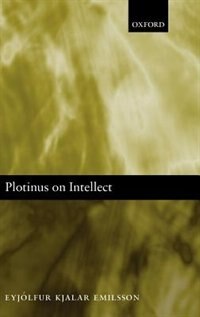
Plotinus on Intellect by Eyjólfur Kjalar Emilsson, Hardcover | Indigo Chapters in Ottawa, ON
By Eyjólfur Kjalar Emilsson
Current price: $177.00

By Eyjólfur Kjalar Emilsson
Plotinus on Intellect by Eyjólfur Kjalar Emilsson, Hardcover | Indigo Chapters in Ottawa, ON
Current price: $177.00
Loading Inventory...
Size: 20 x 234 x 510
*Product information may vary - to confirm product availability, pricing, shipping and return information please contact Coles
Plotinus (205-269 AD) is considered the founder of Neoplatonism, the dominant philosophical movement of late antiquity, and a rich seam of current scholarly interest. Whilst Plotinus' influence on the subsequent philosophical tradition was enormous, his ideas can also be seen as theculmination of some implicit trends in the Greek tradition from Parmenides, Plato, Aristotle, and the Stoics. Emilsson's in-depth study focuses on Plotinus' notion of Intellect, which comes second in his hierarchical model of reality, after the One, unknowable first cause of everything. As opposed to ordinary human discursive thinking, Intellect's thought is all-at-once, timeless, truthful and a directintuition into 'things themselves'; it is presumably not even propositional. Emilsson discusses and explains this strong notion of non-discursive thought and explores Plotinus' insistence that this must be the primary form of thought. Plotinus' doctrine of Intellect raises a host of questions that Emilsson addresses. First, Intellect's thought is described as an attempt to grasp the One and at the same time as self-thought. How are these two claims related? How are they compatible? What lies in Plotinus' insistence thatIntellect's thought is a thought of itself? Second, Plotinus gives two minimum requirements of thought: that it must involve a distinction between thinker and object of thought, and that the object itself must be varied. How are these two pluralist claims related? Third, what is the relation betweenIntellect as a thinker and Intellect as an object of thought? Plotinus' position here seems to amount to a form of idealism, and this is explored. | Plotinus on Intellect by Eyjólfur Kjalar Emilsson, Hardcover | Indigo Chapters
Plotinus (205-269 AD) is considered the founder of Neoplatonism, the dominant philosophical movement of late antiquity, and a rich seam of current scholarly interest. Whilst Plotinus' influence on the subsequent philosophical tradition was enormous, his ideas can also be seen as theculmination of some implicit trends in the Greek tradition from Parmenides, Plato, Aristotle, and the Stoics. Emilsson's in-depth study focuses on Plotinus' notion of Intellect, which comes second in his hierarchical model of reality, after the One, unknowable first cause of everything. As opposed to ordinary human discursive thinking, Intellect's thought is all-at-once, timeless, truthful and a directintuition into 'things themselves'; it is presumably not even propositional. Emilsson discusses and explains this strong notion of non-discursive thought and explores Plotinus' insistence that this must be the primary form of thought. Plotinus' doctrine of Intellect raises a host of questions that Emilsson addresses. First, Intellect's thought is described as an attempt to grasp the One and at the same time as self-thought. How are these two claims related? How are they compatible? What lies in Plotinus' insistence thatIntellect's thought is a thought of itself? Second, Plotinus gives two minimum requirements of thought: that it must involve a distinction between thinker and object of thought, and that the object itself must be varied. How are these two pluralist claims related? Third, what is the relation betweenIntellect as a thinker and Intellect as an object of thought? Plotinus' position here seems to amount to a form of idealism, and this is explored. | Plotinus on Intellect by Eyjólfur Kjalar Emilsson, Hardcover | Indigo Chapters
You May Also Like








More About Coles at Bayshore Shopping Centre
Coles is renowned for its outstanding customer service and great selection of books. Along with the vast array of magazines, stationary, audio-books, children's literature, fiction, non-fiction and reference books, you can find accessories to make your reading experience more pleasurable. We can recommend the very best in reading today. We will help you search our titles for exactly what you need, and if we do not have it in stock, we will order it for you.
100 Bayshore Dr, Nepean, ON K2B 8C1, Canada
Find Coles at Bayshore Shopping Centre in Ottawa, ON
Visit Coles at Bayshore Shopping Centre in Ottawa, ON